
Market Bifurcation Analysis: Policy Shifts Drive Mixed Market Dynamics
Unlock More Features
Login to access AI-powered analysis, deep research reports and more advanced features
About us: Ginlix AI is the AI Investment Copilot powered by real data, bridging advanced AI with professional financial databases to provide verifiable, truth-based answers. Please use the chat box below to ask any financial question.
Related Stocks
This analysis is based on the Seeking Alpha report [5] published on November 11, 2025, which discusses the emergence of a bifurcated market reality. Current market conditions reflect this dichotomy, with U.S. pre-market futures showing positive momentum driven by policy developments, while technology sectors face headwinds from major portfolio rebalancing. The market appears to be transitioning through a period of structural adjustment, with government policy shifts creating both opportunities and uncertainties across different market segments.
The market landscape is being reshaped by significant policy developments. The Senate’s passage of temporary legislation to reopen the federal government, with House voting expected around 7 p.m. ET today, is driving positive sentiment as investors anticipate reduced economic uncertainty [1][9]. Concurrently, Treasury Secretary Scott Bessent announced forthcoming “substantial announcements” to lower prices on coffee, bananas, and other imported goods not grown in the U.S., representing a notable policy reversal following voter concerns about cost of living [3][4][6]. President Trump specifically mentioned lowering tariffs on coffee imports from Vietnam and Brazil, signaling a more consumer-friendly trade approach [6].
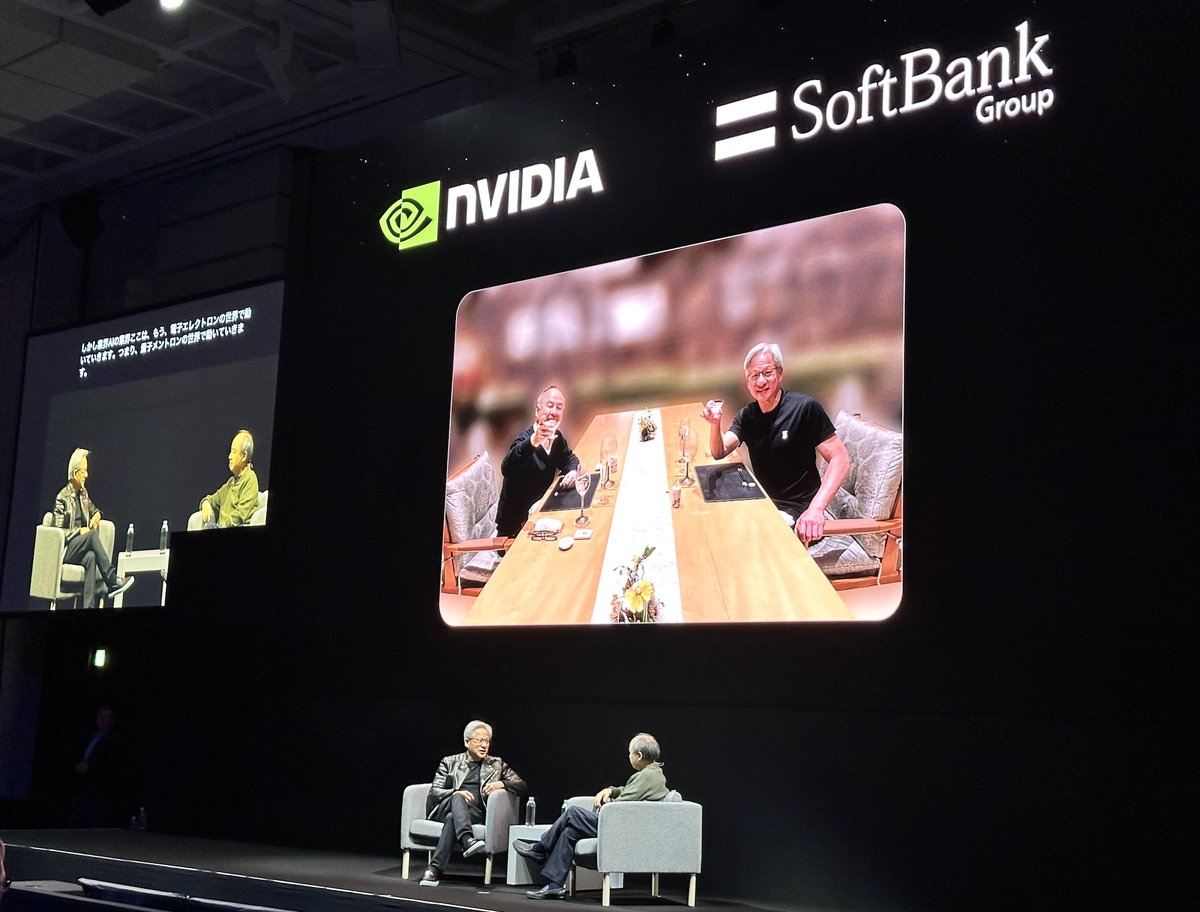
The technology sector is experiencing significant disruption following SoftBank Group’s disclosure that it sold its entire $5.8 billion stake in Nvidia last month [9]. This strategic pivot toward ChatGPT maker OpenAI caused Nvidia shares to plunge as much as 10.1% before recovering to a 3.5% decline, creating ripple effects across Asian tech stocks. The Nikkei 225 managed to gain 0.4% to 51,063.31 despite SoftBank’s 3.5% decline in Tokyo trading, while the Hang Seng rose 0.8% to 26,913.90 and Shanghai Composite added 0.1% to 4,006.17 [9][10].
Pre-market futures indicate a higher open with the Dow leading gains after Tuesday’s record-high close [1][4]. Current pre-market activity shows:
- Dow Jones Industrial Average: +103 points
- S&P 500: +22 points
- Nasdaq Composite: +151 points
- Russell 2000: +7 points [1]
However, sector performance reveals the bifurcation theme, with technology (-1.38%) and energy (-1.34%) leading declines, while communication services (+0.54%) and healthcare (+0.44%) show relative strength [0]. This divergence reflects the market’s adjustment to new policy realities and sector-specific dynamics.
The Seeking Alpha analysis [5] suggesting markets are moving toward a bifurcated reality is evident in current market behavior. While pre-market futures show overall optimism, underlying sector performance reveals significant divergence. Technology stocks face pressure from portfolio reallocation, while defensive sectors demonstrate resilience. This pattern aligns with the analysis suggesting that neutral observers expect uneven U.S. GDP growth with tariffs and inflation remaining realistic concerns [5].
The Trump administration’s apparent shift toward consumer-friendly trade policies, particularly tariff reductions on everyday items like coffee and bananas, represents a significant departure from previous protectionist approaches [3][4][6]. This policy pivot appears to be a direct response to voter concerns about cost of living that impacted recent elections, suggesting a more politically sensitive approach to economic policy.
SoftBank’s strategic exit from its Nvidia position represents more than just a single transaction; it signals a broader reallocation toward artificial intelligence investments, specifically OpenAI [9]. This move reflects changing institutional priorities and may presage further portfolio adjustments across the technology sector as investors rebalance toward next-generation AI opportunities.
- Policy Implementation Uncertainty: While tariff reduction announcements are expected, the timing and scope of implementation remain unclear, potentially creating market volatility [3][4][6]
- Tech Sector Volatility: SoftBank’s portfolio rebalancing may trigger further selling pressure across technology stocks as other institutions follow similar strategies [9]
- Government Shutdown Resolution: Although progress is being made, delays in final approval could reignite economic uncertainty [1][9]
- Inflation Trajectory: Changes in tariff policy could have complex effects on inflation, requiring careful monitoring [0][5]
- Consumer-Focused Sectors: Tariff reductions on consumer goods could benefit retail and consumer discretionary companies [3][4][6]
- Healthcare and Communication Services: These sectors are showing relative strength and may provide defensive positioning during market transitions [0]
- AI-Focused Investments: SoftBank’s pivot toward OpenAI highlights continued institutional interest in next-generation AI opportunities [9]
- Small-Cap Stability: Russell 2000 performance suggests potential opportunities in smaller companies less affected by large-cap portfolio rebalancing [0][1]
Market conditions reflect the bifurcated reality described in recent analysis, with policy developments creating divergent outcomes across sectors. The government shutdown resolution progress and consumer-friendly tariff policy shifts are driving positive sentiment, while technology sector realignment creates headwinds. Pre-market futures indicate higher opens across major indices, though sector performance shows significant variation. Investors should monitor the House vote on government spending, specific tariff reduction details, and tech sector stabilization for clearer directional signals. The market appears to be in a transitional phase where policy-driven opportunities coexist with portfolio adjustment risks.
Insights are generated using AI models and historical data for informational purposes only. They do not constitute investment advice or recommendations. Past performance is not indicative of future results.
About us: Ginlix AI is the AI Investment Copilot powered by real data, bridging advanced AI with professional financial databases to provide verifiable, truth-based answers. Please use the chat box below to ask any financial question.