
Analysis of the Root Causes for the Sustained Revenue Decline in Besunyen's Weight Loss Tea Business
Unlock More Features
Login to access AI-powered analysis, deep research reports and more advanced features
About us: Ginlix AI is the AI Investment Copilot powered by real data, bridging advanced AI with professional financial databases to provide verifiable, truth-based answers. Please use the chat box below to ask any financial question.
Related Stocks
Based on the collected company financial data, market information, and industry insights, I systematically analyze the root causes for the sustained revenue decline in Besunyen’s weight loss tea business for you.
According to Besunyen’s 2024 annual report, the company’s full-year revenue was 484 million yuan, a decrease of 10.8% compared to 543 million yuan in 2023. Among them, Besunyen’s four health teas (Changrun Tea, Changjing Tea, Xianxian Tea, Qingyuan Tea) generated revenue of 257 million yuan in 2024, a year-on-year decrease of 11.3% [1]. In the first half of 2025, the revenue of these four product categories further declined to 129 million yuan, a year-on-year decrease of 4.7% [2]. From historical data, Besunyen’s revenue in its first year of listing (2010) was as high as 874 million yuan, which has now shrunk by more than 40%, and it has been in a loss state for eight years in the 15 years since its listing [2].
This sustained decline is not due to short-term market fluctuations but a concentrated reflection of deep-seated structural problems.
In the weight loss tea segment, the number of competitors has surged. Traditional pharmaceutical companies like Tong Ren Tang have launched similar products relying on brand reputation, while emerging brands like Bao Zhilin, Dayinxiang, and Lv Shou have quickly seized market share [2]. These competitors directly confront Besunyen in product positioning, pricing strategies, and channel layout, diluting its original market concentration advantage.
With the upgrade of health consumption concepts, traditional weight loss teas face the impact of diverse substitutes. New weight loss concept products such as L-carnitine, enzymes, fat-burning pills, and white kidney bean extract emerge in an endless stream. These products often have more clear efficacy claims and more convenient usage methods [2]. Consumers have shifted from single functional health teas to more diversified solutions in weight loss choices.
Young consumer groups are increasingly inclined to achieve healthy weight loss through exercise rather than relying on functional health products. The popularity of gyms and fitness apps has made “exercise weight loss” a mainstream way, further compressing the demand scenarios for health tea products like Besunyen [2].
Besunyen obtained the “Blue Hat” (health food certification) as early as 2004, but there were behaviors of exaggerating product efficacy and misleading consumers in market promotion, which repeatedly landed it in public opinion whirlpools [2]. This short-sighted marketing strategy brought short-term sales growth but埋下 serious brand trust hidden dangers.
A large number of consumers reported severe diarrhea, acute gastroenteritis, fever, and other adverse reactions after drinking Besunyen weight loss tea [2]. These negative experiences spread rapidly through social media and word-of-mouth, forming an extremely unfavorable public opinion environment for the brand. In today’s era of increasing information transparency, the widespread spread of product side effects directly affects the purchasing decisions of potential consumers.
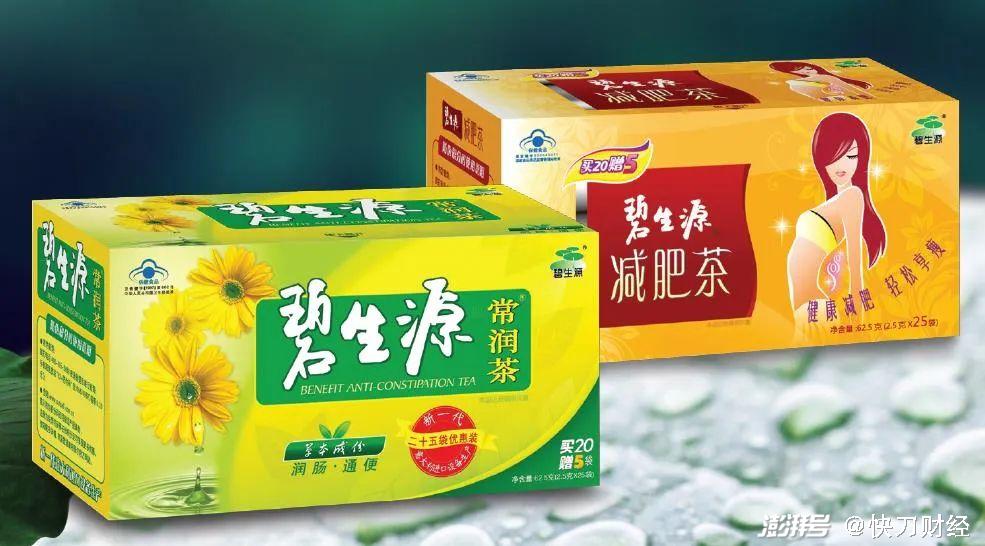
In 2016, due to policy changes, Besunyen Weight Loss Tea was forced to rename as “Besunyen Changjing Tea” [2]. This passive renaming not only caused the loss of brand assets but also led to confusion in consumers’ product cognition, making it impossible to establish stable brand association and loyalty.
Facing the decline of the health tea business, Besunyen acquired 80% of Guangzhou Runliang Pharmaceutical in 2015 to obtain the exclusive代理权 of Haizheng Pharmaceutical’s Orlistat in China; in 2017, it acquired 51% of the equity of Wanshan Pharmaceutical and Wanshan New Drug for 138 million yuan, officially entering the OTC weight loss drug market [2]. Relying on the uniqueness of Orlistat (the only approved chemical OTC weight loss drug in China), Besunyen’s weight loss drug business achieved revenue of 324 million yuan in 2019 and climbed to 607 million yuan in 2020, supporting half of the company’s performance.
However, the good times did not last long. The weight loss drug business encountered a Waterloo in 2021, with revenue dropping to 381 million yuan, a year-on-year decrease of 37.18%. Since then, it has continued to decline, with revenue in 2024 only 148 million yuan, accounting for 30.6% of total revenue [2]. The shrinkage of the weight loss drug business has made the company lose its most important performance support.
Besunyen tried to launch freeze-dried coffee, T+100 billion probiotics, red bean barley tea, etc., extending to the food track [2]. But these new products have never been able to replicate the “blockbuster” effect of weight loss tea, and their performance in the fierce market competition is flat, unable to fill the gap left by the decline of traditional products.
In 2024, revenue from other health foods was 69.55 million yuan, a year-on-year decrease of 14.9%. The company actively optimized OEM products and trade-type products with small volume and no profit prospects, leading to a decrease in revenue in this segment [1]. Although this strategic contraction helps improve operational efficiency, it also means further reduction of the company’s scale.
According to the annual report disclosure, the company adjusted the settlement unit price of its main functional health teas since the end of 2023 [1]. Although the sales volume of Changrun Tea increased by 2.2% in 2024 compared to 2023, and the sales volume of Changjing Tea increased by 8.7%, the sales revenue decreased by 22% and 9% respectively. This reflects the company’s weak bargaining power in channels, having to exchange price for volume but failing to achieve the desired effect.
Besunyen used to rely on large-scale advertising to build brand awareness. This high marketing investment business model could support growth during the industry dividend period, but in an environment of intensified competition and scattered consumer attention, marketing efficiency has significantly declined. Excessively high marketing expenses and declining revenue form a vicious cycle, eroding the company’s profitability.
Functional health teas are not rigid consumer goods. In the macroeconomic downturn cycle, consumers will prioritize cutting such non-essential expenditures. The company also mentioned the negative impact of macro-environmental changes on its business in the financial report [1].
In recent years, the state’s regulation of the health product industry has continued to tighten, putting forward stricter requirements on product efficacy promotion and ingredient labeling. Besunyen once touched the regulatory red line in promotion, and the renaming incident is the direct result of policy changes [2]. The increase in compliance costs and the compression of marketing space pose continuous pressure on the company’s operations.
| Dimension | Core Issues | Impact Level |
|---|---|---|
Market Level |
Intensified competition, emergence of substitutes, shrinking consumption scenarios | ★★★★★ |
Brand Level |
Trust crisis, reputation collapse, brand cognition confusion | ★★★★★ |
Strategic Level |
Transformation dilemma, lack of new growth points | ★★★★☆ |
Operation Level |
Weak channel bargaining power, low marketing efficiency | ★★★☆☆ |
Policy Level |
Tightened regulation, rising compliance costs | ★★★☆☆ |
- Deterioration of External Competitive Ecology: The weight loss tea market has changed from a blue ocean to a red ocean, and demand scenarios are continuously squeezed by diverse substitutes and fitness boom.
- Serious Overdraft of Brand Assets: Historical issues of exaggerated efficacy and product quality controversies have led to consumer trust collapse, forming irreversible negative brand cognition.
- Dilemma in Strategic Transformation: Although it timely laid out the weight loss drug business to achieve short-term recovery, it failed to build a sustainable competitive advantage, and the new product matrix also failed to form effective support.
These three factors are intertwined and interact with each other, forming the deep-seated root of Besunyen’s current predicament. To achieve business recovery, the company needs to carry out systematic restructuring in multiple dimensions such as brand reshaping, product innovation, and channel transformation.
[1] Besunyen Holdings Limited 2024 Annual Report (http://ir.besunyen.com/cn/uploads/pdf/Financial_Reports/2025.04.30_2024年年年报.pdf)
[2] Besunyen Stepping Down from the “Altar”, Hesitating (http://mp.cnfol.com/42086/article/1767575443-142196742.html)
Insights are generated using AI models and historical data for informational purposes only. They do not constitute investment advice or recommendations. Past performance is not indicative of future results.
About us: Ginlix AI is the AI Investment Copilot powered by real data, bridging advanced AI with professional financial databases to provide verifiable, truth-based answers. Please use the chat box below to ask any financial question.