
Analysis of Gross Margin and Premiumization Strategy for Junlebao's Infant Formula Business
Unlock More Features
Login to access AI-powered analysis, deep research reports and more advanced features
About us: Ginlix AI is the AI Investment Copilot powered by real data, bridging advanced AI with professional financial databases to provide verifiable, truth-based answers. Please use the chat box below to ask any financial question.
Junlebao has long been plagued by low gross margin issues. According to public data, the net profit margin of Junlebao’s infant formula business was only 2.2% and 2.9% in 2017-2018, far lower than Yili Dairy’s 8.82% and 8.11%, and Feihe’s 19.68% and 21.55% during the same period [1][2]. This gap directly reflects Junlebao’s weak position in pricing power.
More alarmingly, when Mengniu sold its Junlebao shares in 2019, its CFO Guo Weichang stated bluntly: ‘Junlebao’s gross margin is lower than Mengniu’s level; excluding Junlebao will significantly improve the financial statements.’ [2] This statement reveals Junlebao’s serious lack of profitability.
-
Inertia of Historical Low-Price Strategy:After the 2008 Sanlu incident, Junlebao chose a pricing strategy that was 50%-70% lower than the normal market price to quickly seize third- and fourth-tier cities and rural markets [1]. Although this strategy helped it open the market rapidly, it also made consumers form an inherent impression of ‘low price and affordability.’
-
Insufficient Brand Premium Capacity:The long-term low-price strategy makes it difficult for Junlebao to be associated with ‘premium’ in consumers’ minds, limiting the product’s price increase space.
-
Intensified Market Competition:After the infant formula market entered stock competition, premium brands cut prices to squeeze the mid-end market space, further compressing Junlebao’s already meager profits [3].
To break through its low-end image, Junlebao has implemented multi-dimensional premium product layout:
- Infant Formula Business:Launched mid-to-high-end products such as A2 milk powder, organic milk powder ‘Youcui’, and 500-yuan-level pure goat milk powder ‘Zhenweiai’, with a price increase of 30-40 yuan per can [3]
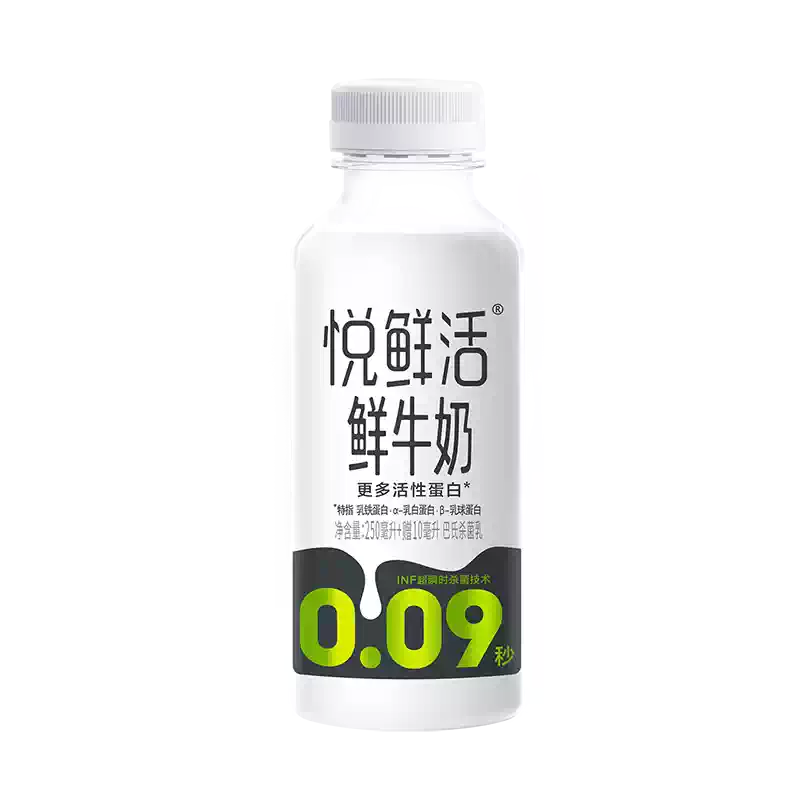
- Liquid Milk Business:Incubated the premium fresh milk brand ‘Yuexianhuo’ in 2019, which topped the national market with a 29.6% market share in July 2023 [3]
- Yogurt Business:Launched Jianchun zero-sugar yogurt, which ranks first in the low-temperature zero-sugar yogurt market [1]
| Dimension | Performance | Evaluation |
|---|---|---|
| Market Share | Premium infant formula market accounted for only 9% in the first 9 months of 2023, while Feihe was 23% | Effect not significant |
| Brand Awareness | Consumers’ inherent impression is difficult to change | Progress slow |
| Channel Expansion | Entered Hong Kong market in May 2025, landing in 1500 supermarkets | Just started |
| Investment Layout | Lao Shen Shi Jia entered bankruptcy liquidation in October 2025 | Suffered a major setback |
-
Brand Image Solidification
- Consumers have a deep-rooted label of ‘price butcher’ for Junlebao, and the brand image transformation to premium faces huge resistance [1]
-
Fierce Industry Competition
- Yili and Mengniu have deeply cultivated the premium field for many years, with strong brand influence and perfect channels
- Feihe’s market share in premium infant formula is far higher than Junlebao (23% vs 9%) [1]
- Imported brands and emerging brands continue to compete for market share
-
Cost Pressure Intensified
- In 2025, Feihe, Yili, and Junlebao invested a total of nearly 5 billion yuan in fertility subsidies, and the ‘price war’ further compressed profit space [3]
- Junlebao’s debt ratio is close to 78%, far higher than the industry average [2]
-
Product Quality Issues
- There are more than 1500 complaints about Junlebao on the Heimao Complaint Platform, involving foreign objects, deterioration within the shelf life, etc. [2]
- Multiple product quality incidents were exposed by the media in 2023 and 2024, damaging the brand image
Facing困境, Junlebao is making strategic focus adjustments:
-
Business Focus Transfer: Shift resources from the infant formula track (which has seen growth peak and meager profits) to the low-temperature fresh milk track with higher gross margins [3]
-
Capacity Layout Optimization:
- East China whole industry chain base (Tianchang, Anhui) focuses on premium fresh milk and student milk products
- Guangdong-Hong Kong-Macao Greater Bay Area project covers Guangdong, Guangxi, Hong Kong and Macao markets
- Entered Hong Kong market high-profile in May 2025, planning to use this as a springboard to expand into Southeast Asia [3]
-
Whole Industry Chain Investment: Invested over 8 billion yuan in pasture planting and dairy cow breeding in the past decade to consolidate the basic milk source disk [3]
Junlebao’s premiumization strategy overall implementation effect
Currently, Junlebao is trying to break through through strategic focus adjustment, investing more resources in the low-temperature fresh milk track with higher gross margins, which may become a key breakthrough for it to improve profitability in the future.
[1] Gelonghui - Can Junlebao’s IPO Resolve the Pain of High Debt? (https://www.gelonghui.com/p/1814425)
[2] PChome - Under the Dairy Industry Winter, Junlebao Trapped in Low-End Cannot Push Open the Door of Capital Market (https://article.pchome.net/info/4535.html)
[3] Sina Finance - Junlebao’s 10 Billion Gamble, Trapped in Development and Listing Dilemma (https://finance.sina.com.cn/stock/relnews/cn/2026-01-04/doc-inhfctqp2836681.shtml)
Insights are generated using AI models and historical data for informational purposes only. They do not constitute investment advice or recommendations. Past performance is not indicative of future results.
About us: Ginlix AI is the AI Investment Copilot powered by real data, bridging advanced AI with professional financial databases to provide verifiable, truth-based answers. Please use the chat box below to ask any financial question.