
Competitive Risk Analysis of荣昌 Biotech's Telitacicept Multi-Indication Expansion Strategy
Unlock More Features
Login to access AI-powered analysis, deep research reports and more advanced features
About us: Ginlix AI is the AI Investment Copilot powered by real data, bridging advanced AI with professional financial databases to provide verifiable, truth-based answers. Please use the chat box below to ask any financial question.
Related Stocks
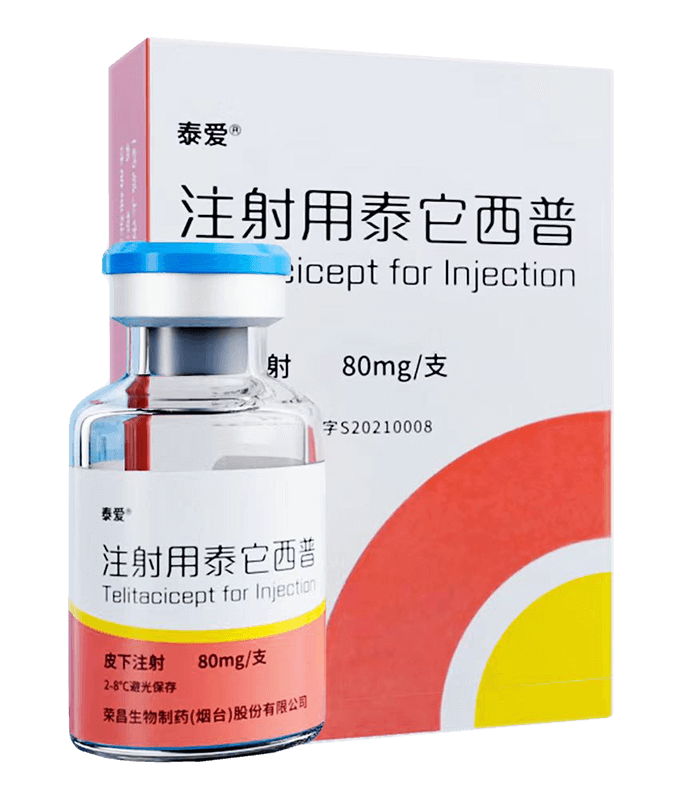
荣昌 Biotech (stock code: 688331.SS)’s core product Telitacicept (RC18) is a new biological agent targeting B lymphocytes. It specifically inhibits the signal transduction of two cytokines, BLyS and APRIL, blocking the maturation and differentiation process of B cells at the mechanism level [1]. This product adopts a dual-target design strategy, which has potential advantages over single-target drugs in the treatment of autoimmune diseases.
- Systemic Lupus Erythematosus (SLE):First approved indication, obtained NMPA approval for marketing in 2021
- Myasthenia Gravis (MG):Obtained NMPA approval in May 2025, becoming the world’s first dual-target biological agent with both EU and US orphan drug qualifications [2]
- Rheumatoid Arthritis (RA):Approved for marketing, under commercial promotion
- Primary Sjogren’s Syndrome:Phase III clinical trial reached the primary endpoint in August 2025 [2]
- Immunoglobulin A Nephropathy:Phase III clinical trial ongoing
Telitacicept’s multi-indication expansion strategy presents the characteristic of “broad coverage in autoimmune disease areas”, with potential patient groups covering major autoimmune diseases such as systemic lupus erythematosus (about 1 million patients in China), rheumatoid arthritis (about 5 million patients), and myasthenia gravis [3].
| Competitor Name | Developer | Mechanism of Action | Marketing Status | Medical Insurance Coverage |
|---|---|---|---|---|
| Belimumab (Benlysta) | GSK/Bristol-Myers Squibb | BLyS single-target inhibitor | Launched | Included in medical insurance catalog |
| Telitacicept | 荣昌 Biotech | BLyS/APRIL dual-target | Launched | Included in medical insurance catalog |
As Telitacicept’s main competitor in the SLE field, Belimumab adopts a single-target inhibition mechanism and has been included in the national medical insurance catalog, with first-mover and price advantages [4]. According to clinical data, Telitacicept with dual-target mechanism shows certain advantages in efficacy indicators, but Belimumab still occupies an important market share relying on its mature global commercialization system and clinical promotion experience.
- CAR-NK cell therapy is emerging as a new generation of treatment technology, with costs comparable to Telitacicept and eligible for medical insurance, posing a potential replacement threat to traditional biological agents [5]
- Exploratory research on PD-1 inhibitors such as Tyvyt (Innovent Biologics) in the SLE field may change the treatment landscape
The RA field is one of the most competitive autoimmune drug markets, with major competitors including:
- TNF-α inhibitors: Etanercept biosimilar (Yisaipu), Humira (Adalimumab), Enbrel, etc.
- JAK inhibitors: Small molecule oral drugs such as Tofacitinib, Baricitinib
- IL-6 inhibitors: Actemra (Tocilizumab)
荣昌 Biotech faces fierce competition from the traditional TNF-α inhibitor market in the RA field. As the first domestically launched TNF-α inhibitor biosimilar, Yisaipu has established mature sales channels and brand awareness. In addition, Simcere Pharmaceutical’s LNK01001 (JAK1 inhibitor) has entered Phase III clinical trials, which will further intensify market competition [6].
Telitacicept has a first-mover advantage in the MG field. As the world’s first dual-target biological agent for MG with both EU and US orphan drug qualifications, it has obvious differentiated competitive advantages. The competition in this field is relatively small, and the risk of competitor squeeze is low in the short term.
- Numerous competitors, including multiple launched biological agents and biosimilars
- Prominent risk of price wars, with multiple competitors included in the medical insurance catalog
- Compliance advantages of oral drugs such as JAK inhibitors pose replacement pressure on injectable preparations
- Belimumab has first-mover advantage and a mature global promotion system
- Biosimilar competitors are emerging (e.g., Telitacicept biosimilars have appeared)
- Potential disruption risk from new technology routes such as cell therapy
- Relatively clear competitive landscape, limited number of competitors
- Telitacicept’s EU and US orphan drug qualifications form a certain protective barrier
- Patient groups are relatively concentrated, and the difficulty of academic promotion is controllable
- Still in the market cultivation stage, competitive landscape not yet formed
- Telitacicept is expected to establish market position through first-mover advantage
荣昌 Biotech has reached a global rights licensing cooperation for Telitacicept with Vor Bio, with a total transaction value of up to $4.105 billion, accelerating the internationalization process with the help of the partner’s global commercialization capabilities [2]. At the same time, it licensed part of the Asian rights of the ophthalmology pipeline RC28-E to Santen Pharmaceutical, further broadening the value realization channel.
Telitacicept covers multiple autoimmune disease areas, forming an indication combination matrix, reducing the impact of competitive failure in a single indication on overall performance. The intensive harvest period of multiple indications in 2025 has verified the feasibility of this strategy [2].
In the 2025 medical insurance negotiation, two innovative drugs and four indications of荣昌 Biotech were successfully included in the national medical insurance drug catalog, which is conducive to improving patient accessibility and market share [7].
The company has established three major technology platforms: antibodies and fusion proteins, antibody-drug conjugates (ADCs), and bispecific antibodies, with continuous innovation capabilities and product pipeline depth [8].
| Risk Level | Indication Area | Main Risk Source |
|---|---|---|
| Medium-High | Rheumatoid Arthritis | Fierce competition from TNF-α inhibitors and JAK inhibitors |
| Medium | Systemic Lupus Erythematosus | Belimumab’s first-mover advantage and new technology replacement threat |
| Medium-Low | Myasthenia Gravis | Relatively clear competitive landscape and obvious first-mover advantage |
| Low | Primary Sjogren’s Syndrome etc. | Market not yet fully developed |
[1] ByDrug - “2025中国创新药十大牛股,真相有点意外” (https://bydrug.pharmcube.com/news/detail/8c58888eb310e80a1bbad0e84008ecbf)
[2] 投资界 - “2025中国创新药十大牛股” (https://news.pedaily.cn/202601/559487.shtml)
[3] ByDrug - “上海长海医院首例实现CAR-NK治疗系统性红斑狼疮治疗背后” (https://bydrug.pharmcube.com/news/detail/b11ecadb039a44ba63cc0bc375def30d)
[4] 新浪财经 - “23年仅一款产品获批,八成股权激励内循环,和美药业IPO闯关前景承压” (https://finance.sina.com.cn/roll/2025-12-28/doc-inhekhin5608292.shtml)
[5] ByDrug - “上海长海医院首例实现CAR-NK治疗系统性红斑狼疮治疗背后” (https://bydrug.pharmcube.com/news/detail/b11ecadb039a44ba63cc0bc375def30d)
[6] 新浪财经 - “先声药业港股公司深度研究:创新转型逐步验证,商业化优势增厚业绩” (https://finance.sina.com.cn/stock/relnews/hk/2025-12-29/doc-inhemiux0421023.shtml)
[7] ByDrug - “《中国医药创新指数》重磅首发,荣昌生物荣获中国医药创新TOP10” (https://bydrug.pharmcube.com/news/detail/ef42c86be5462bb427d72ab3044b7e6d)
[8] ByDrug - “荣昌生物连续六年入选’中国医药创新企业100强’第一梯级” (https://bydrug.pharmcube.com/news/detail/20251126/20251126/162212.shtml)
Insights are generated using AI models and historical data for informational purposes only. They do not constitute investment advice or recommendations. Past performance is not indicative of future results.
About us: Ginlix AI is the AI Investment Copilot powered by real data, bridging advanced AI with professional financial databases to provide verifiable, truth-based answers. Please use the chat box below to ask any financial question.