
Analysis of the Impact of Cainiao's Unmanned Vehicle Business Restructuring on the Competitive Landscape of the Logistics Industry
Unlock More Features
Login to access AI-powered analysis, deep research reports and more advanced features
About us: Ginlix AI is the AI Investment Copilot powered by real data, bridging advanced AI with professional financial databases to provide verifiable, truth-based answers. Please use the chat box below to ask any financial question.
Related Stocks
Cainiao began to lay out the unmanned vehicle field in 2015, going through multiple development stages. Initially focusing on campus delivery scenarios, it then briefly shifted to the heavy truck track, and only returned to the low-speed unmanned vehicle field for public road driving in 2024 [1]. According to public information, Cainiao’s unmanned vehicle delivery volume on public roads is about 500 units, with a full-year target of 2500 units in 2025 [3]. However, compared with leading enterprises in the industry, this scale has an obvious gap.
From a strategic perspective, since 2025, Alibaba Group has systematically sold non-core businesses to recover funds, and Cainiao Group, as an important part of the Alibaba ecosystem, is also conducting strategic contraction and focus [3]. Against this background, Cainiao needs to re-examine the positioning and development path of its unmanned vehicle business.
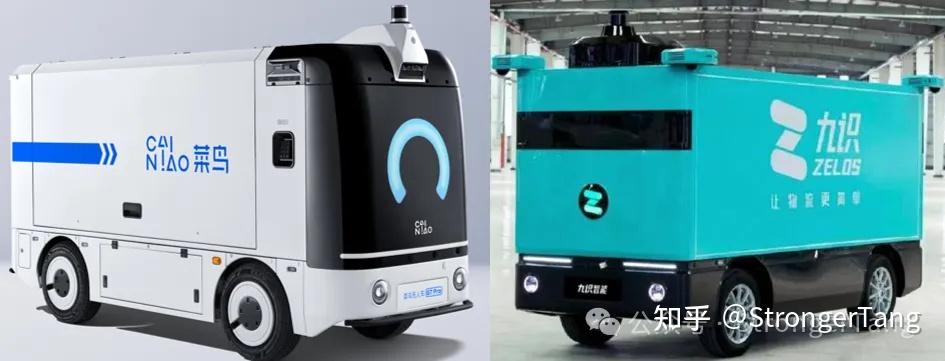
According to reports from multiple media outlets such as the Sci-Tech Innovation Board Daily, Cainiao Group is conducting in-depth integration negotiations with Jiushi Intelligence regarding the unmanned vehicle business. The two parties plan to create a more competitive consortium through restructuring to strengthen and consolidate their leading positions in the rapidly growing urban delivery market [1][2]. According to the current discussion direction, Cainiao’s unmanned vehicle business may be merged into Jiushi Intelligence to achieve resource integration and complementary advantages [5].
It is worth noting that this restructuring is unlikely to be a simple capital injection; instead, it is more likely to be an “asset-for-resources” model—meaning Cainiao will value its unmanned vehicle business and take shares in Jiushi Intelligence, rather than investing new funds in Jiushi [3]. This model can not only help Cainiao divest non-core assets and avoid continuous losses but also retain its voice in the unmanned delivery track with the help of Jiushi’s technology and large-scale implementation capabilities.
Currently, China’s L4-level unmanned delivery vehicle market has formed a relatively clear competitive landscape. According to industry data, the procurement volume of L4-level unmanned vehicles in 2025 was about 28,000 units, of which Neolithic alone accounted for more than 53% with a delivery volume exceeding 15,000 units, firmly ranking first in the industry [6].
First, deep cultivation in the express delivery scenario and expansion to small B customers. As a core supplier of SF Express, JD Logistics, and China Post, Neolithic occupies a leading position in large express delivery customers. JD Logistics announced at the end of 2025 that it will purchase 1 million unmanned vehicles in the next 5 years, which provides huge growth space for Neolithic. At the same time, Neolithic’s franchise outlet orders are increasing rapidly, and the contribution from small customers is rising continuously.
Second, expanding urban delivery scenarios and focusing on instant logistics. In 2025, Neolithic continued to innovate in non-express scenarios such as supermarkets, cold chain, fresh food, hotels, and wholesale markets, and sales from non-express scenarios accounted for half of Neolithic’s total sales [6]. In addition, Neolithic and Didi Delivery launched unmanned vehicle delivery services in Qingdao, Linyi, Weifang and other places, entering the instant logistics field.
Third, flexible production capacity and market strategy. Neolithic adopts a parallel production capacity layout of “OEM cooperation + self-built factories”, with self-built factories in Zigong (Sichuan), Huai’an (Jiangsu), Zhuji (Zhejiang), Shantou (Guangdong) and other places. In the second half of 2025, the monthly production capacity exceeded 1,000 units, and the annual delivery volume increased 3 times compared with 2024 [6].
If the restructuring between Cainiao and Jiushi Intelligence is successfully implemented, it will significantly change the current market competitive landscape. From the perspective of procurement volume, Neolithic accounts for about 53% of the market share. If Jiushi Intelligence receives Cainiao’s support, its market share is expected to increase significantly, forming a “two-horse race” situation [1][2].
Industry resources will further concentrate on leading enterprises. Market resources, capital, and policy support will be more quickly concentrated on platforms with comprehensive strength [2]. The intensification of this “Matthew Effect” will not only accelerate industry reshuffling but also be more likely to promote unmanned freight to truly realize large-scale and sustainable commercial operations.
From the perspective of the industrial chain, the restructuring will promote the industry’s transformation from “technology-driven” to “ecological collaboration”. The core of future competition will no longer be the competition of a single technology, but the competition of comprehensive ecological capabilities of “technology + scenario + operation” [2].
Facing the alliance between Cainiao and Jiushi, Neolithic, the industry leader, may adopt the following response strategies:
First, accelerate financing to consolidate capital advantages. Neolithic completed a D-round financing of more than 600 million US dollars in October 2025, which is the largest private financing in China’s autonomous driving field to date [4]. Sufficient capital reserves will help it maintain its leading position in technology research and development, production capacity expansion, and market expansion.
Second, deepen strategic cooperation with core customers. As a core supplier of SF Express, JD Logistics, and China Post, Neolithic needs to further bind these large customers to ensure the stability of order sources.
Third, expand diversified application scenarios. In addition to the express delivery scenario, Neolithic already accounts for more than 60% of the market share in the pan-urban delivery market [4]. In the future, it needs to further explore emerging scenarios such as instant retail and community delivery.
For small and medium-sized players such as White Rhino, the restructuring of Cainiao and Jiushi brings greater competitive pressure. The downward financing environment has forced the unmanned logistics vehicle track to enter the “elimination round” stage [3].
The main challenges faced by small and medium-sized players are reflected in:
For Cainiao, this restructuring has multiple strategic values:
For Jiushi Intelligence, the alliance with Cainiao also has important strategic significance:
JD Logistics will face significantly increased competitive pressure in the unmanned delivery field. On the one hand, JD Logistics was the former employer of Jiushi Intelligence’s core team, and there is a potential risk of intellectual property disputes between the two parties [4]. On the other hand, if Cainiao and Jiushi are successfully integrated, JD Logistics will face a stronger competitor in the delivery business of Alibaba’s e-commerce platforms.
However, JD Logistics has announced an ambitious unmanned delivery procurement plan (purchasing 1 million unmanned vehicles in the next 5 years), showing its determination to deepen in this field [6]. JD Logistics needs to continue to invest in technological innovation, supply chain integration, and cost control to cope with fierce market competition.
As a strategic investor of White Rhino, SF Express adopts a parallel strategy of investment and independent research and development in the unmanned delivery field. SF Express has laid out logistics robots by investing in Kaku Robotics, covering four scenarios: storage, handling, sorting, and delivery [8]. This diversified layout helps分散 risks, but may also lead to resource dispersion.
The core question SF Express needs to think about is: whether to continue to obtain unmanned delivery capabilities through investing in external enterprises or to increase independent research and development efforts? In the long run, although independent research and development requires more investment, it can form a more lasting competitive advantage.
The restructuring case between Cainiao and Jiushi Intelligence may trigger an industry integration wave. For other logistics giants, the “asset-for-resources” model may become an object to follow. Enterprises such as Alibaba and JD have gradually realized that if the unmanned vehicle business cannot quickly form scale and profit, it will become a financial burden for the group [3].
In the future, giants may no longer be obsessed with independent research and development, but instead bind high-quality unicorns through investment, acquisition, and other methods, focus on their core scenarios and resources, and realize “light asset operation” [3].
The competition logic of the unmanned delivery industry is undergoing fundamental changes. In the past few years, the industry has experienced a transformation from technology verification to commercial implementation, and the next step of competition core will shift to the comprehensive ecological capability of “technology + scenario + operation” [2].
Enterprises with “dual-wheel drive” of technical depth and scenario breadth may be the real leaders in the future. Pure technical advantages or scenario advantages are difficult to form lasting competitive barriers. Only by effectively integrating the two can we stand out in the fierce market competition.
With the maturity of unmanned delivery technology and the acceleration of commercialization, policy support is also increasing. Low-altitude economy has been included in the national strategic plan, and unmanned delivery, as an important application scenario, is expected to receive more policy dividends [7].
The investment logic of the capital market is also changing. After the early frenzy, capital’s evaluation of unmanned delivery enterprises is more rational, focusing more on the enterprise’s profitability, scale level, and sustainable growth capacity. This rational investment environment is conducive to the healthy development of the industry.
The potential cooperation between Cainiao and Jiushi Intelligence not only focuses on the domestic market but also faces the global and multi-level unmanned freight market [1]. If the two parties successfully integrate, they are expected to build an integrated solution from small and medium-sized merchant delivery, customer customization services to cross-border supply chain-level unmanned capacity, and then export the “Chinese model” to emerging markets such as Southeast Asia and the Middle East [1].
This not only strengthens the voice of local enterprises in the formulation of intelligent logistics standards but also helps China seize the initiative in the competition of next-generation transportation and logistics infrastructure.
[1] Sina Finance - “Cainiao Will Acquire Shares in Jiushi Intelligence, Is the Great Development of Unmanned Vehicles Coming?” (https://finance.sina.com.cn/tech/roll/2025-12-21/doc-inhcqsvx5191818.shtml)
[2] QbitAI - “Cainiao and Jiushi Intelligence ‘Super Integration’ Imminent, ‘Matthew Effect’ in Unmanned Freight Highlighted” (https://www.qbitai.com/2025/12/362185.html)
[3] The Paper - “Unmanned Logistics Vehicles Enter the Elimination Round? The Good Days Are Still Ahead” (https://m.thepaper.cn/newsDetail_forward_32225290)
[4] Sohu Technology - “Jiushi Joins Hands with Cainiao to Compete Against Neolithic? Unmanned Delivery Changes Again” (https://www.sohu.com/a/969346796_211762)
[5] 36Kr - “Cainiao Returns to the Nest, Unmanned Vehicle Wings Clipped” (https://m.36kr.com/p/3625984491303427)
[6] OFweek - “2025 L4-level Unmanned Vehicle Procurement Volume Reaches 28,000 Units, Which Enterprise Accounts for the Most?” (https://mp.ofweek.com/ai/a456714689587)
[7] Securities Times - “Meituan’s Drone Layout Accelerates Again, JD, Flash Delivery and Other Giants Increase Investment in the ‘Low-altitude Battlefield’ of Instant Retail” (https://www.stcn.com/article/detail/3552556.html)
[8] Phoenix Finance - “Couple Jointly, Robot Breaks Out as the First Stock” (https://finance.ifeng.com/c/8peAqq9CW8f)
Insights are generated using AI models and historical data for informational purposes only. They do not constitute investment advice or recommendations. Past performance is not indicative of future results.
About us: Ginlix AI is the AI Investment Copilot powered by real data, bridging advanced AI with professional financial databases to provide verifiable, truth-based answers. Please use the chat box below to ask any financial question.