
Analysis of Market Acceptance and Competitive Landscape of Insta360's Drone Business
Unlock More Features
Login to access AI-powered analysis, deep research reports and more advanced features
About us: Ginlix AI is the AI Investment Copilot powered by real data, bridging advanced AI with professional financial databases to provide verifiable, truth-based answers. Please use the chat box below to ask any financial question.
Related Stocks
According to the searched information, the market acceptance and capacity utilization of Insta360’s drone business are as follows:
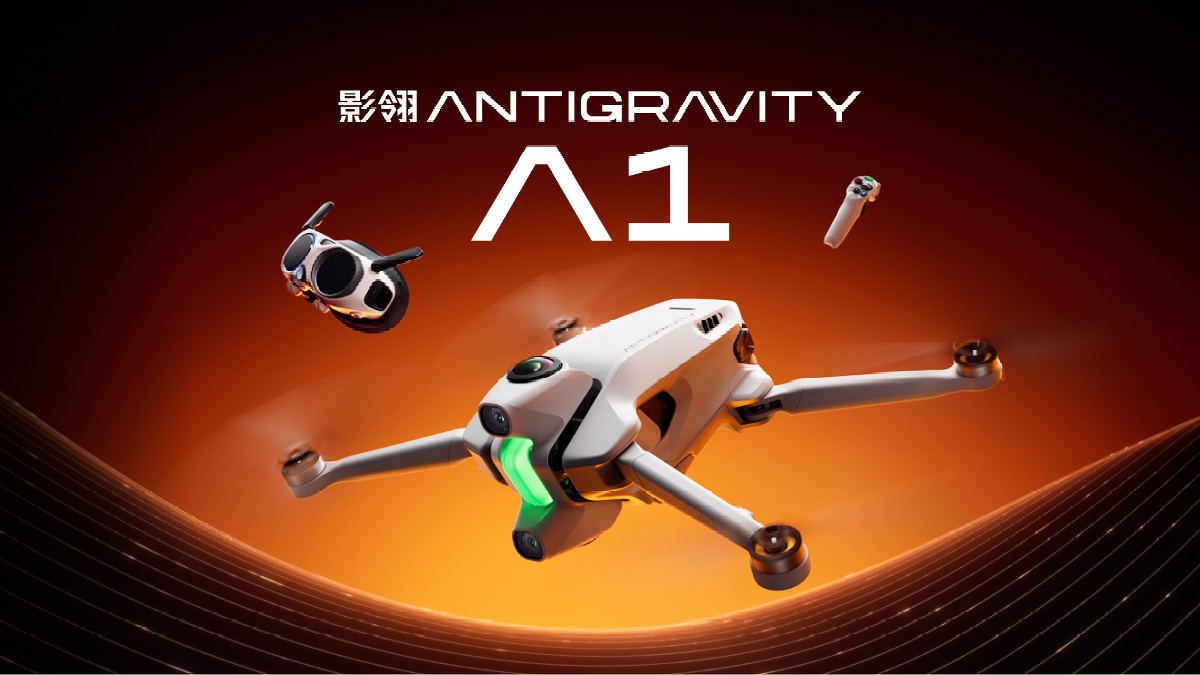
Insta360 officially launched its first panoramic drone, Yingling A1, on December 4, 2025, with a starting price of 6,799 yuan (after national subsidy) [1][2]. There are obvious disputes over sales performance based on data from different sources:
- Official Data: Founder Liu Jingkang stated that Yingling A1’s sales in China exceeded 30 million yuan within 48 hours, which translates to approximately 4,400 units based on the starting price of 6,799 yuan [2].
- Third-Party Platform Data:
Yingling A1 ranks 27th in JD.com’s Top 30 Drone Bestseller List, with the top six positions all occupied by DJI products; it does not appear in Tmall’s Top 20 Drone Bestseller List [1][2]. For comparison, Insta360’s handheld imaging business line had an average daily sales of over 24 million yuan in the first three quarters, so the performance of this new product is relatively mediocre.
Yingling A1 faces multiple user experience challenges [1][2]:
- Image Quality Controversy: Users feedback that “the actual output clarity of the 8K image quality is only at the 1080P level”.
- Image Transmission Problems: Complaints about signal occlusion leading to image transmission interruption.
- Battery Life Shortcoming: Battery life of about 24 minutes, which is inconsistent with its high-end positioning.
- Obstacle Avoidance Algorithm: Users吐槽 that “it frequently alarms even when there is nothing around”.
Yingling customer service explained that the pixels of the panoramic camera are distributed on a virtual sphere, so it is normal that the resolution of the local image is lower than the total resolution of the panoramic image [1].
Insta360 faces significant supply chain pressure in the advancement of its drone business [2][3]:
- Half a year before the drone’s launch, several core suppliers suddenly faced “exclusivity” pressure.
- 7 optical lens module suppliers, 8 structural component suppliers, 3 screen suppliers, 2 battery suppliers, 8 chip and electronic component suppliers, and 5 other suppliers were subject to exclusivity restrictions.
- Insta360 previously adopted a light-asset supply chain model, leveraging industrial cluster advantages to match all supply chain resources within two hours.
Insta360 has laid out two drone brands, including its own drone brand and a new drone brand co-incubated with a third party [2]. The company adopts a light-asset operation model overall, and there is a lack of specific public data disclosure on capacity utilization.
Insta360 continues to maintain a leading position in the panoramic camera sector, with a global market share of 75% in Q3 2025 and over 60% in the domestic market [2]. However, DJI is rapidly rising through aggressive pricing strategies:
- Entered the panoramic camera track in July, capturing approximately 17.1% of the global share and 37.1% of the domestic market in Q3.
- In the action camera track, DJI’s global share increased to 34.6% in Q3, closely following Insta360’s 38.6%.- In October, DJI launched its most aggressive price cut ever, reducing the prices of popular models by about 30% collectively.
The starting price of 6,799 yuan for Yingling A1 has sparked market controversy. Liu Jingkang explained that the cost of VR glasses exceeds that of the drone itself (equipped with two 1-inch MicroOLED screens and high-end chips), making it difficult to reduce prices in the short term [2]. Compared with DJI’s entry-level products, the cost-effectiveness of Yingling A1 has been questioned.
The market acceptance of Insta360’s drone business is generally mediocre. Although the official launch data is relatively eye-catching, third-party platform data shows that the actual sales volume is lower than market expectations. User feedback on core performance issues such as image quality and image transmission stability indicates that the product still needs optimization. In terms of capacity utilization, the company faces challenges from supply chain “exclusivity” pressure, which may affect subsequent capacity expansion plans. Facing full-dimensional competition from DJI, Insta360 needs to find a better balance between product innovation and cost control.
[1] Sina Finance - “First drone sales slow? Insta360’s Liu Jingkang is anxious, tough, and confused” (https://finance.sina.com.cn/tob/2026-01-05/doc-inhfffrx8186858.shtml)
[2] The Paper - “Price wars, supply chain blacklisting, channel blocking: Full-dimensional showdown between Insta360 and DJI” (https://m.thepaper.cn/newsDetail_forward_32294040)
[3] Guancha.cn - “2500 crazy smears: Who wants to strangle the Yingling drone in its cradle?” (https://user.guancha.cn/main/content?id=1571614)
Insights are generated using AI models and historical data for informational purposes only. They do not constitute investment advice or recommendations. Past performance is not indicative of future results.
About us: Ginlix AI is the AI Investment Copilot powered by real data, bridging advanced AI with professional financial databases to provide verifiable, truth-based answers. Please use the chat box below to ask any financial question.