
Impact of CSRC's Promotion of Comprehensive Prevention and Punishment System for Financial Fraud on A-share Listed Companies and Investor Protection
Unlock More Features
Login to access AI-powered analysis, deep research reports and more advanced features
About us: Ginlix AI is the AI Investment Copilot powered by real data, bridging advanced AI with professional financial databases to provide verifiable, truth-based answers. Please use the chat box below to ask any financial question.
Related Stocks
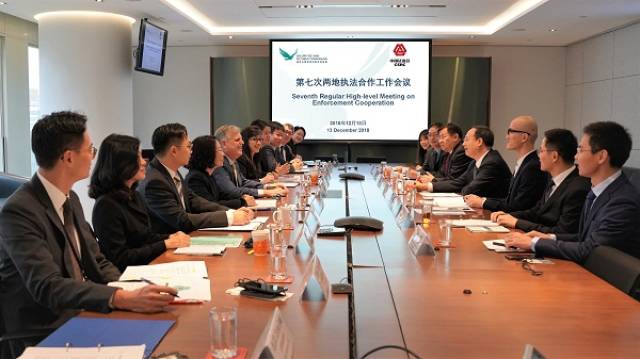
China Securities Regulatory Commission (CSRC) recently convened an inter-departmental work promotion symposium, bringing together multiple departments including the Supreme People’s Court, Supreme People’s Procuratorate, National Development and Reform Commission, Ministry of Public Security, Ministry of Justice, Ministry of Finance, People’s Bank of China, State-owned Assets Supervision and Administration Commission of the State Council, State Taxation Administration, State Administration for Market Regulation, and State Financial Regulatory Administration, to jointly study the construction of a comprehensive prevention and punishment system for financial fraud in the capital market [1]. The establishment of this multi-department collaboration mechanism reflects the regulatory authorities’ high attention and collaborative determination to comprehensively govern financial fraud, and is the concrete implementation and upgrade of the “Two Strengthens and Two Stricts” (Strengthen Supervision, Strengthen Risk Control, Strict Law Enforcement, Strict Accountability) regulatory philosophy [1].
According to public information, in 2024, CSRC handled 249 cases of information disclosure violations, 95 cases of intermediaries failing to fulfill their due diligence obligations, 178 cases of insider trading, and 71 cases of market manipulation [2]. This indicates that financial fraud remains a persistent problem in the capital market, requiring a more systematic and full-chain prevention and punishment system.
The core of the comprehensive prevention and punishment system for financial fraud lies in the combination of “prevention” and “punishment”. In terms of prevention:
-
Cross-departmental Data Sharing Mechanism: Break down data barriers between tax, customs, banking, market supervision, and other departments to enable cross-verification of financial information. For example,对接税务部门数据 can real-time verify the matching degree between a company’s revenue and tax payment data; comparing with customs data can detect fictitious transactions of import-export trade enterprises [1].
-
Technology-enabled Supervision: Establish intelligent monitoring systems using big data and artificial intelligence to conduct real-time monitoring and abnormal identification of listed companies’ financial data. AI models can analyze abnormal fluctuations in financial indicators, suspicious patterns of related-party transactions, etc., to预警潜在造假 risks in advance [3].
-
Corporate Governance Enhancement: Strengthen the accountability mechanism for “key minorities”, especially controlling shareholders, actual controllers, directors, supervisors, and senior managers. According to 2024 regulatory data, CSRC has continuously intensified the punishment of responsible persons [2].
In terms of punishment, the comprehensive prevention and punishment system will achieve:
-
Strengthened Criminal Accountability: Collaboration between judicial authorities and regulatory departments will become closer, forming a “criminal and administrative law connection” mechanism. According to the “Guiding Opinions on Strictly Cracking Down on Securities Crimes in accordance with the Law to Provide Judicial Guarantee for High-quality Development of the Capital Market” jointly issued by the Supreme People’s Court and CSRC in May 2025, courts are encouraged to fully communicate with securities and futures regulatory institutions and their local offices, and review and copy case files and evidence materials of the same illegal act in criminal and administrative penalty cases in accordance with the law to improve trial and law enforcement efficiency [3].
-
Improved Civil Compensation Mechanism: The special representative litigation mechanism has gradually been applied normally. Up to now, special representative litigation has been successfully used in four landmark cases including Kangmei Pharmaceutical, Kangde Xin, Jintongling, and Meishang Ecology [3]. In May 2025, the Supreme People’s Court and CSRC jointly issued the Guiding Opinions, which clearly require “establishing a normalized mechanism for special representative litigation to ensure that representative litigation of securities disputes is conducted in accordance with the law, prudently and efficiently” [3], providing institutional support for investor relief in securities misrepresentation cases. However, its rules and scope of application are different from those of U.S.-style class action settlements, and do not represent the full promotion of class action/settlement.
-
Market Constraint Mechanism: Cooperate with the normalized delisting new rules to implement rapid delisting for companies with major financial fraud. Data shows that the number of A-share companies delisted due to financial fraud has continued to rise in recent years, reaching a peak in 2022 [4].
According to brokerage API data [0], the A-share market showed a volatile pattern during the period 2024-2025. The Shanghai Composite Index, Shenzhen Component Index, and other major indices showed obvious differentiation, and the ChiNext Index had high volatility (20-day rolling annualized volatility often exceeded 25%) [0]. This differentiation reflects the market’s differential pricing of listed companies of different quality.
-
Premium for High-quality Companies: Companies with transparent finances and excellent governance will obtain higher valuation premiums. With the improvement of the comprehensive prevention and punishment system for financial fraud, market information asymmetry will be significantly reduced, and investors will be willing to pay premiums for high-quality companies [5].
-
Clearance of Low-quality Companies: The optimization of the continuous delisting mechanism will accelerate the clearance of low-quality companies, realizing “survival of the fittest”. According to incomplete statistics, the number of A-share companies delisted due to financial fraud has increased significantly since 2022, and the market clearance speed has accelerated [4].
-
Optimized Capital Allocation: Long-term funds (insurance funds, social security funds, public funds, etc.) tend to allocate to companies with excellent financial quality, which will guide social resources to concentrate on high-quality enterprises [5].
Through cross-departmental collaboration and technology-enabled supervision, the “information asymmetry” faced by investors will be significantly improved:
-
Data Verification Mechanism: Authoritative data from tax, customs, banking, and other departments will become important references for investors to judge the authenticity of company financials, reducing the risk of being misled by false financial reports [1].
-
Early Warning System: Intelligent monitoring systems can identify potential risk companies in advance and provide risk warnings for investors. For example, when a company’s financial indicators show abnormal fluctuations or excessive deviation from the industry average, the regulatory system can prompt in time [3].
When financial fraud occurs, the investor loss compensation mechanism will be more完善:
-
Normalization of Special Representative Litigation: Starting from the Kangmei Pharmaceutical case, special representative litigation has become an important tool for investor rights protection. In May 2025, the Guiding Opinions jointly issued by the Supreme People’s Court and CSRC clearly require “establishing a normalized mechanism for special representative litigation to ensure that representative litigation of securities disputes is conducted in accordance with the law, prudently and efficiently” [3], providing institutional support for investor relief in securities misrepresentation cases. However, its rules and scope of application are different from U.S.-style class action settlements, and do not represent the full promotion of class action/settlement.
-
Standardization of Loss Determination: In securities misrepresentation cases, most courts usually entrust professional institutions to quantify systematic and non-systematic risks. Common institutions include the Shanghai Advanced Institute of Finance, China Securities Capital Market Legal Service Center, and China Securities Investor Protection Fund Corporation [3]. This will improve the scientificity and fairness of investor loss determination and increase the success rate of claims [3].
-
Advance Compensation Mechanism: Encourage responsible entities to actively set up compensation funds to provide advance compensation for damaged investors, improving compensation efficiency. In cases such as Kangmei Pharmaceutical, relevant responsible parties have provided advance compensation for investor losses by setting up special compensation funds [5].
-
Investor Education: Regulatory authorities and exchanges continue to strengthen investor education, and through activities such as the “5·15 National Investor Protection Publicity Day”, improve investors’ ability to identify financial fraud. The theme of the 2025 Investor Protection Day activity focused on “Preventing Financial Fraud, Protecting Investor Rights” [5].
-
Risk Prompt Mechanism: For companies with financial abnormalities, exchanges will issue risk prompt announcements in a timely manner to remind investors of risks [2].
According to the latest market data provided by Jinling API [0]:
-
Market Volatility: Major A-share indices showed a volatile trend during the period 2024-2025. The Shanghai Composite Index (000001.SH) fell by 5.12% in the past 88 trading days, with a volatility of 0.80% [0]. This volatility reflects the market’s dual digestion of economic fundamentals and policy environment.
-
Market Structure Differentiation: Different sectors showed significant performance differences. Low-valued sectors such as finance and infrastructure were relatively stable, while some growth sectors fluctuated greatly [0]. This differentiation is closely related to the quality differences of listed companies.
-
International Comparison: Compared with the U.S. S&P 500 Index, the A-share market has relatively higher volatility, which is related to factors such as investor structure and institutional environment [0]. With the improvement of the comprehensive prevention and punishment system for financial fraud, the stability and maturity of the A-share market are expected to gradually improve.
Although significant progress has been made in the construction of the comprehensive prevention and punishment system for financial fraud, there are still some challenges:
-
Cross-departmental Collaboration Efficiency: Multi-department collaboration needs to establish an efficient communication mechanism and clear division of responsibilities to avoid “buck-passing” phenomena [1].
-
Judicial Resource Pressure: With the increase in securities civil litigation cases, courts are facing pressure from more cases and fewer personnel, and need to optimize the allocation of judicial resources [3].
-
Investor Rights Protection Costs: Although special representative litigation reduces the cost of rights protection, small and medium investors still face difficulties in evidence collection and legal procedures [3].
-
Improve the Overall Quality of Listed Companies: Through the combination of prevention and punishment, force listed companies to improve financial transparency and governance levels.
-
Enhance Investor Confidence: Effective investor protection mechanisms will attract more long-term funds to enter the market and improve the investor structure.
-
Optimize Resource Allocation Efficiency: The market will more effectively identify and reward high-quality companies, realizing the optimal allocation of resources.
-
Promote the Healthy Development of the Capital Market: The comprehensive prevention and punishment system for financial fraud is an important part of the construction of the capital market’s basic system, and will provide a solid guarantee for the high-quality development of the capital market [5].
The CSRC’s promotion of the construction of a comprehensive prevention and punishment system for financial fraud is an important measure to improve the capital market’s basic system and protect the legitimate rights and interests of investors. Through multi-dimensional measures such as cross-departmental collaboration, technology empowerment, and improvement of the civil compensation mechanism, it will significantly improve the quality of A-share listed companies, enhance investor protection, and promote the healthy and stable development of the capital market. The continuous improvement of this system will lay a solid foundation for building a standardized, transparent, open, dynamic, and resilient capital market.
[1] CSRC Cross-departmental Work Promotion Symposium Report - Multiple Departments Participate in the Discussion on the Construction of a Comprehensive Prevention and Punishment System for Financial Fraud (https://www.csrc.gov.cn/)
[2] 2024 CSRC Case Handling Statistical Data - 249 Cases of Information Disclosure Violations, 95 Cases of Intermediaries Failing to Fulfill Due Diligence Obligations, etc. (https://www.csrc.gov.cn/csrc/c100028/c7557781/7557781/images/图表2-20250515095324747.png)
[3] Law.asia - “New Rules for Securities Misrepresentation Cases” Reports the Guiding Opinions Jointly Issued by the Supreme People’s Court and CSRC in May 2025 (https://law.asia/new-rules-securities-misrepresentation-china-guidelines/)
[4] Bloomberg - Statistics on the Number of A-share Companies Delisted Due to Financial Fraud (2018-2024 Trend Chart) (https://www.bloomberg.com/graphics/2025-china-market-deadpool/)
[5] 2025 “5·15 National Investor Protection Publicity Day” Activity Report - Emphasizing the Prevention of Financial Fraud and Protection of Investor Rights (https://www.csrc.gov.cn/csrc/c100028/c7557781/7557781/images/图1-20250515095324747.png)
[6] Yahoo Finance - “CSRC Chairman Wu Qing: Continuously Improve the Institutional Inclusiveness and Attractiveness of the Capital Market” (https://hk.finance.yahoo.com/news/中證監主席吳清-持續提高資本市場制度包容性和吸引力-230619427.html)
[0] Jinling API Data - A-share Indices, U.S. Stock Sectors and Global Indices (2025-08-
Insights are generated using AI models and historical data for informational purposes only. They do not constitute investment advice or recommendations. Past performance is not indicative of future results.
About us: Ginlix AI is the AI Investment Copilot powered by real data, bridging advanced AI with professional financial databases to provide verifiable, truth-based answers. Please use the chat box below to ask any financial question.