
2026 Fed Policy and Chair Uncertainty: Active Management as a Navigation Tool
Unlock More Features
Login to access AI-powered analysis, deep research reports and more advanced features
About us: Ginlix AI is the AI Investment Copilot powered by real data, bridging advanced AI with professional financial databases to provide verifiable, truth-based answers. Please use the chat box below to ask any financial question.
Related Stocks
This analysis is based on the ETF Trends article “Fed Rate Cut & Chair Uncertainty Loom in 2026: How Active Can Help” [6] published on January 5, 2026. The article identifies two interconnected sources of market uncertainty in 2026:
- Fed Interest Rate Policy: Market expectations for rate cuts vary widely. LSEG estimates traders anticipate two 25-basis-point cuts [1], the Fed’s December 2025 dot-plot suggests only one cut [3], and analyst Louis Navellier predicts four cuts due to deflation concerns [3][4].
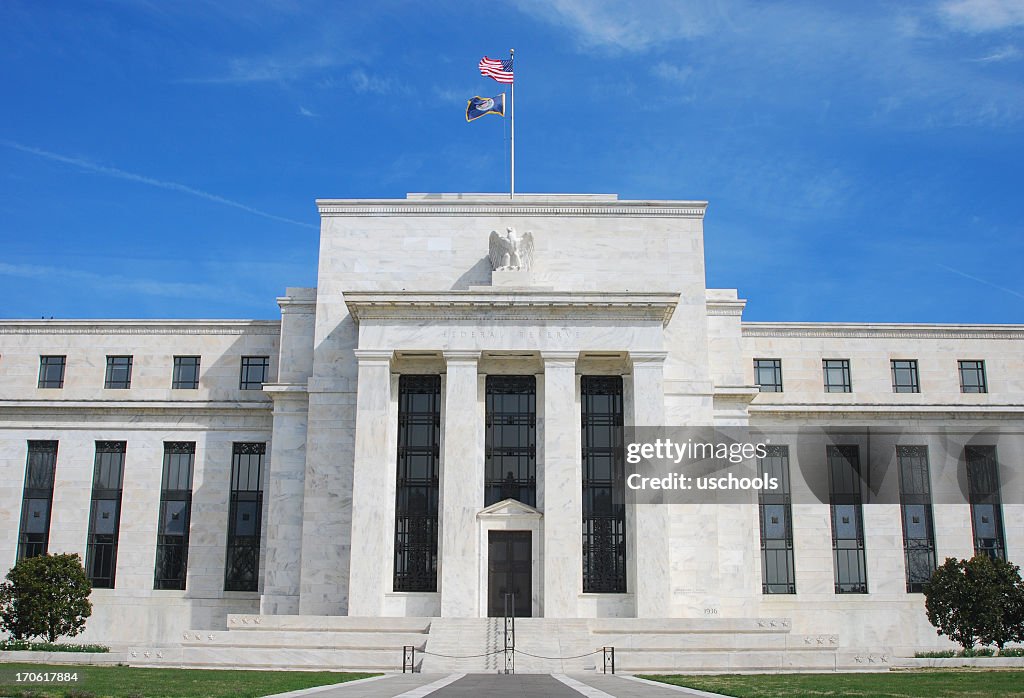
- Fed Chair Leadership: Current Chair Jerome Powell’s term ends in May 2026, and President Trump has stated he will name a successor this month who “believes in lower interest rates, by a lot” [2].
Short-term market impacts include slightly lower U.S. Treasury yields on January 5, 2026 (10-year: 4.176%, 2-year: 3.463%) [5], reflecting ongoing rate cut expectations. Major U.S. indices showed mixed performance in the days prior: S&P 500 (SPY) down 0.37% on January 2, 2026, NASDAQ Composite down 1.05%, and Dow Jones Industrial Average up 0.57% [0]. Strategists at BlackRock Investment Institute support the article’s thesis, noting “this environment is ripe for active investing” [1], as active management’s flexibility may outperform passive vehicles amid uncertainty.
- Dual Policy Uncertainty Amplifies Volatility Risks: The combination of rate cut uncertainty and potential leadership change creates a more complex market environment than single-factor policy shifts, increasing the likelihood of heightened volatility in 2026 [1][2].
- Active Management’s Appeal Tied to Flexibility: Unlike passive ETFs that track indices, active management can quickly adjust exposures to rate-sensitive sectors or reallocate based on real-time policy signals, addressing the gaps between diverse rate cut expectations [1][6].
- Economic Narrative Divides Persist: Conflicting views on inflation/deflation (Navellier’s deflation concerns vs. unstated inflation worries from other analysts) underpin the split in rate cut forecasts, highlighting deeper economic uncertainty beyond Fed policy [3].
- Policy Misalignment Risk: If the new Fed Chair’s policy stance differs significantly from market expectations, it could trigger unexpected market volatility [2].
- Inflation/Deflation Uncertainty: The lack of consensus on core economic trends complicates Fed policy decisions and investor positioning [3].
- Geopolitical Overhang: Recent events like the U.S. capture of Venezuela’s Nicolas Maduro could overshadow Fed-related uncertainty and independently impact markets [5].
- Active Management Growth: The uncertain environment may drive increased demand for active ETFs, as investors seek flexible strategies to navigate volatility [1][6].
- Value Investing Potential: As the AI rally matures, investors may shift toward value stocks, a trend favorable for active managers with stock-picking expertise [1].
Critical points from the analysis include:
- Fed Chair Powell’s term ends in May 2026, with a successor nomination expected soon [2].
- Rate cut expectations range from 1 (Fed dot-plot) to 4 (analyst forecast) [1][3][4].
- January 5, 2026 Treasury yields: 10-year = 4.176%, 2-year = 3.463% [5].
- Active management is positioned as a tool to navigate dual uncertainties, per BlackRock and the article [1][6].
- Key metrics to monitor: Fed Chair nomination details, monthly inflation/employment reports, and active vs. passive ETF performance in rate-sensitive sectors.
All conclusions are based on cited sources and do not constitute investment advice.
Insights are generated using AI models and historical data for informational purposes only. They do not constitute investment advice or recommendations. Past performance is not indicative of future results.
About us: Ginlix AI is the AI Investment Copilot powered by real data, bridging advanced AI with professional financial databases to provide verifiable, truth-based answers. Please use the chat box below to ask any financial question.