
LONGi Green Energy Base Metallization Technology Cost Reduction and Profitability Improvement Assessment (After Q2 2026 Mass Production)
Unlock More Features
Login to access AI-powered analysis, deep research reports and more advanced features
About us: Ginlix AI is the AI Investment Copilot powered by real data, bridging advanced AI with professional financial databases to provide verifiable, truth-based answers. Please use the chat box below to ask any financial question.
- Silver paste has become the largest single cost item for PV modules: Data as of December 2025 shows that silver paste accounts for approximately 17% of module costs, exceeding silicon material (14%) and glass (13%) (Source: Industry data and media estimates) [5].
- Raw material prices have risen significantly: Silver prices increased by approximately 141.2% in 2025, and silicon material prices rose from about 41,500 CNY/ton to 53,900 CNY/ton (Source: Industry chain and media price statistics) [5].
- Capacity planning and rhythm: According to the company’s public communications, BC Gen 2 capacity is expected to reach approximately 35 GW in 2025, increasing to about 50 GW by the end of the year; BC cell capacity is expected to reach approximately 100 GW in 2026, with BC module shipments accounting for more than 25% (company target) [1][2].
- Cost path and cost reduction caliber (BC Gen 2 vs. industry silver-reduced/silver-free paths):
- Company caliber: BC Gen 2 has lower difficulty and more abundant solutions for base metal substitution compared to TOPCon, with an expected “remaining cost reduction space of 0.02 CNY/W” (company management statement) [2].
- Industry caliber: Estimates from Guojin Securities and others show that industry silver-reduced/silver-free paths (e.g., stencil printing, silver-copper paste) can reduce TOPCon metallization costs by approximately 0.02 CNY/W; this estimate is based on silver paste prices of about 11,695 CNY/kg and related process assumptions [3].
- Key note: The above “0.02 CNY/W” has two different application contexts and calculation calibers—one is the company’s statement regarding BC Gen 2’s base metal introduction convenience and potential cost reduction space relative to TOPCon; the other is the industry’s process cost reduction estimate for TOPCon and other routes. The two cannot be directly equated and need to be judged based on specific technical routes and mass production rhythms.
- Technology maturity and mass production plan: The HPBC 2.0 mass production line has been fully connected, with cell yield of approximately 97% and maximum module mass production efficiency of about 24.8% (company caliber) [2]. The company expects to start mass production of base metallized products in Q2 2026 (user premise), and related capacity construction has begun.
- Cost reduction target: Reference the company’s public statement that “BC Gen 2 has a cost reduction space of approximately 0.02 CNY/W compared to TOPCon via base metal substitution” (company caliber) [2]; at the same time, industry silver-reduced/silver-free paths have also been estimated to reduce metallization costs by approximately 0.02 CNY/W for processes like TOPCon (industry estimates, need to correspond to specific processes and assumptions) [3]. The company’s actual implementation level needs to be verified by mass production.
- Relative cost improvement (calculated based on 0.02 CNY/W): If referencing a module cost of approximately 0.692 CNY/W (December 2024 calculation standard) [5], a cost reduction of about 0.02 CNY/W corresponds to a cost improvement rate of approximately 2.89% (=0.02/0.692). Note that this cost benchmark is a December 2024 estimate and should not be directly extrapolated to the end of 2025 or 2026.
- Magnitude impact (anchored on BC Gen 2 capacity): If BC Gen 2 shipment share reaches the company’s target in 2026 (e.g., ≥25%, corresponding to approximately 20–22.5 GW based on the 2025 module shipment target of 80–90 GW), the corresponding annual cost savings will be approximately 40–45 million CNY (0.02 CNY/W ×20–22.5 GW). Actual implementation depends on shipment structure, yield, and process introduction progress.
- Current profitability status (TTM): According to the company overview data (based on Trailing Twelve Months), LONGi Green Energy’s net profit margin is -7.36% and operating profit margin is -8.77%, which is in a loss state [0].
- Direct contribution of cost improvement to the income statement: Taking an annualized revenue of approximately 181 billion CNY as an example [0], if cost optimization contributes 0.83 percentage points (the relative magnitude of 0.02 CNY/W under partial shipment structure, not an accurate prediction), the theoretical improvement in net profit margin is around +0.8 percentage points, which is still insufficient to cover the current loss rate (-7.36%) [0]. Therefore, cost reduction at the level of “0.02 CNY/W” alone is difficult to achieve break-even.
- Profit recovery requires comprehensive factors:
- Price improvement: Both industry and company levels indicate that module prices need to return to a more reasonable range (e.g., some estimates and industry communications mention that approximately 0.80–0.99 CNY/W is needed to achieve profitability; this range needs to be interpreted based on different enterprise cost structures and technical routes, not a unified standard) [6][7].
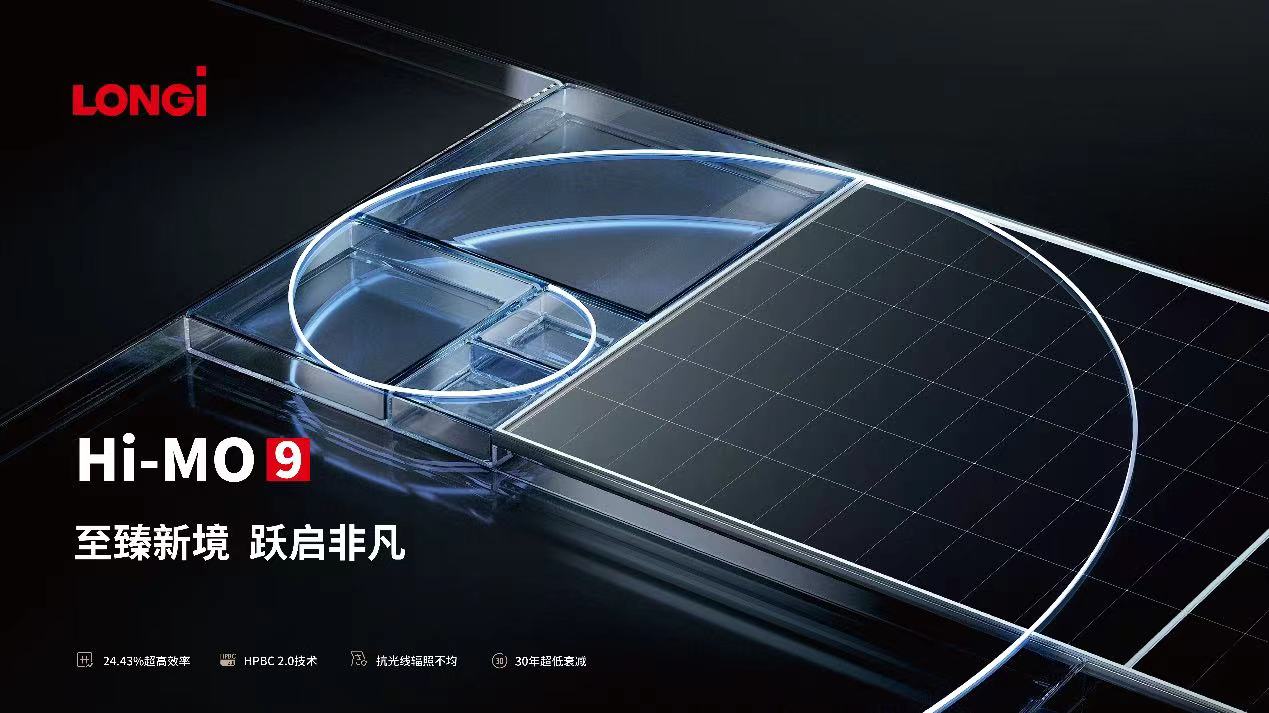
- Product structure and premium: High-efficiency products such as Hi-MO 9 modules equipped with BC technology have approximately 6%–8% higher power generation than traditional TOPCon, and enjoy premium advantages in some markets, which helps improve portfolio gross margin [2].
- Industry “anti-involution” and supply self-discipline: Measures such as silicon material storage and capacity control, and capacity clearance of modules based on efficiency standards help rebalance supply and demand and repair prices [6][7].
- Capacity utilization and yield ramp-up: Changes in yield and operating rate during the new process introduction period will directly affect unit costs.
- Scenario A (Conservative): If base metallization cost reduction is gradually reflected in BC Gen 2 shipments in H2 2026, combined with a moderate recovery of module prices to around 0.80 CNY/W and the promotion of industry self-discipline, the company is expected to significantly narrow losses; break-even may be delayed until 2027.
- Scenario B (Neutral): Module prices return to the range of approximately 0.88–0.95 CNY/W, BC Gen 2 shipment share reaches the target, yield stabilizes at a high level (≥97%), and with other cost reduction and efficiency improvement measures, the company is expected to achieve significant loss reduction or near break-even in 2026.
- Scenario C (Optimistic): Module prices return to around 0.95–1.00 CNY/W, BC Gen 2 shipments and premiums are realized, cost-side optimization (including silver-reduced/silver-free and other process cost reductions) exceeds expectations, then there is a possibility of turning around losses in 2026.
The above scenario framework is only used to understand the impact factors and path directions, and is not a deterministic prediction. The company’s official guidance also closely links the turnaround target to the industry situation (e.g., company management has stated that it hopes to achieve break-even or turnaround in a certain quarter of 2026, which is uncertain) [2].
- Key risks:
- Price upward risk: If raw material prices such as silver and silicon material continue to rise, it may weaken the cost reduction effect at the level of “0.02 CNY/W”.
- Technology ramp-up risk: Yield fluctuations and capacity ramp-up rhythm during the new process introduction period may affect the cost curve.
- Industry competition and technology diffusion: Other manufacturers promote silver-reduced/silver-free and high-efficiency routes (such as TOPCon, HJT, etc.).
- Demand and policy: Uncertainty in global installation growth rate and trade policies.
- Recommended observation indicators (2026):
- BC Gen 2 shipment share, average module unit price and product structure;
- Company-announced changes in module unit cost and yield/capacity utilization;
- Silver/silicon price trends and module bidding transaction prices;
- Industry “anti-involution” policy implementation and backward capacity clearance progress.
- Cost reduction magnitude: Company caliber shows that BC Gen 2 is more convenient for base metal substitution compared to TOPCon, with an expected “remaining cost reduction space of 0.02 CNY/W” [2]. Industry silver-reduced/silver-free paths also have estimated metallization cost reductions of approximately 0.02 CNY/W for processes like TOPCon [3]. The two have different calibers and applicable scenarios and should not be equated. The actual cost reduction magnitude is subject to mass production verification.
- Impact on profitability: Based on current TTM financial data (net profit margin -7.36%) [0], cost reduction at the level of “0.02 CNY/W” alone is difficult to cover losses, and profit recovery needs to rely on: module prices returning to a more reasonable range (industry and estimates mention approximately 0.80–0.99 CNY/W) [6][7], BC high-efficiency product premiums, industry self-discipline and supply clearance, and capacity utilization and yield improvement.
- Mass production time: The company expects to start mass production of base metallized products in Q2 2026 (user premise). 2026 is a key year for verification and ramp-up, and whether the triple resonance of “cost reduction + premium + price repair” can be formed in the future will determine the slope of profit improvement.
[0] Jinling API Data (Company Overview and Financial Indicators)
[1] Securities Times, 21st Century Business Herald, etc., “All-in BC, LONGi Wants to Turn Around” (2025-05-07/2025-05-08) [1]
[2] LONGi Green Energy Investor Communication Meeting, Xinhuanet Report “LONGi Green Energy Zhong Baoshen: The Company Will Take the Lead to Return to Growth Track in 2025” (2024-07-09) and Related Media Reports [1][2]
[3] Related Estimates in Guojin Securities Annual Report (Industry Silver-reduced/Silver-free Cost Reduction Path Diagram and Estimate Instructions) [3]
[4] How Effective is PV “Anti-involution”, Economic Observer, Huxiu.com (2026-01-02/2026-01-04) [6][7]
[5] Securities Times, China Report Hall, etc., Reports on PV Module Cost Structure, Silver Paste/Silicon Material Prices and Proportions in 2025 (2025-12-25/2025-12-26) [5]
[6] China PV Under “Anti-involution”: Profit Inflection Point May Appear in 2026, Securities Times (2026-01-02) [7]
Insights are generated using AI models and historical data for informational purposes only. They do not constitute investment advice or recommendations. Past performance is not indicative of future results.
About us: Ginlix AI is the AI Investment Copilot powered by real data, bridging advanced AI with professional financial databases to provide verifiable, truth-based answers. Please use the chat box below to ask any financial question.