
Analysis of the Impact of Venezuela's Political Situation on the Global Oil Market and Energy Investments
Unlock More Features
Login to access AI-powered analysis, deep research reports and more advanced features
About us: Ginlix AI is the AI Investment Copilot powered by real data, bridging advanced AI with professional financial databases to provide verifiable, truth-based answers. Please use the chat box below to ask any financial question.
Related Stocks
Venezuela, as the country with the world’s largest oil reserves (approximately 303 billion barrels), its political turmoil has far-reaching impacts on the global energy market. Currently (early 2026), after Trump started his second term, U.S.-Venezuela relations have deteriorated sharply, and U.S. sanctions and military pressure on Venezuela have continued to escalate [1][2]. This report systematically analyzes the multi-dimensional impacts of the Venezuela situation on oil supply, energy investments, and the geopolitical landscape, providing decision-making references for investors.
| Indicator | Data | Notes |
|---|---|---|
Proven Oil Reserves |
Approximately 303 billion barrels | Global No.1 [1] |
Historical Peak Production |
3.5 million barrels/day | Late 1990s [2] |
2025 Production |
800,000-900,000 barrels/day | Less than 1/4 of peak [2][3] |
2025 Export Volume |
Over 900,000 barrels/day on average | Rebounded from previous three years [1] |
Comparison with 2013 Production |
Current exports are less than half of that time | Significant production decline [1] |
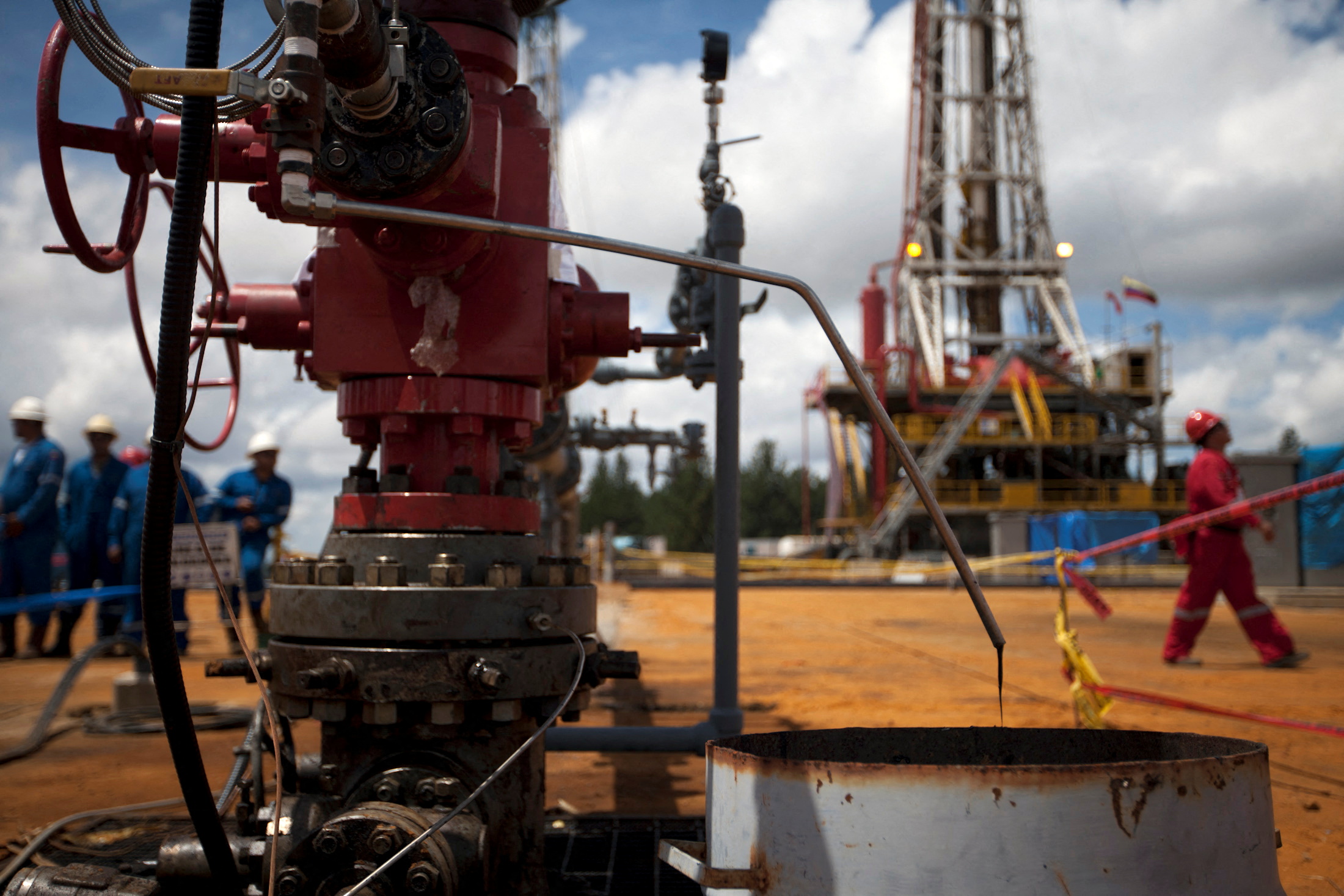
Venezuela’s oil resources are mainly concentrated in the Orinoco Belt, which covers an area of approximately 55,000 square kilometers and contains abundant but difficult-to-refine extra-heavy crude oil [3]. However, long-term underinvestment and U.S. sanctions have caused the country’s oil production to plummet from 3.5 million barrels per day before Hugo Chávez took office in 1999 to approximately 800,000 barrels per day currently.
Venezuela’s oil export pattern has undergone fundamental changes in recent years:
- China’s Dominant Position: Currently, China accounts for approximately 80-45% of Venezuela’s oil exports (varies by data source) [1][4]
- U.S. Market: Before 2019, the U.S. absorbed approximately 32% of Venezuela’s exports, but this shrank significantly after sanctions [4]
- Indian Market: India imported nearly $1 billion worth of oil from Venezuela in 2023-24, but declined in the second half of 2025 due to tighter sanctions [4]
- European Market: The EU has basically exited the Venezuelan oil import market
Notably, according to data from energy consulting firm Kpler, U.S. refineries may increase imports of Venezuelan heavy crude by more than 200,000 barrels per day by the end of 2025, which would nearly double U.S. purchases [5].
After Trump started his second term in 2025, his policy towards Venezuela escalated sharply [1][2]:
- The U.S. deployed military forces in the Caribbean region
- Threatened military strikes on Venezuelan territory
- Blocked sanctioned oil tankers entering or leaving Venezuelan waters
- Imposed sanctions on 4 entities illegally operating in Venezuela’s oil sector
- Seized at least two oil tankers violating sanctions
- Expanded the scope of sanctions on PDVSA (Petróleos de Venezuela, S.A.)
- Restricted the transport of diluents (chemicals used to dilute heavy crude)
According to U.S. official statements and media reports, the core objectives of the Trump administration’s adoption of these measures include:
- Regime Change: Force Maduro to step down through economic strangulation and military deterrence
- Energy Resource Control: Trump publicly stated that he wants U.S. companies to take over Venezuelan oil fields to exploit and sell resources [2]
- Weaken China’s Influence: Cut off China’s access to cheap Venezuelan oil
- Nominal Anti-Drug Operation: Use combating drug trafficking as a superficial reason for military action
- Venezuela’s oil exports remain at 800,000-900,000 barrels/day
- No fundamental change in the global oil supply-demand pattern
- Limited impact on oil prices (current WTI price at approximately $56.40/barrel, in the low range of 2025 [0])
- Venezuela’s exports drop below 500,000 barrels/day
- Buyers like China and India are forced to reduce purchases
- Global heavy crude supply tightens; some refineries need to find alternative sources
- May push the Brent-WTI spread to widen
- Exports may be completely interrupted (extreme scenario)
- Will cause a supply gap of approximately 800,000 barrels/day
- If the conflict persists, may push oil prices to surge 10-20% in the short term
- Long-term depends on whether the new regime can restore production
From the latest market data [0]:
| Market Indicator | Data | Interpretation |
|---|---|---|
| WTI Crude Oil Price | $56.40/barrel | Down ~20% in 2025, at annual low |
| 52-Week Price Range | $54.98 - $80.77 | Currently near the bottom of the range |
| Energy Sector Performance | +1.99% | One of the best-performing sectors today |
| Average Daily Volume | 44,053 contracts | Below average level |
The current market reaction to the Venezuela situation is relatively mild, mainly due to the following reasons:
- Venezuela’s production accounts for a small share of global supply (less than 1%)
- Other OPEC+ members (Saudi Arabia, Russia) have the ability to fill the gap
- Global oil demand growth slows
- The crude oil market was overall oversupplied in 2025
Venezuelan crude oil is mainly sour heavy crude, which is of great significance to specific markets:
- U.S. Gulf Coast Refineries: Long-term dependence on Venezuelan heavy crude as raw material
- Indian Refiners like Reliance Industries: Specifically configured to process heavy crude
- Alternative Supplies: Canadian oil sands, Iraqi heavy crude, Brazilian FPSOs can partially substitute
- U.S. Domestic Shale Oil Producers: Permian Basin producers like EOG and PXD can fill the heavy crude gap
- Canadian Oil Sands Operators: Suncor, CNRL (Canadian Natural Resources Limited), etc.
- Heavy Crude Concept Stocks: Enterprises with integrated refining capabilities
- Venezuela-Sensitive Assets: Oilfield service companies with business ties to PDVSA
- Chinese State-Owned Oil Enterprises: Enterprises with investment or procurement agreements in Venezuela
- Emerging Market Energy Funds: Funds with exposure to Venezuela-related assets
| Risk Type | Probability of Occurrence | Potential Impact | Investment Advice |
|---|---|---|---|
| Supply Disruption Risk | Medium | High | Hold energy stocks as a hedge |
| Sanction Expansion Risk | High | Medium | Avoid Venezuela-sensitive targets |
| Oil Price Volatility Risk | Medium | Medium | Consider energy ETFs for diversification |
| Geopolitical Premium Risk | Low | High | Focus on option strategies for protection |
- Focus on rebound opportunities for the energy sector after overselling
- Prioritize配置 U.S. domestic shale oil targets
- Consider buying out-of-the-money call options to guard against geopolitical risks
- Focus on valuation repair opportunities for Canadian oil sands assets
- Evaluate risks for Chinese state-owned oil enterprises due to Venezuela exposure
- Track the evolution of U.S. policy towards Venezuela and adjust timely
- If the Venezuela situation eases, focus on potential acquisition opportunities for oil assets in the country
- Continuously monitor the impact of OPEC+ production policies on oil prices
- Evaluate the allocation value of traditional oil and gas assets in the context of energy transition
The U.S. maintains current sanction levels but does not take military action. Venezuela’s oil exports remain at 800,000-900,000 barrels/day. Oil prices oscillate in the range of $50-$65 per barrel. Energy sector performance is in line with the broader market.
The U.S. expands the scope of sanctions, including imposing secondary sanctions on third countries purchasing Venezuelan oil. China and India are forced to reduce imports significantly. Venezuela’s exports drop below 500,000 barrels/day. Oil prices may test above $70 per barrel in the short term.
The U.S. conducts military strikes or naval blockades on Venezuela. Venezuela’s oil exports are interrupted. Oil prices may surge above $80 per barrel in the short term. However, the risk of conflict escalation may limit gains as the market also factors in recession expectations.
- Venezuela’s share in global oil supply is limited(approximately 1%). Its political crisis has controllable immediate impacts on the global market but may have structural impacts by affecting the heavy crude supply pattern.
- U.S. policy is a key variable. The direction of the Trump administration’s policy towards Venezuela will determine the future supply-demand balance of the oil market. If the U.S. attempts to fully take over Venezuelan oil assets, it will trigger international political博弈.
- The China factor cannot be ignored. As the main buyer of Venezuelan oil, if China is forced to exit due to sanctions, it will reshape the global energy trade pattern and may become a new battlefield for Sino-U.S.博弈.
- Current market pricing already reflects some risks. WTI oil prices are at the 2025 low (around $56 per barrel), and the energy sector rose 1.99% today against the market, indicating that the market has some expectations for supply disruptions.
- Geopolitical Risk: U.S.-Venezuela conflict may escalate unexpectedly
- Sanction Execution Risk: Secondary sanctions may trigger countermeasures from China and other countries
- Supply Substitution Risk: Changes in OPEC+ production policies may offset the impact of reduced Venezuelan supply
- Demand Risk: Slowdown in global economic growth may offset supply-side benefits
[1] CNN - “In evolving Latin America, US-Venezuela discord remains a constant” (https://www.cnn.com/2025/12/31/americas/venezuela-us-history-trump-strike-latam-intl)
[2] Al Jazeera - “Venezuela’s oil, not alleged drug trafficking, caught Trump’s eye” (https://www.aljazeera.com/news/2026/1/4/venezuelas-oil-not-alleged-drug-trafficking-caught-trumps-eye)
[3] Anadolu Agency - “FACTBOX - Venezuela’s oil wealth: Reserves, output and exports” (https://www.aa.com.tr/en/americas/factbox-venezuela-s-oil-wealth-reserves-output-and-exports/3778476)
[4] Economic Times - “US control of Venezuelan oil may unlock $1 bn stuck dues for India” (https://m.economictimes.com/industry/energy/oil-gas/us-control-of-venezuelan-oil-may-unlock-1-bn-stuck-dues-for-india-lift-output/articleshow/126332919.cms)
[5] AInvest - “Venezuela’s Oil as a Strategic Geopolitical Tool: U.S. Influence and…” (https://www.ainvest.com/news/venezuela-oil-strategic-geopolitical-tool-influence-impact-global-energy-markets-2601/)
[6] U.S. Department of State - “Sanctioning Oil Traders Funding Maduro’s Corrupt Regime” (https://www.state.gov/releases/office-of-the-spokesperson/2025/12/sanctioning-oil-traders-funding-maduros-corrupt-regime)
[7] Newsweek - “Map Shows How Venezuela’s Oil Reserves Compare to Rest of World” (https://www.newsweek.com/map-venezuela-oil-reserves-compare-rest-world-11301907)
[8] CNBC - “Crude prices lower as Maduro overthrow casts uncertainty” (https://www.cnbc.com/2026/01/04/oil-prices-trump-maduro-venezuela.html)
[0] Jinling AI API - Market Data (crude oil prices, index performance, industry sectors)
Insights are generated using AI models and historical data for informational purposes only. They do not constitute investment advice or recommendations. Past performance is not indicative of future results.
About us: Ginlix AI is the AI Investment Copilot powered by real data, bridging advanced AI with professional financial databases to provide verifiable, truth-based answers. Please use the chat box below to ask any financial question.