Based on the background information you provided and my research, I will systematically analyze the commercialization prospects of RRAM resistive memory technology and the investment implications of industrial capital layout for the semiconductor industry chain in the Hong Kong stock market.
1. Commercialization Prospects of RRAM Resistive Memory Technology
1.1 Technical Principles and Core Advantages
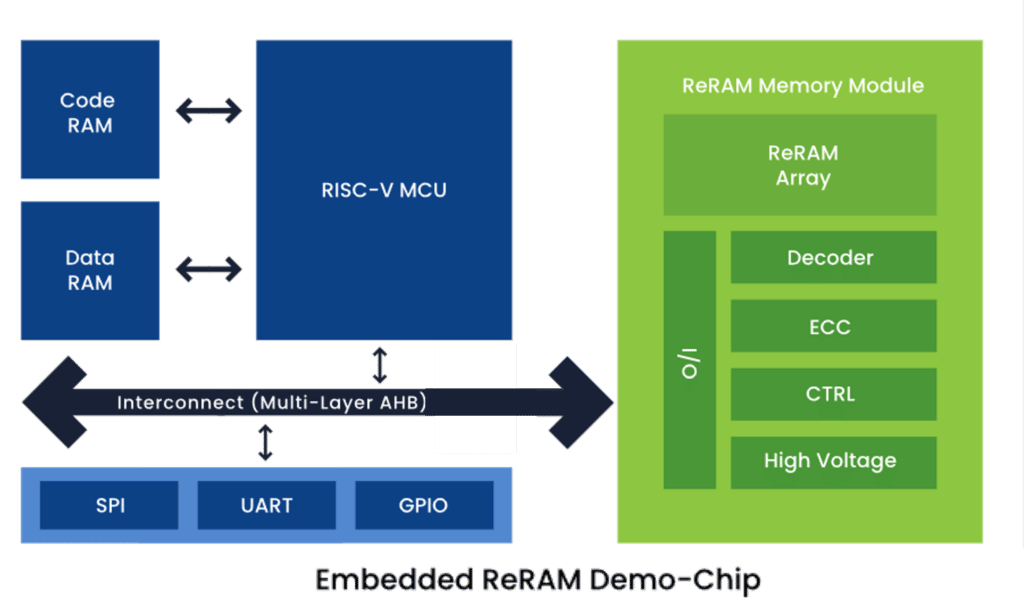
RRAM (Resistive Random-Access Memory) is a new type of non-volatile memory technology based on resistance change characteristics, with core advantages including:
Breaking the “von Neumann Bottleneck”:
In traditional computing architectures, computing units and storage units are independent of each other, and data needs to be frequently transferred between them. Research shows that data transfer power consumption can be a thousand times that of computing power, seriously slowing down overall computing efficiency [1]. The RRAM in-memory computing solution embeds computing units inside the memory chip, allowing data to be processed locally without long-distance transfer, fundamentally reducing latency and lowering energy consumption.
Significant Performance Breakthroughs:
A 2016 PRIME study by the University of California, Santa Barbara (UCSB) showed that compared to traditional von Neumann architectures, RRAM-based in-memory computing architectures can achieve about 20x lower power consumption and about 50x faster speed [2].
Substantial Improvement in Energy Efficiency Ratio:
In specific fields, in-memory computing technology can provide greater computing power (over 1000 TOPS) and higher energy efficiency (exceeding 10-100 TOPS/W), significantly surpassing existing ASIC computing chips. By reducing unnecessary data transfer, energy consumption can be reduced to 1/10 to 1/100 of previous levels [5].
1.2 Market Scale and Commercialization Progress
Rapid Market Growth:
The in-memory computing chip market is experiencing explosive growth. According to market forecasts:
- By 2025, the small computing power in-memory computing chip market scale will reach 12.5 billion yuan
- By 2030, the small computing power chip market scale is expected to exceed 106.9 billion yuan, and the large computing power chip market scale will reach 6.7 billion yuan
- Together, they will push the overall in-memory computing chip market scale to 113.6 billion yuan [4]
Edge Market Becomes Largest Incremental Source:
From the three layers of edge, edge, and cloud, the edge market has the most significant growth, with its scale rapidly increasing from 11 billion yuan in 2025 to 99.5 billion yuan in 2030, becoming the largest incremental source [4].
Accelerated Industrialization:
After 2020, in-memory computing technology entered the accelerated commercialization phase. Domestic enterprises such as Zhicun Technology and Xinyuan Semiconductor have successively launched in-memory computing chips for edge and edge computing [4]. Although Mingxin Qirui was established in May 2024, it has successfully completed product engineering batch verification tape-out and deeply partnered with multiple leading enterprise customers [2].
1.3 Application Scenario Expansion
Key application scenarios of RRAM in-memory computing technology include:
Edge AI Devices:
Smart wearables, smart homes, AI phones, AIoT devices, etc., optimized for low power consumption, small size, and low cost requirementsAutonomous Driving:
L2 to L5 autonomous driving requires instant processing of massive sensor data, and PIM technology has become a key force driving the industry toward high-level autonomous drivingData Centers:
Provide high-energy-efficiency computing power support for AI large model training and inference
2. Strategic Logic of Industrial Capital Layout in the In-Memory Computing Track
2.1 Xiaomi’s Strategic Layout
Xiaomi’s investment in the semiconductor field shows full industry chain coverage:
Self-developed Chip Breakthrough:
On May 22, 2025, Xiaomi officially released its second-generation 3nm mobile system-on-chip (SoC), “XRING O1 (XRING O1)”, marking its semiconductor technology reaching international leading levels in both advanced processes and architecture design [7].
Full Industry Chain Investment:
According to Xiaomi’s semiconductor investment map, its investment covers the entire industry chain: upstream (equipment materials, IP/EDA), midstream (design, manufacturing, packaging and testing), and downstream (end applications) [7].
Ecosystem Synergy Driven:
Xiaomi focuses on the “full ecosystem of people, vehicles, and homes” and needs to integrate computing power and storage requirements of multiple terminals. RRAM in-memory computing technology can provide cross-terminal synergy effects for mobile phones, car smart cockpits, laptops, tablets, and even servers [7].
Continuously Increasing Investment in Early-Stage Projects:
In Mingxin Qirui’s Pre-A round financing, Xiaomi Strategic Investment continued to increase its investment as an existing shareholder, reflecting Xiaomi’s recognition of the long-term value of the in-memory computing track [2].
2.2 Lenovo’s Strategic Layout
Lenovo Ventures’ layout in the chip semiconductor track is more systematic and forward-looking:
Investment Record of Backing Four Leaders:
Lenovo Ventures has invested in four AI computing power leaders—Cambricon, Hygon Information, Moore Threads, and Muxi—in the AI computing power and chip semiconductor track, making it the only investment institution to “back four leaders” [3].
Ten-Year Systematic Layout:
It began systematic layout in the AI computing power and chip semiconductor track ten years ago, and currently focuses on disruptive computing architectures such as in-memory computing, quantum computing, RISC-V, and brain-inspired computing [3].
Industrial Ecosystem Empowerment:
Relying on Lenovo Group’s global resources and industrial ecosystem, Lenovo Ventures not only provides capital support but also helps portfolio companies grow rapidly through industrial synergy. In the case of Weina Hexin, Lenovo Ventures, as an investor, supported its首创 3D-CIM chip, becoming the world’s fastest mass-producible 3D edge AI chip [3].
Leading the Next-Generation Computing Architecture:
Wang Guangxi, Vice President of Lenovo Group, stated that new memory technologies represented by RRAM and in-memory computing technology are key directions to break through the boundaries of computing power efficiency and lead the next-generation computing architecture revolution [2].
2.3 Common Characteristics of Industrial Capital
Long-Term Companionship Philosophy:
Institutions like Zhongke Chuangxing emphasize “continuous investment” and “long-term companionship and industrial empowerment” to support enterprises through the innovation cycle [2].
Breakthrough from the Source:
Industrial capital recognizes that “the breakthrough of the next-generation computing architecture must start from the bottom layer”, and RRAM and in-memory computing technology are profound changes that reconstruct computing from the material and device levels [2].
Emphasis on Technology and Product Conversion Capabilities:
Lenovo Ventures particularly values Mingxin Qirui’s “outstanding technology conversion capabilities, such as completing engineering batch verification tape-out soon after establishment, deeply partnering with leading customers, and building an industrial synergy ecosystem” [2].
3. Investment Implications for the Hong Kong Stock Market’s Semiconductor Industry Chain
3.1 Current Performance of the Hong Kong Stock Market’s Semiconductor Industry Chain
Outstanding Market Performance:
Since 2025, Hong Kong stock hard technology represented by the semiconductor chip industry chain has rebounded strongly. The Hong Kong Stock Connect Information C Index has risen by over 39% this year, significantly outperforming Hong Kong stock technology indices such as Hang Seng Tech, Hong Kong Stock Connect Tech, and Hong Kong Stock Connect Internet [6].
Leading by Core Enterprises:
SMIC (
00981.HK) and Hua Hong Semiconductor (
01347.HK) are core enterprises in the Hong Kong stock semiconductor industry chain. In recent trading, Hua Hong Semiconductor rose nearly 10%, and SMIC rose over 5% [6].
Outstanding Valuation-to-Performance Ratio:
As of December 30, 2025, the latest P/E ratio of the underlying index of the Hong Kong Stock Information ETF is 33.25 times, at the 37.58% percentile in the past three years. Its valuation-to-performance ratio is significantly better than the ChiNext Index (41.04 times P/E) and Nasdaq 100 (36.23 times P/E) [6].
3.2 Impact of In-Memory Computing Technology on the Hong Kong Stock Market’s Semiconductor Industry Chain
Wafer Foundry Enterprises Benefit:
As wafer foundry enterprises, SMIC and Hua Hong Semiconductor will directly benefit from the large-scale mass production demand for in-memory computing chips. In 2024, the Chinese semiconductor market scale reached 176.9 billion USD (up 15.9% year-on-year), and it is expected to reach 206.7 billion USD in 2025 [6].
Accelerated Domestic Substitution:
Driven by national policies and international situations, the domestic semiconductor industry chain is continuously breaking through from downstream manufacturing and packaging to upstream core equipment, materials, and software. In-memory computing technology is an area where domestic and international gaps are relatively small, with the possibility of “overtaking on curves” [4].
Industry Chain Synergy Opportunities:
SMIC recently plans to acquire 49% equity of SMIC North, and SMIC South received a cash capital increase of 7.778 billion USD. These capital operations demonstrate the enterprise’s determination to strengthen control over core manufacturing links and improve the autonomy of domestic chips [6].
3.3 Investment Strategy Recommendations
Focus on Core Manufacturing Enterprises:
SMIC and Hua Hong Semiconductor are core assets in the Hong Kong stock semiconductor industry chain. Hua Hong Semiconductor plans to acquire 97.4988% equity of Huali Micro through share issuance, with a transaction consideration of 8.268 billion yuan, which will further increase its 12-inch wafer foundry capacity [6].
Layout In-Memory Computing Ecosystem Chain:
In addition to the manufacturing link, attention should be paid to design companies, packaging enterprises, and related equipment and material suppliers that have layouts in in-memory computing technology.
Seize Valuation Repair Opportunities:
The Hong Kong stock semiconductor sector has experienced a long adjustment period, and current valuations are at a relatively reasonable level. With the commercialization of new technologies such as in-memory computing, it is expected to迎来 a double boost from valuation and performance.
Pay Attention to Industrial Capital Trends:
The investment layouts of industrial capital such as Xiaomi and Lenovo have important weathervane significance. Continuously tracking their investment dynamics helps to discover potential investment opportunities.
3.4 Risk Tips
Uncertainty in Technology Industrialization Progress:
Although in-memory computing technology has broad prospects, it is still in the early stage of industrialization, and the maturity of technology and processes still requires time.
Downstream Demand Fluctuation Risk:
The semiconductor industry has strong cyclicality, and lower-than-expected recovery of downstream demand may affect the performance of related enterprises.
Intensified International Competition:
The global semiconductor industry chain is highly competitive, with rapid technology iteration, and domestic enterprises face competitive pressure from international giants.
4. Conclusion
RRAM resistive memory technology, with its unique advantages of breaking the “memory wall”, significantly reducing power consumption, and improving computing power, is becoming an important development direction of semiconductor technology in the AI era. The in-memory computing chip market scale is expected to reach 100 billion yuan by 2030, and the edge market will become the largest incremental source.
The intensive layout of industrial capital such as Xiaomi and Lenovo in the in-memory computing track reflects their forward-looking judgment on the next-generation computing architecture revolution. This layout not only provides capital support for startups but also accelerates the technology industrialization process through industrial ecosystem empowerment.
For the Hong Kong stock semiconductor industry chain, the commercialization of in-memory computing technology brings new growth opportunities for related enterprises. Core manufacturing enterprises such as SMIC and Hua Hong Semiconductor will directly benefit from this round of technological change. At the same time, the background of domestic substitution provides historical development opportunities for Hong Kong stock semiconductor companies.
Investors should focus on: 1) Capacity expansion and technological upgrading of core manufacturing enterprises; 2) Design enterprises with in-depth layouts in in-memory computing technology; 3) Emerging enterprises with industrial capital backgrounds and outstanding technology conversion capabilities. At the same time, attention should be paid to risk factors such as technology industrialization progress and changes in downstream demand.
References
[1] Industry Research | Chip Storage: Processing-in-Memory (PIM) Leads 2025 Commercialization Trend - Electronic Engineering Album (https://www.eet-china.com/mp/a374695.html)
[2] Mingxin Qirui Completes Over 100 Million Yuan Pre-A Round Financing, Continuously Focusing on High-Density RRAM and In-Memory Computing Technology - Sohu (https://m.sohu.com/a/972576332_116132)
[3] Weina Hexin Completes Over 100 Million Yuan B Round Financing, Becoming a Global Leading In-Memory Computing AI Chip Company - Jiwei Network (https://jiweipreview.laoyaoba.com/html/news/newsdetail?news_id=964278)
[4] Breaking the Memory Wall - Breakthroughs and Future of In-Memory Computing Technology (https://www.njicg.com/article/305)
[5] Semiconductor Industry Express - Oriental Wealth (https://pdf.dfcfw.com/pdf/H3_AP202501061641827585_1.pdf)
[6] The First Hong Kong Stock Information ETF Focusing on “Hong Kong Stock Chip Chain” Rises by 2% - Sina Finance (https://finance.sina.com.cn/money/fund/etf/2025-12-30/doc-inheqqfh7165083.shtml)
[7] Business Potential Analysis of Kingsoft Cloud and Xiaomi Group (http://www.unbank.info/static/pages/2063/316200.html)
[8] TOP 50 Best IPO Investment Institutions, Lenovo Ventures Wins Multiple Awards from IPO Early Knowledge - Sina Finance (https://t.cj.sina.cn/articles/view/5229323498/137b124ea019016cc0)
[9] Five Key Questions and Possible Answers About Xiaomi’s Chip Development - Finance Client (https://news.caijingmobile.com/article/detail/548238)
[10] 2026 Technology Industry Outlook: AI Algorithm Iteration Expands Computing Power Base - SPD International (https://www.spdbi.com/getfile/index/action/images/name/科技行业2026年展望.pdf)