
Samsung's 800M Gemini AI Devices: Impact on Google AI Revenue and Smartphone Competition
Unlock More Features
Login to access AI-powered analysis, deep research reports and more advanced features
About us: Ginlix AI is the AI Investment Copilot powered by real data, bridging advanced AI with professional financial databases to provide verifiable, truth-based answers. Please use the chat box below to ask any financial question.
Related Stocks
Comprehensive Assessment of Samsung’s Expansion to 800 Million Gemini AI Devices: Impact on Google’s AI Business Revenue and Smartphone Competition Landscape
- Background and Factual Anchors
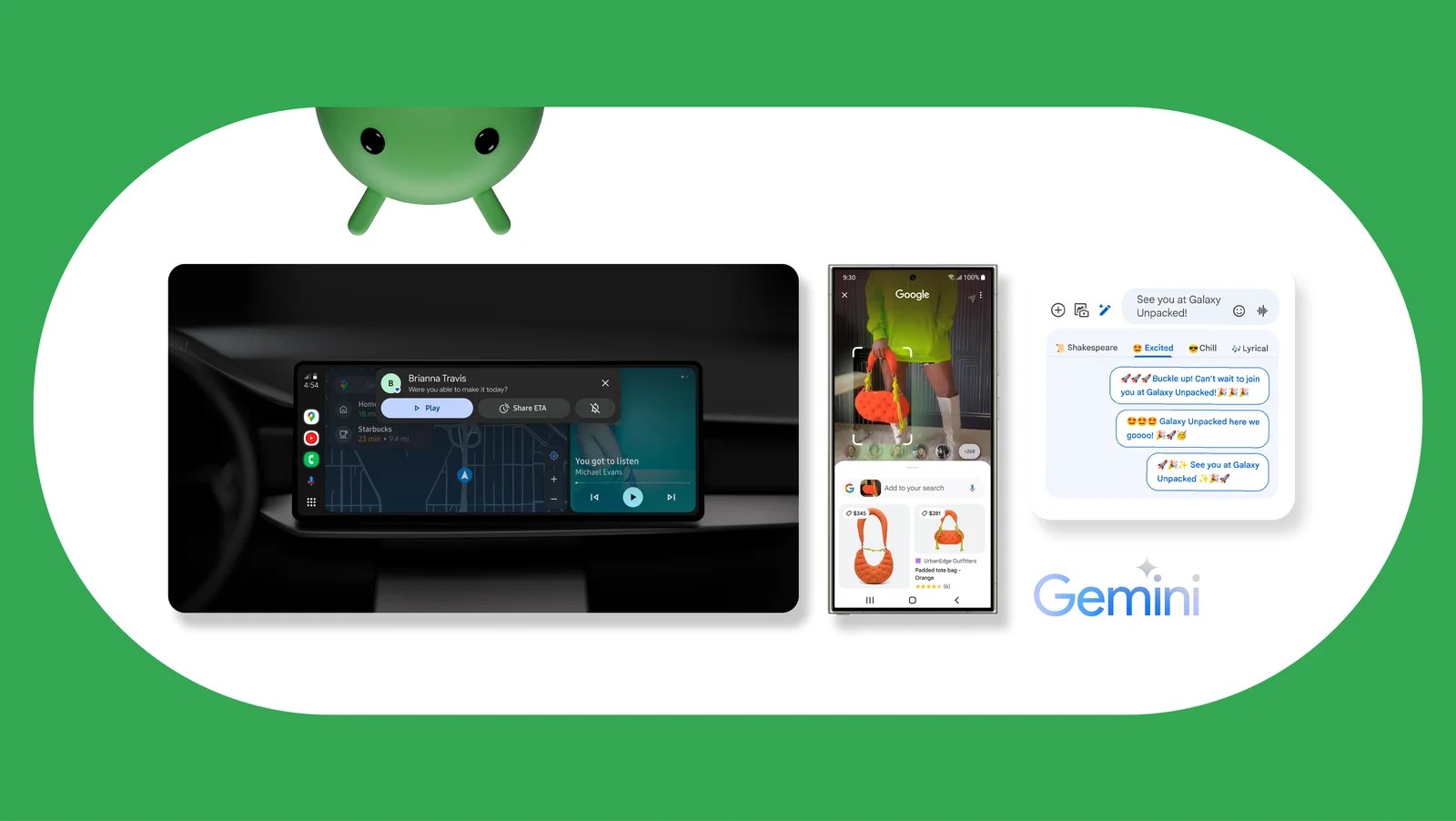
- Device Scale and Coverage: Based on public information, Samsung plans to expand the number of mobile devices equipped with or deeply integrated with Gemini AI to approximately 800 million units during the 2024-2025 period, covering phones, tablets, and some wearable/XR devices [2,4].
- Cooperation Direction: The two parties are advancing the implementation of “Gemini + Cloud” visual and multimodal capabilities not only on mobile phones but also in XR/wearable (e.g., Galaxy XR headsets, lightweight AI glasses) and home appliance (e.g., Bespoke AI refrigerators, wine cabinets) scenarios [2,4].
- Google AI Product Progress: The Gemini 3 series has been released to the public and integrated into search and cloud services; Gemini’s monthly active users (MAU) are close to 350 million (as of November 2025), with users and call volume continuing to grow [5].
- Google Financial Snapshot: TTM revenue exceeded $53.8 billion; Q3 2025 cloud revenue increased by 34% YoY, which media attributed to strong demand for AI infrastructure and services [7]; 2025 full-year capital expenditure guidance was revised upward from $75 billion to $91-$93 billion, explicitly directed at AI computing power and infrastructure [7].
- Stock Price and Market: GOOGL’s stock price rose from approximately $190 to $313 throughout 2025, an increase of about 64%, reflecting the market’s pricing of AI commercialization progress [0]; TTM operating margin was approximately 32%+, with continuous improvement in operational efficiency [7].
- Potential Impact on Google’s AI Business Revenue (Conservative/Baseline/Optimistic Scenarios)
Note: Google does not separately disclose “Gemini revenue”; AI-related revenue is mainly embedded in Search & Ads, Cloud, Subscriptions & Devices, and Other Services [7]; the commercial terms between Google and Samsung are not public. The following is a scenario calculation framework based on public information and industry practices, not company guidance.
-
- Direct Measurable Revenue (Annualized)
- Device Authorization and Call Volume Sharing: Assuming some devices adopt the “pre-installation + settlement by API call” model, if the annual API amortization per device (combining search/translation/summary/multimodal scenarios) is $1-5, then at the scale of 800 million devices, the corresponding annualized revenue range is approximately $800 million to $4 billion. If only high-end models or heavy functions are charged, or bundled subscriptions are used, this range will narrow or shift structurally downward.
- Search and Advertising Diversion: Gemini-enhanced search and AI summaries can increase ad click-through rates and ad space value. According to public reports, Search and YouTube ads maintained double-digit growth driven by AI functions [7]; combined with device scale expansion, it may generate a medium-to-high single-digit percentage incremental pull on Search and YouTube ads.
- Subscription and Cloud Conversion: Some AI functions may guide users to upgrade Google One, cloud storage, productivity subscriptions, or drive enterprise users to adopt Vertex AI and Google Cloud services. Industry pricing shows enterprise-level API calls and data pipeline usage (e.g., BigQuery+Vertex AI) are key engines for cloud growth [7].
- Comprehensive Scenarios (Annualized, Not Company Guidance): Conservative ~$1 billion, baseline ~$2-3 billion, optimistic ~$4-5 billion (requires simultaneous improvement in penetration rate, ARPU, and settlement conditions).
-
- Indirect and Ecosystem Benefits
- Android Ecosystem Stickiness and Entry Control: 800 million Gemini devices can consolidate Android’s first-mover position in “AI-native devices” and enhance control over entry points like search, maps, payments, and app distribution.
- Data and Feedback Loop: Larger-scale usage scenarios provide rich feedback for model iteration, RLHF, and safety alignment, improving accuracy/security and long-term retention/paid conversion.
- Developer and Scenario Lock-in: Wide device coverage reduces developer adaptation costs, promoting more apps to call Gemini API or use Android XR framework, forming network effects.
- Cooperation Demonstration Effect: The Samsung case can prove Gemini’s deliverability/scalability to other OEMs and ecosystem partners, driving wider industry adoption.
- Impact on Smartphone and AI Terminal Competition Landscape
-
- Hardware Side
- Samsung Galaxy AI vs Apple On-Device AI: Samsung uses Gemini cloud+local hybrid architecture for multimodal/translation/visual recognition functions; Apple focuses on device-side models and privacy-first differentiation. Open vs closed ecosystem, local-cloud balance are competition focuses [2,4,6].
- AI Phone Penetration and Replacement Pull: Industry data shows AI-related functions are key for phone replacement/brand selection. If Samsung continues to use Galaxy AI/Gemini as flagship selling points, it can consolidate mid-to-high-end market share and compete directly with Apple in price and functions [6].
- Cross-Terminal Collaboration (XR/Wearable/Home Appliances): Samsung integrates Gemini visual capabilities into XR headsets and home appliances, strengthening home-mobile scenario linkage and forming different ecosystem paths from Apple’s Vision Pro/wearable routes [2,4].
-
- Software/Model and Ecosystem Side
- Android+Gemini vs iOS Privatization Combination: Android ecosystem has advantages in model openness and developer-friendliness, covering more manufacturers/scenarios quickly; iOS excels in end-side performance, privacy, and system-level integration. They compete in function depth and update rhythm [5,7].
- Developer and Scenario Competition: Large-scale deployment reduces developer adaptation/trial costs, attracting more third-party apps to use Gemini API/Android XR, boosting ecosystem richness and user stickiness.
- Search and Advertising: AI search entry changes may reshape ad distribution. If Samsung devices are deeply integrated with Gemini, Google’s search/advertising weight may strengthen, but depends on manufacturer-channel share negotiations.
- Financial and Market Indicator Verification and Monitoring (Recommendations)
- Finance: Monitor Google’s quarterly Cloud revenue growth and AI-related disclosures (API call volume, AI cloud projects, partner cases); whether Subscriptions & Devices revenue has structural growth due to AI; whether AI-related increments in Search & Ads are emphasized in earnings calls [0,7].
- Product and Ecosystem: Gemini MAU/DAU, device coverage (OEM disclosures/industry stats), ARPU changes (API, subscriptions, diversion, ads), and Samsung’s official Galaxy AI penetration rate [2,4,5].
- Competition: Apple and other OEMs’ AI phone/wearable progress and pricing strategies; global smartphone shipment and share changes; XR/wearable shipment and AI function penetration [6].
- Main Risks and Uncertainties
- Commercial Terms: Unpublicized settlement models (one-time authorization, API call share, search share, subscription guidance) make direct revenue highly sensitive.
- Regulation and Privacy: EU/US regulations on AI transparency, competition, and data usage may affect deployment rhythm and commercialization paths.
- Technology and Security: Model hallucinations, security incidents, or privacy disputes may impact user trust and deployment depth.
- Competition: Continuous iteration by OpenAI, Microsoft, Meta, etc., in models/cloud/terminals may divert demand or change bargaining power.
- Summary (Operation-Oriented)
- For Google’s AI Revenue: Under conservative/baseline/optimistic scenarios, 800 million Gemini devices can bring potential annualized increments of approximately $1 billion, $2-3 billion, or close to $4-5 billion (embedded in multiple business lines such as Search/Ads/Cloud and subscriptions). It is necessary to continuously calibrate assumptions through financial reports and product data.
- For Competition Landscape: In the short term, it strengthens Android+Gemini’s first-mover advantage and ecosystem stickiness in AI phones and XR; in the medium and long term, it forms continuous competition with Apple in local and cloud balance, privacy and openness, and cross-terminal collaboration.
- Recommended Indicators to Monitor: Cloud growth rate and AI project disclosures; structural improvement of Subscriptions & Devices revenue; AI-related increments in Search & Ads; Gemini MAU/ARPU; Samsung’s Galaxy AI penetration rate; Apple and other OEMs’ AI progress; global smartphone and XR/wearable shipment and share changes.
References
[0] Jinling API Data (Company Overview, Real-Time Quotes, 2025 Price Data, Sector Performance)
[1] Samsung Global Newsroom - Samsung To Unveil AI Vision Built With Google Gemini at CES 2026 (2025-12-22)
[2] Web Search - Samsung Galaxy AI and Gemini Device Scale and Function Progress (2025)
[3] Los Angeles Times - Google unveils plans for first Gemini AI-powered glasses (2025-12-09)
[4] Web Search - Smart Glasses/XR Device Shipment and Industry Forecast (2025)
[5] AndroidCentral - The state of AI in 2025: Google, Apple, OpenAI (Gemini User and Product Progress)
[6] Web Search - 2025 Global Smartphone Share and iPhone vs Android Statistics
[7] Web Search/Company Materials - Alphabet/Google Financial and AI Strategy Analysis (Cloud Growth, Capital Expenditure, TPU Cost Advantage, AI Penetration in Businesses)
Insights are generated using AI models and historical data for informational purposes only. They do not constitute investment advice or recommendations. Past performance is not indicative of future results.
About us: Ginlix AI is the AI Investment Copilot powered by real data, bridging advanced AI with professional financial databases to provide verifiable, truth-based answers. Please use the chat box below to ask any financial question.