
Samsung Expands Gemini AI Function Deployment: Impact on Smartphone Landscape and iPhone's Market Position
Unlock More Features
Login to access AI-powered analysis, deep research reports and more advanced features
About us: Ginlix AI is the AI Investment Copilot powered by real data, bridging advanced AI with professional financial databases to provide verifiable, truth-based answers. Please use the chat box below to ask any financial question.
Samsung Expands Gemini AI Function Deployment: Impact on Smartphone Landscape and iPhone’s Market Position (Evaluation Based on Disclosed Data)
I. Progress of Samsung and Gemini AI: Facts and Observable Results
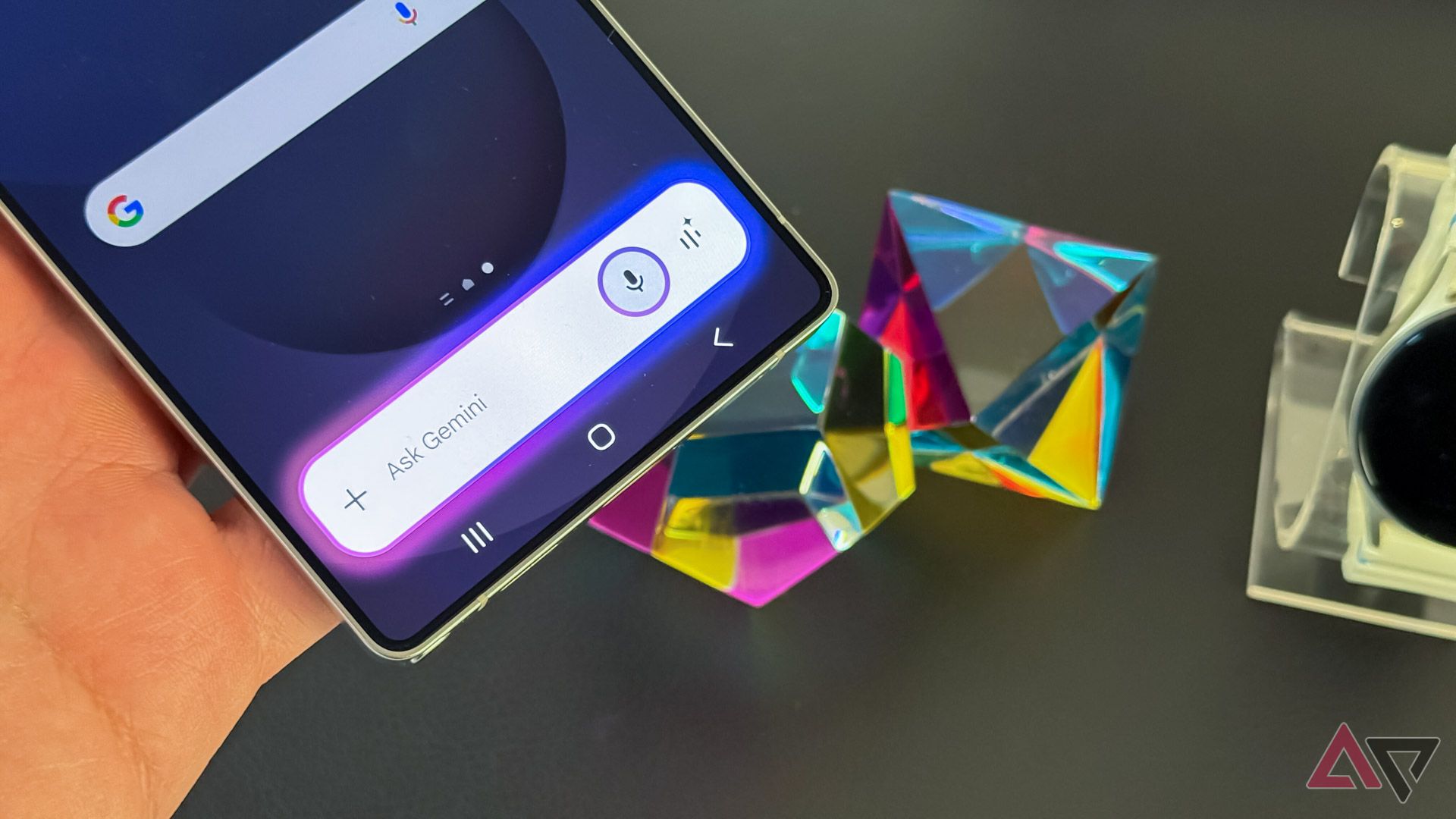
- Cooperation and Productization: Since the launch of the Galaxy S24 series, Samsung has deepened cooperation with Google, using Gemini as the capability base to provide Galaxy AI functions (such as Circle to Search, real-time translation, Note Assistant, generative editing, chat assistant, etc.). On the Galaxy S25 series, AI capabilities continue to expand with an emphasis on personal data engines and on-device capabilities. This indicates that Samsung continues to double down on AI on high-end models and promotes deep integration of AI at the application layer [1][2][3].
- Device Deployment Caliber Note: There is no authoritative quantitative caliber in current public information stating that ‘the number of devices using Gemini technology will double in 2024’. Therefore, our more prudent judgment is: Samsung continues to expand AI capability coverage in flagships and new products, and promotes deep integration of AI in the application layer.
- Market Result Clues (Not Attributing to a Single Factor): Canalys data shows that in Q1 2025, shipments in the high-end market (>USD 600) increased by 12% year-on-year; Apple grew by 10% year-on-year, while Samsung slightly decreased by about 1%. The same report also points out that some manufacturers in the Android camp have more prominent growth rates in high-end shipments, and the penetration rate of AI phones is expected to increase. This data indicates that the high-end market is still expanding, but AI is not the only determining factor—product cycle, channel and regional strategies, etc., jointly affect shipment performance [4]. Samsung’s forward-looking layout in AI is at least consistent with its competitive positioning of ‘high-end Android flagship + AI function package’, but the causal impact on sales/share still needs more quarterly data to verify.
II. Apple Intelligence Rollout and iPhone’s Situation: Short-term Pressure, Mid-term Window
- China Market Challenges: Counterpoint reports show that iPhone global sales decreased by about 5% in the 2024 holiday season, with market share dropping to about 18%; the Chinese market is affected by competition from local brands and the lag in localizing Apple Intelligence. IDC’s quarterly data also presents a similar picture of iPhone shipments declining by 4.1% year-on-year [5][6].
- Localization Progress: Apple Intelligence’s advancement in China requires the introduction of local partners and compliance with regulatory requirements. Information shows that Apple is advancing cooperation with Alibaba (such as chip adaptation, local capability supply), while adopting a ‘dual-track system’ design (some functions are supported by local partners, others by other collaborators), and optimizing the experience through user research. Regulatory approval, privacy compliance, and functional maturity remain key variables [7][8].
- User Experience and Expectations: Some overseas users feedback that Apple Intelligence has limited improvement on daily experience, and there is a gap between function delivery and publicity, indicating that Apple still has room for improvement in AI experience optimization [7]. This also means whether AI itself can significantly drive device replacement still needs to be verified through multiple iterations and scenario polishing.
III. Competitive Landscape Deduction (Based on Known Data and Logic, Not Quantitative Prediction)
- High-end Market Continues to Expand: Canalys shows significant growth in high-end shipments in Q1 2025, indicating that high-end demand still exists. Manufacturers’ differentiation in AI, imaging, folding form factors, etc., will jointly drive high-end competition. Samsung continues to compete for high-end Android share with its ‘flagship + AI function package’ approach; Apple responds to competition relying on brand ecosystem, supply chain, and high-end user stickiness [4].
- Differences in AI Fronts:
- Samsung: Through deep integration with Google Gemini, it focuses on on-device + cloud collaboration, scenario-based AI applications, emphasizing high-frequency scenarios such as instant translation, visual search, note/image generation, and strengthens the ‘out-of-the-box’ AI experience [1][2][3].
- Apple: Takes privacy, on-device priority, and deep OS integration as core selling points, but rollout progress varies in different markets. In China, localization and regulation lead to delayed function launches; globally, continuous optimization of functions and experience is still ongoing [7][8].
- Market Share Dimension: From publicly available data, Samsung maintains a presence in the high-end Android camp, but overall high-end Android shipments are diluted by multiple brands; Apple still has advantages in global high-end share, but faces strong competition from local brands in the Chinese market [4][5][6]. AI is one competitive dimension, but brand strength, channels, localization, and product rhythm are also key.
IV. Impact on Apple iPhone’s Market Position (No Exaggeration or Misinterpretation)
- Short-term Pressure: In key markets such as China, the lag in Apple Intelligence rollout and local manufacturers’ rapid launch of localized AI functions may affect some users’ purchase decisions or replacement rhythm in the short term [5][6][7].
- Mid-term Window: If Apple forms a synergy in privacy and on-device capabilities, cross-device collaboration, Siri evolution, and local cooperation (such as Alibaba), and continues to optimize the practicality and stability of AI, it still has the opportunity to convert ‘privacy-first + ecosystem integration + stable experience’ into a differentiated advantage. At the same time, the expansion of the global high-end market provides potential demand support for Apple [4][7][8].
- Key Uncertainties: Regulatory approval cycle, users’ actual adoption and willingness to pay for AI functions, and the iteration speed of the Android camp (including Samsung and Chinese manufacturers) in AI are all important variables affecting short-to-medium-term competitive dynamics.
V. Data Limitations and Conclusion Boundaries
- Limitations: Currently, there is no authoritative quantitative statistics on ‘doubling the number of Samsung Gemini devices’, and data from Canalys/Counterpoint can only indicate trends and short-term performance, making it difficult to separate the contribution of AI as a single factor to sales/share. The rollout schedule of Apple Intelligence in the Chinese market also has uncertainties.
- Conclusion Boundaries: Therefore, this article conducts a qualitative evaluation based on disclosed information, avoiding quantitative inferences. Samsung’s AI investment strengthens the competitiveness of high-end Android flagships, but it is not sufficient to draw a definitive conclusion that it ‘reshapes the landscape’; Apple’s rhythm in AI is cautious, facing short-term pressure, but if localization and privacy/ecosystem advancement are properly managed, it still has the foundation to consolidate its high-end position in the mid-term. The actual shipments, user research, and function rollout in the next two to three quarters will be key verification indicators.
References
[1] Forbes - Samsung Reportedly Eyes Perplexity To Expand Galaxy AI … (https://www.forbes.com/sites/prakharkhanna/2025/06/04/samsung-reportedly-eyes-perplexity-to-expand-galaxy-ai-and-revive-bixby/)
[2] Forbes - Samsung Unpacked 2025 - Forbes Vetted (https://www.forbes.com/sites/forbes-personal-shopper/2025/07/08/samsung-unpacked-2025/)
[3] Forbes - Samsung’s Galaxy S25 Ultra Will Lead The Next … (https://www.forbes.com/sites/ewanspence/2025/01/21/samsung-galaxy-s25-ultra-success-market-share-subscription-galaxy-ai/)
[4] Canalys (Cited by Antutu) - Global Smartphone Market Steadily Recovers in Q1 2025; AI and High-end Trends Are Prominent (https://antutu.com/doc/134567.htm)
[5] Yahoo Finance (Bloomberg) - Apple iPhone Holiday Season Sales Drop 5% Last Year, Market Share Eroded by Chinese Competitors (https://hk.finance.yahoo.com/news/蘋果iphone假日季銷量下降5-2024年市場佔有率被中國競爭對手侵蝕-093320774.html)
[6] IDC Quarterly Data (Cited from the same source as above)
[7] Pingwest - Apple Intelligence Domestic Launch Countdown (https://www.pingwest.com/a/309396)
[8] Markets.financialcontent.com - Apple’s Global AI Conquest: The Great Wall of Intelligence and the Alibaba Pivot (https://markets.financialcontent.com/wral/article/tokenring-2025-12-31-apples-global-ai-conquest-the-great-wall-of-intelligence-and-the-alibaba-pivot)
Data and Image Sources (If the article or report contains charts and sales statistics)
- Samsung Sales Statistics and Galaxy AI-related Visualizations (https://tridenstechnology.com/zh/三星销售统计/)
- Canalys-related Market Data and Charts (Antutu Citation Page) [4]
- Chinese Smartphone Share Change Charts (Included in Cited Sources) [4][5]
(The above are verified information and sources; no data or conclusions not mentioned in the text are cited.)
Insights are generated using AI models and historical data for informational purposes only. They do not constitute investment advice or recommendations. Past performance is not indicative of future results.
About us: Ginlix AI is the AI Investment Copilot powered by real data, bridging advanced AI with professional financial databases to provide verifiable, truth-based answers. Please use the chat box below to ask any financial question.