
Analysis of the Current Status, Investment Opportunities, and Challenges of China's Humanoid Robot Industry
Unlock More Features
Login to access AI-powered analysis, deep research reports and more advanced features
About us: Ginlix AI is the AI Investment Copilot powered by real data, bridging advanced AI with professional financial databases to provide verifiable, truth-based answers. Please use the chat box below to ask any financial question.
Based on my in-depth industry research, the following is a comprehensive analysis of China’s robot industry, especially the humanoid robot track:
China’s humanoid robot industry is迎来 a critical inflection point. The market size is expected to reach 8.239 billion yuan in 2025, with industrial applications accounting for over 60% [2]. Authoritative forecasts indicate that
Notably, China currently has more than 150 humanoid robot companies, but the industry has already issued early warnings of overcapacity [1]. This number reflects high market enthusiasm but also预示 future intense industry consolidation.
As a key area for developing new quality productive forces, humanoid robots have received strong policy support from both national and local levels:
- National Level: The 15th Five-Year Plan proposal clearly states “forward-looking layout of future industries” and includes embodied intelligence as a key development direction [1].
- Local Layout: Shanghai, Nanjing, Hangzhou, Wuhu and other places have issued plans to build humanoid robot industry highlands:
- Hangzhou: Industry scale to reach 50 billion yuan by 2029 [1].
- Shanghai: Core industry scale to exceed 50 billion yuan by 2027 [1].
- Nanjing: Core industry scale to exceed 10 billion yuan by 2027 [1].
The National Development and Reform Commission has clearly emphasized the need to prevent the risk of repeated and clustered launches of embodied intelligence products [1], indicating that policy orientation is shifting from simple encouragement to more rational high-quality development.
Significant progress has been made in the localization of core components, laying the foundation for industry cost reduction and efficiency improvement:
| Component Type | 2023 Domestic Share | 2025 Domestic Share | Price Reduction Range |
|---|---|---|---|
| Servo Motors | 28% | 82% | 40%-45% |
| Harmonic Reducers | 30% | 80% | 40%-50% |
| 6-axis Force Sensors | 25% | 78% | 30%-40% [3] |
Specifically:
- Servo Motors: The price of domestic products of the same specification has dropped from 1,800-2,500 yuan/unit (imported) to 900-1,300 yuan/unit. Companies like Inovance Technology and Hicreate Technology have reached international levels in technical indicators [3].
- Harmonic Reducers: Products from Greentown Harmonic and Laifu Harmonic have dropped from 1,200-1,500 yuan (Japan’s Harmonic Drive) to 550-750 yuan, with global market shares of 28% and 15% respectively [3].
- 6-axis Force Sensors: Products from Bluepoint Touch and Keli Sensing are 30%-40% cheaper than US-based ATI, and have received bulk orders from DeepRobotics and Unitree Robotics [3].
2025 is regarded as the first year of mass production of humanoid robots, with leading enterprises seeing explosive growth in orders:
- UBTECH: 2025 order value of nearly 1.4 billion yuan, delivery volume exceeding 500 units, monthly production capacity over 300 units, expected to reach 10,000-unit level in 2026 [2]. Its industrial humanoid robots have entered factories of leading enterprises such as BYD, Geely, Foxconn, and SF Express [2].
- DeepRobotics: 2025 order value exceeding 1 billion yuan, shipments exceeding 5,000 units [3].
- Unitree Robotics: Cumulative orders reaching 1.2 billion yuan, and has achieved five consecutive years of profitability [3].
Financing scale in the humanoid robot field has hit a record high:
- RoboGalaxy: Completed a nearly 1.5 billion yuan Pre-IPO round financing, with Shenzhen Investment Holding Capital leading the investment with 400 million yuan for a 3.8% stake, resulting in a post-investment valuation of 10.5 billion yuan [1].
- Galaxy General: Completed over 300 million USD (about 2.1 billion yuan) financing in December 2025, with cumulative financing of about 800 million USD and valuation exceeding 3 billion USD (over 20 billion yuan), setting a financing record in China’s embodied intelligence field [2].
Despite significant progress, technological maturity remains a major obstacle:
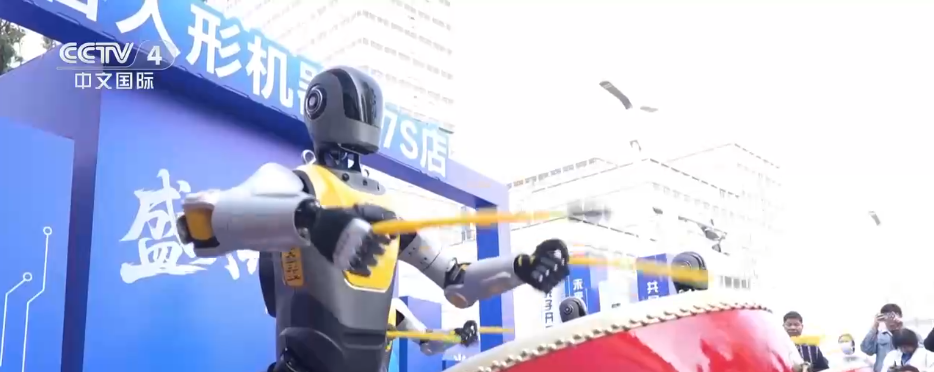
- “Brain” Not Yet Truly Mature: Most current humanoid robots are still focused on demonstration and performance (e.g., exhibition guidance, somersaults), with most actions being preset or obtained through extensive data collection and training, lacking human-like autonomous learning and extension capabilities [4].
- Extreme Difficulty in Mass Production: Tesla’s Elon Musk admitted in October 2025 that “Optimus2 is almost impossible to manufacture”, and Xpeng Motors’ He Xiaopeng also acknowledged that “the difficulty of making robots walk stably is no less than making cars achieve autonomous driving” [4].
- Large Models Lack Spatial Perception: Current large models mainly focus on text processing and knowledge Q&A, lacking spatial perception and reasoning capabilities, making it difficult to perform tasks requiring environmental interaction such as folding clothes and cooking [4].
Scenario implementation is the core pain point of the industry, specifically reflected in:
- Scenario Selection Dilemma: Chery切入 from the car sales scenario, Tesla adheres to the factory-first strategy, but the real large-scale rigid demand scenario has not yet been clarified [4].
- Insufficient Cost Competitiveness: Industry calculations show that the comprehensive cost per hour of humanoid robots needs to drop below 15 USD, and the payback period should be shorter than 2 years to have universal appeal to the manufacturing industry [4].
- Hidden Costs Underestimated: In reality, hidden costs such as robot deployment, operation and maintenance, debugging, and production line transformation are far higher than paper calculations [4].
Many industry insiders predict that
Companies that can胜出 include:
- Body enterprises that control hardware costs to the extreme (5-10 companies).
- Software companies focusing on the “brain” that provide general intelligent systems (the most valuable and profitable link) [4].
RoboGalaxy’s recent series of actions reflect the industry’s integration trend:
- Pre-IPO Financing: Completed a nearly 1.5 billion yuan Pre-IPO round financing, with Shenzhen Investment Holding Capital leading the investment with 400 million yuan for a 3.8% stake, resulting in a post-investment valuation of 10.5 billion yuan [1].
- Diversified Strategic Investors: Investors include state-owned assets such as Shenzhen Investment Holding Capital, Hefei Industrial Investment, Shijingshan Industrial Fund, as well as industrial capital from manufacturing leaders like Dongfang Precision and Tuopu Group [1].
This diversified capital structure reflects both policy resource support and deep participation of industrial capital, indicating more cross-border integration in the future.
RoboGalaxy’s proposed “Three 10-Billion” project reflects the large-scale ambition of leading enterprises:
- 3 Billion Yuan: Build a Shenzhen Longhua Super Factory with an annual output of 100,000 units.
- 4 Billion Yuan: Increase investment in “brain-joint-hand” full-stack technology, targeting to raise the number of degrees of freedom of the whole machine to 60 and single-leg jump height to over 35 cm by 2026.
- Remaining Funds: Used for scenario implementation, planning to complete 10,000 orders in three fields: 3C assembly, new energy logistics, and medical rehabilitation by the end of 2025 [1].
RoboGalaxy’s in-depth cooperation with industrial chain enterprises is forming a new ecological pattern:
- Haichen Co., Ltd.: Signed a strategic cooperation agreement with RoboGalaxy to cooperate in robot core components and co-build a robot cloud control platform with China Mobile [1].
- Dongfang Precision: Jointly built a large-scale humanoid robot production line with RoboGalaxy and co-founded a humanoid robot controller company [1].
In September 2025, RoboGalaxy completed its shareholding system reform and changed its name to “RoboGalaxy Intelligence (Shenzhen) Co., Ltd.”, marking an accelerated IPO process [2]. In addition to RoboGalaxy, leading humanoid robot companies such as Unitree Robotics and DeepRobotics have also completed shareholding system reforms and are sprinting towards IPO.
This means that
Based on industry development trends, three investment themes are recommended:
- Complete Machine Segment: Humanoid robot manufacturers that have entered mass production or clearly have continuous order sources, such as UBTECH, DeepRobotics, and Unitree Robotics.
- Key Components and Modules: Core suppliers benefiting from industry pattern optimization and host factory volume growth, such as Greentown Harmonic, Inovance Technology, Hicreate Technology, and Keli Sensing.
- Capability Evolution Direction: Enterprises focusing on brain generalization capabilities and end effector dexterous hand iteration.
- Technological Risk: Technological maturity is lower than expected, delaying mass production progress.
- Market Risk: Commercial implementation is lower than expected, with slow scenario expansion.
- Competition Risk: Intensified industry competition, price wars squeeze profit margins.
- Policy Risk: Overcapacity leads to policy tightening and accelerated industry consolidation.
China’s humanoid robot industry is in a critical transition stage from the “technology demonstration phase” to the “productization and order validation phase”. Large-scale financing and IPO sprints by leading enterprises like RoboGalaxy mark the industry’s entry into a new phase of capitalization and large-scale development.
For investors, it is recommended to focus on leading enterprises with core technical advantages, clear mass production capabilities, and solid order implementation, as well as domestic leading enterprises in the core component field. At the same time, vigilance should be exercised against risks brought by over-investment and homogeneous competition.
[1] Jinling API Data - Humanoid Robot Market Data, Policy Information and Industry Overview
[2] Caifuhao - “2025 Humanoid Robot Annual Review: From Stage to Factory, Is the ‘First Year of Mass Production’ Really Here?” (https://caifuhao.eastmoney.com/news/20260103192210249716870)
[3] Sina Finance - “Breaking! Two Major Positive News from Humanoid Robots” (https://finance.sina.com.cn/stock/relnews/cn/2025-12-30/doc-inheqixn9599081.shtml)
[4] Yicai - “Zhang Chi: 2026 Consolidation: Which of China’s Hundreds of Humanoid Robot Companies Will Remain?” (https://www.yicai.com/video/102983588.html)
[5] China Business News - “Humanoid Robot Commercialization ‘Inflection Point’ Arrives as Multiple Places卡位 Trillion-Yuan New Blue Ocean” (https://finance.sina.com.cn/jjxw/2025-12-29/doc-inheknri0867318.shtml)
Insights are generated using AI models and historical data for informational purposes only. They do not constitute investment advice or recommendations. Past performance is not indicative of future results.
About us: Ginlix AI is the AI Investment Copilot powered by real data, bridging advanced AI with professional financial databases to provide verifiable, truth-based answers. Please use the chat box below to ask any financial question.