
Analysis of Songguo Mobility's Turnaround to Profit in the First Three Quarters of 2025 and the Stability of Its Profit Model
Unlock More Features
Login to access AI-powered analysis, deep research reports and more advanced features
About us: Ginlix AI is the AI Investment Copilot powered by real data, bridging advanced AI with professional financial databases to provide verifiable, truth-based answers. Please use the chat box below to ask any financial question.
Based on the latest public information, I provide the following in-depth analysis of
Songguo Mobility submitted an application for main board listing on the Hong Kong Stock Exchange on January 2, 2025, which is an important milestone in its 8-year history [1]. From the financial data, the company shows a clear trend of profit improvement:
- Revenue Scale: Revenue was RMB 953 million in 2023, increased to RMB 963 million in 2024; reached RMB 746 million in the first three quarters of 2025 [1]
- Gross Margin Improvement: Rose from 15.8% in 2023 to 18.9% in 2024, and further increased to 24.3% in the first three quarters of 2025 [1]
- Loss Continues to Narrow: Net loss decreased from RMB 192 million in 2023 to RMB 151 million in 2024, and further narrowed to RMB 60 million in the first three quarters of 2025 [1]
- Adjusted Net Profit: Achieved approximately RMB 26 million in adjusted net profit in the first three quarters of 2025, officially turning around to profit [1]
According to the report by CIC Consulting, in 2024, China’s short-to-medium distance travel (within 10 km) accounted for about 75.9% of total travel demand, equivalent to about 525 billion trips [1]. The shared e-bike service market increased from RMB 2.2 billion in 2019 to RMB 16.6 billion in 2024, with a compound annual growth rate (CAGR) of 49.7%. It is expected to reach RMB 108.3 billion by 2032, with a CAGR of 26.4% from 2024 to 2032 [1].
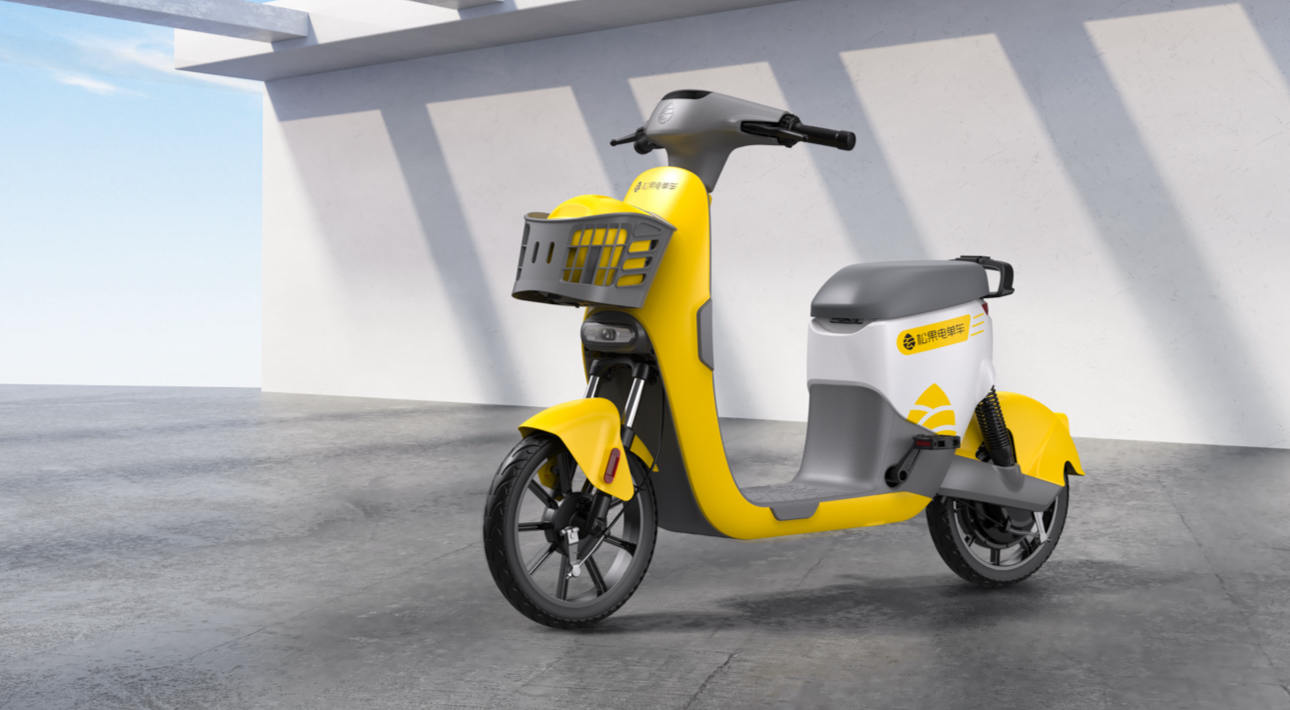
Songguo Mobility is the only shared e-bike platform in China covering the entire value chain (from independent e-bike design and production to operation management) [1]. It chooses to compete differently with industry giants such as Meituan, Didi, and Hello Bike, focusing on county-level and sinking markets with short decision-making chains and flexible operations [1]. Based on transaction volume and e-bike deployment volume in 2024, it is the largest shared e-bike service operator in China’s peripheral development regions and ranks fourth in the overall market [1].
Relying on its proprietary AI operation management system and localized teams, the company has achieved efficient vehicle scheduling and operation maintenance management [1], which helps control operating costs and improve asset turnover efficiency.
Compared with platforms with ecological synergy capabilities such as Meituan, Didi, and Hello Bike, Songguo Mobility lacks ecological traffic diversion and cross-subsidy support, and must face profit pressure independently [1]. In the stage of deepening industry competition, this is a significant challenge for its long-term development.
The shared e-bike business is essentially a heavy asset model, and asset turnover efficiency and operation and maintenance costs are key challenges [1]. A large amount of capital investment is required in the early stage for vehicle procurement and deployment, and continuous investment is needed for operation and maintenance as well as replacement in the later stage.
Although the company’s cooperation model with local governments has formed certain regional barriers, it also makes the company’s operation highly dependent on the policy environment [1]. Against the background of strengthened industry regulations and widespread implementation of total volume control policies, expansion space may be restricted.
The shared mobility market is highly competitive, and giant platforms have stronger financial strength and more complete ecological systems. Songguo Mobility needs to continuously improve operational efficiency and profitability while maintaining its differentiated advantages.
- Continuous narrowing of losses and realization of profit turnaround verify the feasibility of the business model
- Continuous improvement of gross margin (24.3%) indicates that scale effect is emerging
- Steady growth of user scale and steady increase of market share
- The track it is in has a high ceiling, and the industry growth prospect is clear
- Just achieved initial profit; the sustainability of profit remains to be seen
- Heavy asset model has high requirements for cash flow management
- Changes in policy environment may affect business expansion
- Competitive pressure from giants continues to exist
##4. Conclusion
Songguo Mobility’s realization of profit turnaround in the first three quarters of 2025 marks a turning point in its business model from the “validation period” to the “growth period”. From the fundamental perspective, the shared e-bike track it is in has broad market space, and the company has built certain competitive barriers through differentiated positioning and complete industrial chain. However, the stability of its profit model still needs continuous verification, and it mainly faces challenges such as
For investors, as a leader in the vertical field of shared e-bikes, Songguo Mobility has certain scarcity value, but it is necessary to pay close attention to its
[1] Sina Finance - “Songguo Mobility Submits Listing Application to HKEX; Turns Profit in First Three Quarters of 2025” (https://finance.sina.com.cn/jjxw/2026-01-04/doc-inhfeeei2719022.shtml)
Insights are generated using AI models and historical data for informational purposes only. They do not constitute investment advice or recommendations. Past performance is not indicative of future results.
About us: Ginlix AI is the AI Investment Copilot powered by real data, bridging advanced AI with professional financial databases to provide verifiable, truth-based answers. Please use the chat box below to ask any financial question.