
Oklo Secures DOE Nuclear Safety Design Approval for Aurora Fuel Facility
Unlock More Features
Login to access AI-powered analysis, deep research reports and more advanced features
About us: Ginlix AI is the AI Investment Copilot powered by real data, bridging advanced AI with professional financial databases to provide verifiable, truth-based answers. Please use the chat box below to ask any financial question.
Related Stocks
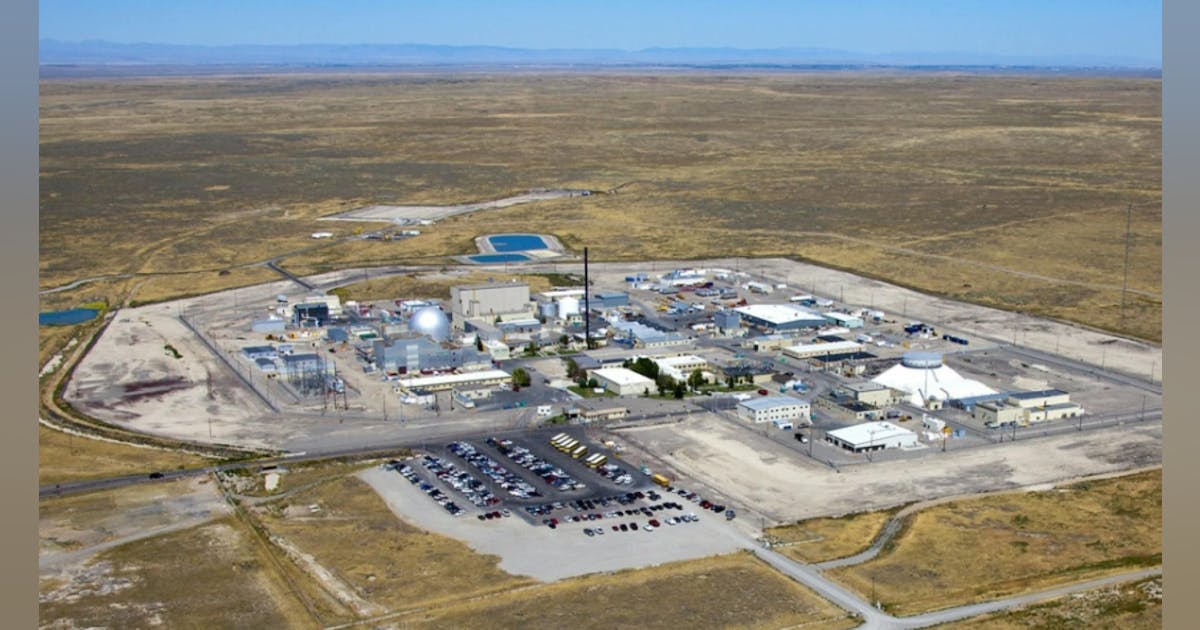
This analysis is based on the Oklo Inc. press release [1] published on November 11, 2025, announcing the U.S. Department of Energy’s approval of the Nuclear Safety Design Agreement (NSDA) for the Aurora Fuel Fabrication Facility (A3F) at Idaho National Laboratory (INL). This approval represents a significant regulatory milestone, being the first granted under the DOE’s Advanced Nuclear Fuel Line Pilot Projects and completed in just under two weeks, demonstrating an expedited authorization pathway for advanced nuclear technologies [1][2].
The approval positions Oklo strategically within the advanced nuclear energy sector, which is experiencing substantial growth. The global Small Modular Reactor (SMR) market is projected to grow from $5.95 billion in 2024 to $8.20 billion by 2035 (CAGR 2.96%) [4], with some projections indicating even more aggressive growth to $13.8 billion by 2032 (CAGR 9.1%) [5]. This growth is driven by increasing clean energy demand, enhanced safety features, lower capital costs, and growing focus on decarbonization and energy security [4].
Oklo’s competitive advantages include vertical integration of design, licensing, fuel supply, and recycling capabilities; regulatory first-mover advantage as the first NSDA recipient under the new DOE framework; technology foundation building on 400+ combined reactor years of operating experience; and strong financial position with approximately $1.2 billion in cash and marketable securities as of Q3 2025 [6].
- Market Leadership: First-mover advantage in DOE’s new regulatory pathway could establish long-term competitive positioning
- Supply Chain Integration: Vertical integration of fuel production provides cost advantages and supply security
- Growing Demand: AI-driven data center expansion creates substantial clean energy demand
- Policy Support: Continued government backing through DOE programs and potential Nuclear Refuel Act 2025
- Regulatory Transition: Despite DOE progress, full commercial licensing still requires NRC approval, creating potential timeline uncertainty
- Execution Challenges: Commercial deployment targets of 2027-2028 may face delays given policy ambitions for 2026 reactor operations [3]
- Financial Performance: Company reported Q3 2025 losses of $0.20 per share with zero revenue [3]
- Technology Risk: First-of-a-kind technologies face operational and performance uncertainties
- Market Competition: Rapidly evolving competitive landscape with multiple SMR technology approaches
The DOE approval for Oklo’s Aurora Fuel Fabrication Facility represents a significant milestone in the advanced nuclear energy sector, demonstrating the effectiveness of new regulatory pathways and addressing critical fuel supply challenges. The company’s stock performance reflects both opportunity and volatility, with gains of 401.14% year-to-date and a current market cap of $16.16 billion [0]. Analyst consensus remains BUY with a price target of $134.00 (+22.4% from current) [0].
The broader HALEU supply chain is developing concurrently, with Centrus Energy delivering 900 kilograms to the DOE by June 2025 and securing contract extensions through June 2026 [7][8]. Oklo’s Advanced Fuel Center represents up to $1.68 billion investment, anchoring long-term fuel supply chain development with a Tennessee facility that will enable conversion of used fuel into new metal fuel [6].
The advanced nuclear market features several key competitors including NuScale Power, GE Hitachi, X-energy, and traditional nuclear players like Constellation [5]. Oklo’s progress establishes a benchmark for regulatory achievement and supply chain integration that competitors must address to maintain market position.
Critical success factors for industry participants include regulatory navigation, fuel supply security, technology validation, capital efficiency, and market timing alignment with growing energy demand, particularly from data centers [6].
Insights are generated using AI models and historical data for informational purposes only. They do not constitute investment advice or recommendations. Past performance is not indicative of future results.
About us: Ginlix AI is the AI Investment Copilot powered by real data, bridging advanced AI with professional financial databases to provide verifiable, truth-based answers. Please use the chat box below to ask any financial question.