
Sanhuan Group: Analysis of the Successful Replication Path from Alumina Ceramic Substrates to MLCC Business
Unlock More Features
Login to access AI-powered analysis, deep research reports and more advanced features
About us: Ginlix AI is the AI Investment Copilot powered by real data, bridging advanced AI with professional financial databases to provide verifiable, truth-based answers. Please use the chat box below to ask any financial question.
Related Stocks
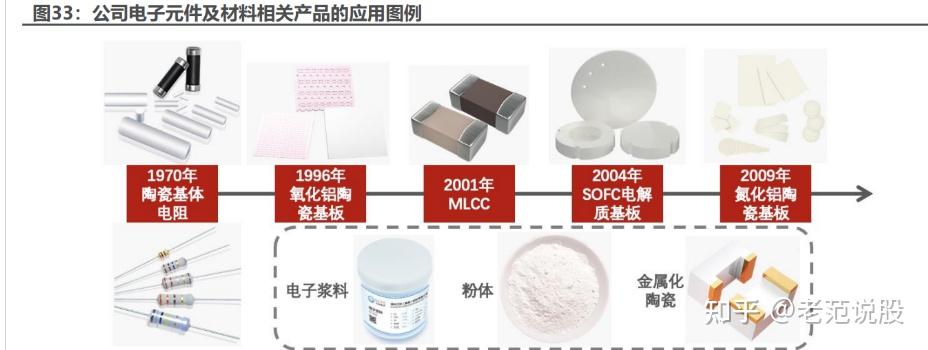
Sanhuan Group has achieved a remarkable market position in the alumina ceramic substrate sector. According to the latest data, the company’s global market share in this business reached 52% in 2024, ranking first in the industry [1]. This advantage is built on decades of technical accumulation and vertical integration production capabilities. From the industrial chain perspective, the company has realized full-process independent control from raw material powder preparation to final product forming, which effectively reduces production costs and ensures product quality stability [2].
In the semiconductor ceramic packaging base sector, Sanhuan Group also holds more than 50% of the global market share, filling the gap in the domestic industry [3]. In addition, products such as SOFC diaphragms and MT ferrules also rank first globally. This pattern of multiple successes reflects the company’s technical depth and market development capabilities in the electronic ceramic materials field.
In contrast, although Sanhuan Group’s MLCC business is growing rapidly, its position in the global market is still weak. The company became the largest MLCC supplier in mainland China in 2024, but ranked ninth globally with a market share of approximately 2% [3]. This data forms a sharp contrast with the alumina ceramic substrate business, reflecting the different competitive landscapes and technical barriers in the two markets.
In terms of financial performance, Sanhuan Group achieved operating revenue of 3.427 billion yuan in the first half of 2024, a year-on-year increase of 30.36%; net profit attributable to the parent company was 1.026 billion yuan, a year-on-year increase of 40.26%, with a gross sales margin of 41.90% [4]. The rapid growth of the MLCC business is mainly due to the continuous improvement in demand from downstream industries such as consumer electronics and optical communication, as well as the increasing market recognition of the company’s products.
Sanhuan Group’s technical breakthroughs in the MLCC field are worth noting. The company has successfully reduced the MLCC dielectric layer thickness from the industry mainstream of 5 microns to less than 1 micron, with stacking layers exceeding 1000 [3]. This technical breakthrough enables the company to compete with international giants in the high-end MLCC market. At the same time, the company’s automotive-grade MLCC products have passed the AEC-Q200 certification, achieving important breakthroughs in the new energy vehicle sector [5].
In terms of product specifications, Sanhuan Group’s MLCC products already cover mainstream sizes from 0201 to 2220, and subsequent expansion plans will focus on high-capacity product models [2]. The company stated that with the pull of AI innovation, high-capacity products have entered a period of explosion. This technical upgrade path is highly consistent with the company’s consistent “Materials +” development strategy.
Sanhuan Group’s core competitiveness lies in its vertical integration production capabilities. The company has achieved in-depth integration of ceramic materials from materials to equipment, which supports the company’s outstanding performance in cost control and product R&D innovation [2]. In the alumina ceramic substrate business, it was precisely by virtue of this full-chain capability from powder preparation to finished product processing that the company achieved a leading global market share of 52%.
The global MLCC market presents a highly concentrated competitive landscape. Japan’s Murata Manufacturing ranks first with a 32.7% market share, and Samsung Electro-Mechanics ranks second with 20.5%, together accounting for half of the global market [3]. In 2024, Japanese companies’ overall market share reached 54.5%, while mainland Chinese MLCC manufacturers accounted for only 9.2% of the global share [5]. This pattern reflects the extremely high technical barriers and capital-intensive characteristics of the MLCC market.
According to CECA data, the global MLCC market size was 120.4 billion yuan in 2022 and is expected to reach 154.7 billion yuan by 2026 [4]. New energy vehicles and AI data centers are the two major engines driving MLCC demand growth. The MLCC usage per traditional fuel vehicle is approximately 3,000 pieces, while that of pure electric vehicles can reach 18,000 pieces [5].
The competitive landscape of the alumina ceramic substrate market is relatively scattered, and Sanhuan Group can achieve market leadership through technical accumulation and cost advantages. However, the MLCC market has been dominated by Japanese and South Korean manufacturers for many years, who have established strong technical patent barriers and customer relationship networks. Murata Manufacturing ships approximately 1 trillion MLCCs globally every year, and this scale advantage poses a significant challenge to new entrants [5].
-
Transfer of Technical Accumulation: Sanhuan Group’s deep accumulation in the electronic ceramic materials field provides a solid foundation for its MLCC business. The company has successfully broken through the two major technical difficulties of small size and high capacity, forming a rich product matrix [4]. From the material perspective, there are technical commonalities between alumina ceramic substrates and MLCCs in ceramic dielectric preparation, and this accumulation helps accelerate the iterative upgrade of MLCC technology.
-
Domestic Substitution Opportunities: Mainland Chinese MLCC manufacturers account for only 9.2% of the global share, leaving broad space for domestic substitution [5]. Against the backdrop of Sino-US technological competition, domestic end customers’ acceptance of domestic MLCCs has significantly increased, and Sanhuan Group’s high-capacity MLCC products have entered benchmark customers such as Hikvision, Dahua, Haier, and Huaxing [2].
-
Explosive Demand for New Energy Vehicles: The development of new energy vehicles is driving the continuous expansion of the automotive electronic MLCC market. Global new energy vehicle sales were 3.31 million units in 2020 and are expected to reach 44.05 million units by 2030, with a compound annual growth rate of 29.54% [5]. Sanhuan Group’s automotive-grade MLCC products have passed certification and are gradually entering the supply chain of well-known automotive-grade manufacturers.
-
Capital Support for Expansion: The company is promoting multiple MLCC expansion projects and further financing through a Hong Kong IPO [1]. Sufficient capital support helps accelerate capacity expansion and R&D progress.
-
Huge Market Share Gap: The 2% global market share of the MLCC business is vastly different from the 52% of the alumina ceramic substrate business. In the market pattern where Murata holds 32.7% and Samsung Electro-Mechanics holds 20.5%, Sanhuan Group needs a long time and huge investment to achieve a similar market position.
-
Persistent Technical Gaps: Although Sanhuan Group has achieved a technical breakthrough of 1-micron dielectric layer, Murata Manufacturing has already reached the 0.8-micron level [3]. There are still gaps with international leaders in terms of dielectric layer thickness, stacking layers, and product consistency.
-
Long Cycle for Establishing Customer Trust: As key electronic components, MLCCs have long verification cycles and high replacement costs for downstream customers. Sanhuan Group needs to gradually accumulate customer trust to gain more share in the high-end market.
The success Sanhuan Group has achieved in the alumina ceramic substrate sector (52% global market share) provides valuable experience and technical foundation for the development of its MLCC business. However, replicating this successful path faces significant challenges. The MLCC market has a more fierce competitive landscape, higher technical barriers, and more stable customer relationships.
In the short term, Sanhuan Group’s MLCC business is expected to achieve rapid growth in the domestic market, benefiting from the domestic substitution wave and the explosive demand for new energy vehicles. In the medium term, the company needs to continue investing in R&D to narrow the technical gap with international leaders in high-end products. In the long term, to achieve a leading position in the global MLCC market similar to that in alumina ceramic substrates, it still needs to overcome huge market entry barriers.
Comprehensive evaluation shows that Sanhuan Group has the ability to gradually increase its market share in the MLCC field, but it is difficult to replicate the market position of the alumina ceramic substrate business in the short term. The company needs to continue its efforts in technical breakthroughs, capacity expansion, and customer development. It is expected that the next 3-5 years will be a critical period for establishing its market position in the MLCC field.
[1] Caifuhao - “Chaozhou Sanhuan Rushes for Hong Kong IPO! 52% Global Ceramic Substrate Market Share Ignites the Market” (https://caifuhao.eastmoney.com/news/20251205221440014719770)
[2] Eastmoney.com - “Sanhuan Group (300408.SZ) Research Report” (http://pdf.dfcfw.com/pdf/H3_AP202412131641293805_1.pdf)
[3] Caifuhao - “In-depth Research Report on the Market Competitiveness of Chaozhou Sanhuan Group” (https://caifuhao.eastmoney.com/news/20251225002127153411590)
[4] Securities Times - “Sanhuan Group: H1 Revenue and Net Profit Growth Exceed 30%, MLCC Technical Breakthrough” (https://stcn.com/article/detail/1303347.html)
[5] Eastmoney.com - “In-depth Research Report on Sanhuan Group (300408.SZ)” (https://pdf.dfcfw.com/pdf/H3_AP202508221732274480_1.pdf)
Insights are generated using AI models and historical data for informational purposes only. They do not constitute investment advice or recommendations. Past performance is not indicative of future results.
About us: Ginlix AI is the AI Investment Copilot powered by real data, bridging advanced AI with professional financial databases to provide verifiable, truth-based answers. Please use the chat box below to ask any financial question.