
Energy Sector Analysis: AI Data Center Power Constraints Create Investment Opportunities in Natural Gas Stocks
Unlock More Features
Login to access AI-powered analysis, deep research reports and more advanced features
About us: Ginlix AI is the AI Investment Copilot powered by real data, bridging advanced AI with professional financial databases to provide verifiable, truth-based answers. Please use the chat box below to ask any financial question.
Related Stocks
This analysis is based on the Seeking Alpha article [1] published on November 11, 2025, which argues that energy stocks are poised for a major rotation as AI-driven data center growth exposes power supply constraints. The thesis positions energy as the new bottleneck for big tech companies, with natural gas demand expected to surge due to AI expansion and LNG exports [1].
Current market data [0] shows mixed performance for the highlighted energy companies against a backdrop of broader market weakness. The energy sector is currently down -1.26%, with major indices also declining: S&P 500 (-0.36%), NASDAQ (-1.00%), and Technology sector (-1.35%) [0].
-
Comstock Resources (CRK): Despite strong recent performance (1-month: +34.26%, 3-month: +59.04%, YTD: +32.25%), the stock faces significant valuation concerns with a P/E ratio of 96.58x and analyst consensus target of $16.00 (35.3% below current price) [0].
-
Antero Resources (AR): Shows more moderate recent gains (1-month: +8.58%, 3-month: +6.06%) but has stronger analyst support with a consensus target of $41.50 (+21.0% upside) and reasonable valuation metrics (P/E: 19.34x, ROE: 7.58%) [0].
-
EQT Corporation (EQT): Demonstrates solid performance (1-month: +14.12%, YTD: +28.03%) with the strongest profitability metrics (ROE: 8.29%, Net Margin: 20.69%) but faces analyst skepticism with consensus target of $44.00 (-27.4% downside) [0].
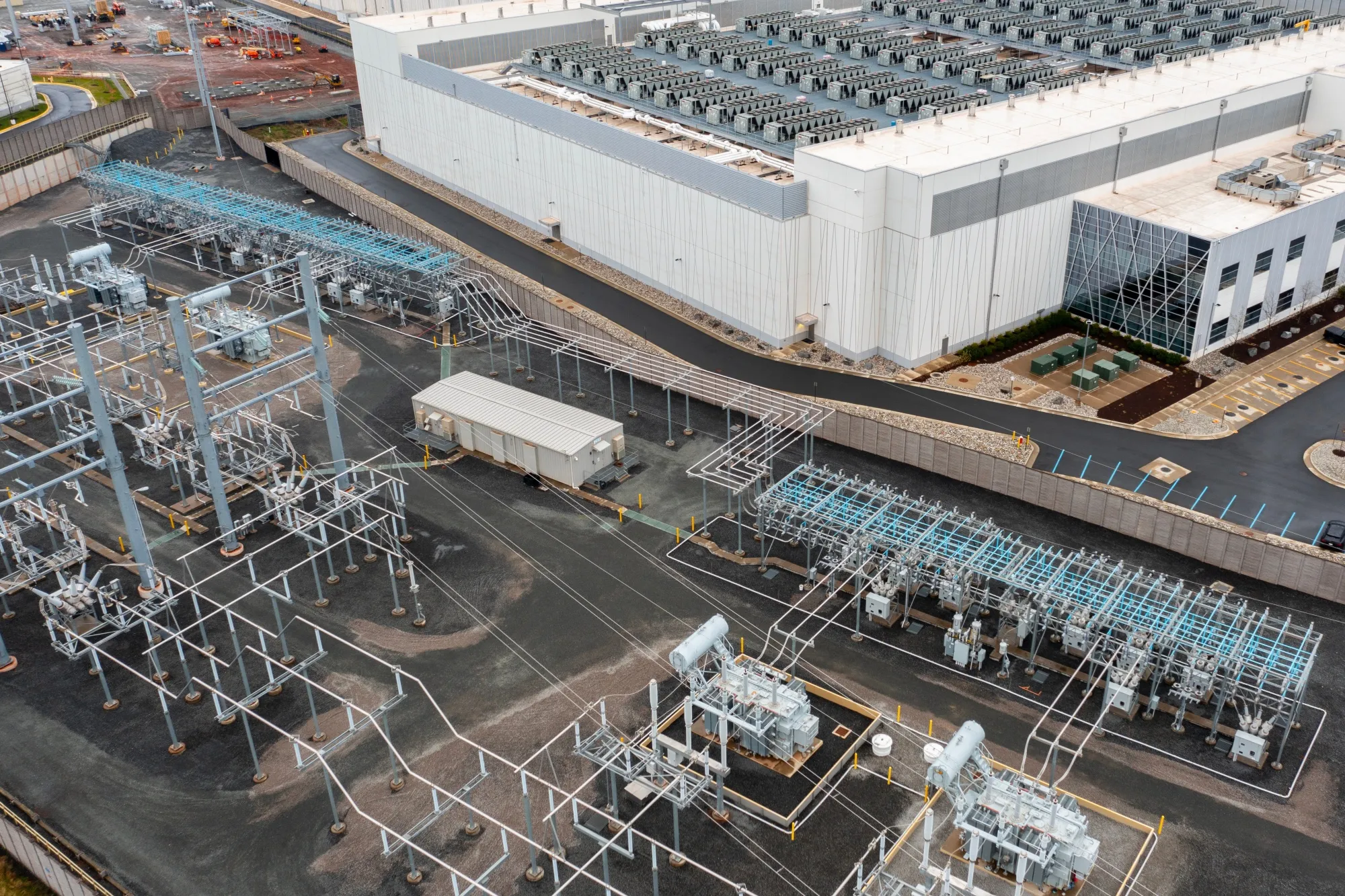
Independent research supports the article’s core thesis about growing power constraints. According to Pew Research analysis based on IEA data, natural gas is projected to continue supplying the largest share of energy at data centers through 2030 [2]. Goldman Sachs research indicates that by 2027, a top AI system will require approximately 600 kilowatts of power - equivalent to the needs of 500 homes [3].
The global data center market was valued at $347.6 billion in 2024 and is projected to grow to $652 billion by 2030 (11.2% CAGR) [3]. This growth creates significant infrastructure challenges, with regions like South Carolina, Illinois, Arizona, and Mississippi requiring natural gas infrastructure development to meet data center demand [4].
The analysis reveals a critical convergence between AI technological advancement and energy infrastructure constraints. Unlike typical tech sector investments, the beneficiaries of AI growth may shift to energy companies that can solve the power bottleneck. This represents a fundamental realignment of value creation in the AI ecosystem.
The PJM electricity market provides concrete evidence of this trend, where data centers accounted for an estimated $9.3 billion price increase in capacity markets, with residential bills expected to rise by $16-18 monthly [2]. This demonstrates that power constraints are not theoretical but already impacting consumer costs and market dynamics.
A significant disconnect exists between the strong fundamental demand thesis and current market valuations. While CRK has shown exceptional momentum, its 96.58x P/E ratio suggests market expectations may be pricing in substantial future growth that has not yet materialized [0]. Similarly, EQT’s strong profitability metrics contrast with analyst targets indicating significant downside potential [0].
The Seeking Alpha analysis presents a compelling thesis about energy becoming the bottleneck for AI growth, with natural gas companies positioned to benefit [1]. Independent research from Pew Research [2], Goldman Sachs [3], and Trio Advisory [4] supports the fundamental demand drivers, showing that data center power consumption will create significant natural gas demand through 2030.
However, current market data reveals substantial headwinds. All three highlighted companies face analyst skepticism with consensus targets below current prices, and CRK’s valuation appears particularly stretched at 96.58x earnings [0]. The energy sector is currently underperforming broader markets (-1.26% vs -0.36% S&P 500) [0], suggesting the rotation thesis has not yet gained market traction.
Investors should monitor data center power consumption growth, natural gas infrastructure development progress, and regional power market dynamics to assess the timing and magnitude of benefits to specific companies. The fundamental thesis appears sound, but valuation concerns and near-term market weakness suggest careful consideration of entry points and risk management is warranted.
Insights are generated using AI models and historical data for informational purposes only. They do not constitute investment advice or recommendations. Past performance is not indicative of future results.
About us: Ginlix AI is the AI Investment Copilot powered by real data, bridging advanced AI with professional financial databases to provide verifiable, truth-based answers. Please use the chat box below to ask any financial question.