
Baidu's Spin-off of Kunlun Chip for Listing and Investment Research Analysis on Super Node Technology
Unlock More Features
Login to access AI-powered analysis, deep research reports and more advanced features
About us: Ginlix AI is the AI Investment Copilot powered by real data, bridging advanced AI with professional financial databases to provide verifiable, truth-based answers. Please use the chat box below to ask any financial question.
Related Stocks
Based on the above research data and analysis, here is a deep investment research report on whether Baidu’s spin-off of Kunlun Chip for listing and its super node technology can support AI inference computing power needs.
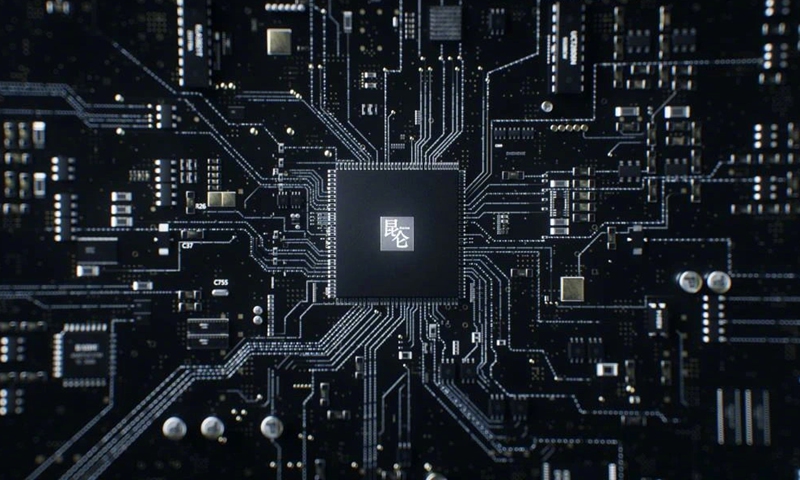
On January 2, 2026, Baidu Group officially issued an announcement stating that its holding subsidiary Kunlun Chip had submitted a listing application form (Form A1) to the Hong Kong Stock Exchange in confidence via joint sponsors on January 1, 2026, applying for listing and trading on the main board of the Hong Kong Stock Exchange [1]. This milestone event marks Kunlun Chip’s official transformation from Baidu’s internal R&D department to an independent AI chip supplier facing the public market.
From the timeline perspective, Baidu first confirmed in December 7, 2025 that it was evaluating the proposed spin-off and listing, Kunlun Chip completed the shareholding system reform (registered capital increased from approximately RMB 21.28 million to RMB 400 million) on December 16, and formally submitted the listing application on January 1, 2026, taking only about one month for the entire process, demonstrating an efficient capital operation rhythm [2].
According to the latest financing data, Kunlun Chip’s valuation has jumped from RMB 13 billion when it operated independently in 2021 to RMB 21 billion in July 2025, an increase of more than 60% [3]. JPMorgan Chase’s forecast is more optimistic: Baidu Kunlun Chip’s revenue will soar from approximately RMB 1.3 billion in 2025 to RMB 8.3 billion in 2026, an increase of 6 times. If calculated based on the average price-to-sales ratio (PS) of 10 times for tech stocks, the valuation is expected to exceed RMB 80 billion, and the value of the part held by Baidu will be significantly increased [1].
Fraser Research’s estimate is more prudent but still optimistic: Considering the discount between A-shares and H-shares and industrial development trends, the 100% shareholding valuation of Kunlun Chip is expected to be between USD 16 billion and USD 23 billion; if the value of Baidu’s holding of KLX is included, Baidu’s valuation should be equivalent to USD 9 billion to USD 13 billion [4]. Based on this, Fraser raised Baidu’s target price from HK$154 to HK$176, an increase of 14%, and the US stock target price to USD 181.
Kunlun Chip’s third-generation product P800 series is the technical cornerstone supporting its high valuation, adopting the self-developed XPU-P architecture and demonstrating the strength to compete with international giants in multiple key indicators [5]:
| Technical Indicator | Kunlun Chip P800 | NVIDIA H20 | Competitive Advantage |
|---|---|---|---|
| FP16 Computing Power | 345 TFLOPS | 148 TFLOPS | 133% Lead |
| Memory Specification | 20%-50% higher than similar products | Standard configuration | Large Memory Advantage |
| Cluster Scale | 32,000 cards | 10,000-card level | Large-scale Leadership |
| Effective Training Efficiency | 98% | 95% | Stronger Stability |
| Linear Speedup Ratio | 96% | 90% | Better Scalability |
Test data shows that Kunlun Chip P800’s FP16 computing power reaches 345 TFLOPS, far exceeding NVIDIA’s H20 chip customized for the Chinese market (148 TFLOPS), and its performance ranks in the first tier among domestic chips [5]. Its large memory advantage is extremely friendly to the MoE (Mixture of Experts) architecture; a single machine with 8 cards can run ultra-large models such as DeepSeek-V3/R1 with 671B parameters, and only 32 machines are needed to support full-parameter training of the model.
At the Baidu World Conference held in November 2025, Baidu officially released the new generation Kunlun Chip and super node product “Tianchi”, which is a major breakthrough in Kunlun Chip’s system-level integration capability [6]. The core technical features of Tianchi Super Node include:
Baidu Smart Cloud has completed the large-scale deployment of the first domestically self-developed 30,000-card cluster based on Kunlun Chip P800, which is the best proof of Kunlun Chip’s system-level engineering capability [8]. Relying on the Baige AI heterogeneous computing platform 4.0, this cluster has achieved an effective training duration of 99.5% and a linear speedup ratio of over 96%, successfully solving the stability problem of “10,000 cards being 10,000 pits”.
This engineering practice verifies the technical reliability of Kunlun Chip in ultra-large-scale cluster deployment, laying a solid foundation for subsequent commercial promotion.
According to Deloitte’s “2026 Global High-tech, Media and Telecommunications Industry Trend Forecast” report, with the rapid evolution of large-scale AI applications, AI model inference computing will account for two-thirds (67%) of total AI computing volume. This transformation marks that AI computing power demand is evolving from training-centered to a balance between training and large-scale inference [9].
Guojin Securities’ research report points out that the daily token usage of Doubao large model soared from 16.4 trillion in May 2025 to 50 trillion in December 2025, an increase of more than 200%, directly reflecting the explosive growth of inference demand [10].
| Year | Inference Computing Power Proportion | Domestic Market Size | Global Market Size | Demand for 10,000-card Cluster |
|---|---|---|---|---|
| 2024 | 45% | RMB 80 billion | USD 80 billion | 50 |
| 2025 | 55% | RMB 150 billion | USD 120 billion | 150 |
| 2026 | 67% | RMB 280 billion | USD 180 billion | 400 |
| 2027 | 75% | RMB 450 billion | USD 250 billion | 800 |
According to Crowe’s forecast, by 2026, AI model inference computing will account for two-thirds of total AI computing volume, and related loads will still be mainly concentrated in data centers, relying on high-end AI chips worth more than USD 200 billion to support operations [9]. At the same time, sovereign AI has become a new focus, and it is expected that nearly USD 100 billion will be invested in local computing capacity building globally in 2026.
The core logic that Kunlun Chip’s super node technology can effectively support AI inference computing power demand is as follows:
Kunlun Chip’s technical capabilities have been fully verified by the market:
-
Operator Breakthrough: In August 2025, Kunlun Chip won the bid for China Mobile’s 1 billion-level AI computing equipment procurement project, marking its products entering the procurement list of national core information infrastructure [5].
-
Financial Landing: The actual test of China Merchants Bank’s AI chip resource project shows that Kunlun Chip P800’s performance support for the Qwen series far exceeds similar domestic chips, and the inference performance of some multi-modal models reaches the industry-leading level [5].
-
Industry Coverage: Kunlun Chip products have entered multiple key fields such as energy and power (State Grid, China Southern Power Grid), manufacturing (China Iron and Steel Research Institute), and education and scientific research (Tongji University) [8].
Although Kunlun Chip has competitive advantages in technical performance, there are still the following areas that need continuous improvement:
-
Technology Leadership Advantage: Kunlun Chip P800’s computing power performance leads NVIDIA H20 by 133%, and the large-scale deployment capability of 30,000-card cluster verifies system-level engineering strength.
-
Market Demand Alignment: The demand for inference computing power will increase from 45% in 2024 to 67% in 2026, and Kunlun Chip’s high throughput and low cost characteristics are highly aligned with this market trend.
-
Commercialization Acceleration: Winning the bid for China Mobile’s 1 billion-level procurement, entering key fields such as finance and energy, with revenue exceeding RMB 1 billion in 2024, leading peers such as Cambricon and Moore Thread.
-
Valuation Re-rating Space: JPMorgan Chase predicts that revenue will soar from RMB 1.3 billion to RMB 8.3 billion in 2026, and if calculated based on a PS ratio of 10 times, the valuation is expected to exceed RMB 80 billion.
-
International Competition Pressure: After listing, it needs to face direct competition from giants with absolute ecosystem advantages such as NVIDIA and AMD.
-
Profitability Verification: Currently, Kunlun Chip’s profitability has yet to be verified by the public market. In an environment where the capital market’s tolerance for the profit cycle of hard technology enterprises is declining, how to clarify the commercialization path and gross profit margin model will become a key challenge.
-
Software Ecosystem Construction: It is necessary to build a software stack and developer ecosystem independent of Baidu while being compatible with multiple models, which is the key to long-term development.
-
Geopolitical Risks: The semiconductor supply chain continues to face geopolitical risks, which may affect the acquisition of advanced processes and overseas market expansion.
Based on the above analysis, Kunlun Chip’s super node technology
-
Leading Single-card Performance: P800’s 345 TFLOPS computing power ranks in the first tier among domestic chips, far exceeding international competitors.
-
Outstanding Cluster Capability: The large-scale deployment capability of 32,000-card cluster verifies system-level engineering strength, with an effective training efficiency of 98% and a linear speedup ratio of 96% reaching international first-tier levels.
-
Super Node Innovation: Tianchi Super Node’s 64-card per cabinet high-density design and self-developed communication architecture effectively solve the communication bottleneck and cost pain points of large-scale inference scenarios.
From the perspective of market matching, as the demand for AI inference computing power increases from 45% in 2024 to 67% in 2026, Kunlun Chip’s high throughput and low cost characteristics are highly aligned with this market trend. In terms of commercialization, winning the bid for China Mobile’s procurement and entering key fields such as finance and energy have fully verified the reliability of its products.
For Baidu, spinning off Kunlun Chip for listing will release the value of undervalued AI underlying hardware assets. JPMorgan Chase predicts that the valuation is expected to exceed RMB 80 billion, which will significantly increase the value of Baidu’s shareholders. From an industrial perspective, the independent development of Kunlun Chip is expected to replicate NVIDIA’s successful path, build a Chinese version of the AI computing power closed loop, and achieve a virtuous cycle of “internal verification + external expansion”.
[1] Red Star Capital Bureau - “Kunlun Chip Goes to Hong Kong for Independent IPO, Baidu’s Stock Price Soars by Nearly 10% in a Single Day” (https://wap.eastmoney.com/a/202601033607711858.html)
[2] Sina Finance - “Baidu Officially Announces: Plans to Spin off Kunlun Chip Business and List Independently on the Hong Kong Stock Exchange” (https://finance.sina.com.cn/roll/2026-01-02/doc-inhewqnv2258262.shtml)
[3] Phoenix Finance - “Baidu’s Stock Price Soars by Nearly 10% in a Single Day ‘Kunlun Chip’ Independent IPO Ignites Value Re-rating” (https://i.ifeng.com/c/8paX05CpjTE)
[4] Fraser Research Report - “Fraser Raises Baidu’s Target Price by 14%, Saying Spin-off Can Release Kunlun Chip’s Value” (https://hk.finance.yahoo.com/news/)
[5] 36氪 - “Baidu’s AI Ace Kunlun Chip Goes to Hong Kong IPO, Domestic Computing Power Breakthrough Faces Key Trial” (https://m.36kr.com/p/3582740350253954)
[6] Tencent Cloud Developer Community - “Kunlun Chip Super Node Leads Domestic Computing Power Upgrade, AI Infrastructure Moves from ‘Available’ to ‘Efficient’” (https://cloud.tencent.com/developer/article/2579299)
[7] Daily Economic News - “Baidu Launches Evaluation of Kunlun Chip Spin-off and Listing, Can It Break the ‘Identity Dilemma’ of Big Factory Chip Manufacturing?” (https://www.nbd.com.cn/articles/2025-12-08/4172702.html)
[8] Electronic Innovation Network - “Kunlun Chip Secretly Goes to Hong Kong IPO” (https://www.eet-china.com/mp/a464046.html)
[9] Deloitte’s “2026 Global High-tech, Media and Telecommunications Industry Trend Forecast” - “AI Agents and Computing Power Sovereignty Define New Tracks for the 2026 Global TMT Industry” (https://www.deloitte.com/tw/tc/about/press-room/pr20251223-tmt-predictions-2026.html)
[10] Guojin Securities Research Report - “Everything Still Points to Computing Power” (https://finance.sina.cn/stock/yjbg/2025-12-28/detail-inheivts5816842.d.html)
[11] Six Hundred Park - “Baidu Plans to Spin off Kunlun Chip for Listing to Reproduce the Wealth Creation Myth?” (https://www.6park.com/news/1765806172.html)
This report is compiled and analyzed by Jinling AI based on public information and does not constitute investment advice. Investors should make prudent decisions based on their own risk tolerance.
Insights are generated using AI models and historical data for informational purposes only. They do not constitute investment advice or recommendations. Past performance is not indicative of future results.
About us: Ginlix AI is the AI Investment Copilot powered by real data, bridging advanced AI with professional financial databases to provide verifiable, truth-based answers. Please use the chat box below to ask any financial question.