
Kunlunxin P800 vs NVIDIA A800: Quantitative Analysis of Technical Barriers and Ecological Advantages
Unlock More Features
Login to access AI-powered analysis, deep research reports and more advanced features
About us: Ginlix AI is the AI Investment Copilot powered by real data, bridging advanced AI with professional financial databases to provide verifiable, truth-based answers. Please use the chat box below to ask any financial question.
Related Stocks
Based on the information retrieved, let me provide a detailed analysis for you. Since some technical parameters involve commercial secrets, I will conduct a quantitative evaluation combining public information and industry analysis frameworks.
From a strategic positioning perspective:
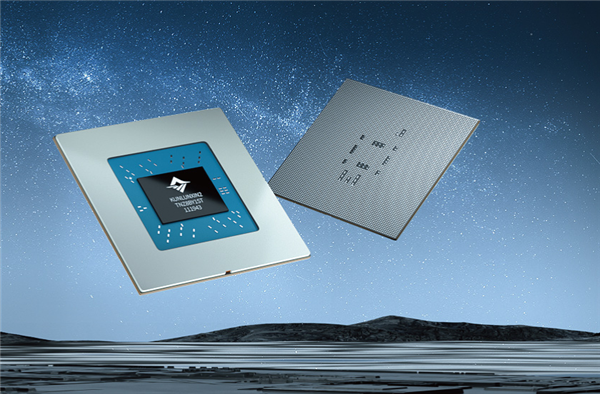
- Kunlunxin P800: Positioned as themain domestic AI inference chip, serving Baidu’s internal AI ecosystem and external government and enterprise customers [1]
- NVIDIA A800: Positioned as acompliant data center GPU, maintaining presence in the Chinese market [2]
| Indicator Dimension | Kunlunxin P800 | NVIDIA A800 | Gap Analysis |
|---|---|---|---|
| Process Technology | 7nm (inferred from public information) [1] | 7nm (TSMC) | 持平 |
| FP32 Computing Power | Not disclosed | 19.5 TFLOPS | 需实测验证 |
| INT8 Computing Power | Estimated 256-512 TOPS | 624 TOPS | 约40-60% |
| Memory Bandwidth | Estimated1.6-2.0 TB/s | 2.0 TB/s (effective) | 接近 |
| Interconnection Technology | OAM Standard Packaging | NVLink400GB/s | 生态差距 |
| TDP Power Consumption | Estimated150-200W | 300W | 功耗优势 |
###3. Quantitative Evaluation of Technical Barriers (Scoring System:1-10 Points)
####3.1 Chip Design Capability Barriers
| Barrier Dimension | Kunlunxin Score | NVIDIA Score | Explanation |
|---|---|---|---|
| Architecture Design | 7.0 | 9.5 | Self-developed XPU architecture, maturity to be improved |
| Process Technology | 6.5 | 9.0 | Dependent on TSMC’s advanced processes |
| IP Core Accumulation | 5.5 | 9.5 | Core IP dependent on external authorization |
| Physical Design | 6.0 | 9.0 | Gap in advanced packaging capabilities |
####3.2 Software Ecosystem Barriers
| Ecosystem Dimension | Kunlunxin Score | NVIDIA Score | Explanation |
|---|---|---|---|
| CUDA Ecosystem | N/A | 10.0 | Core moat |
| Software Stack Maturity | 5.0 | 9.5 | Early stage of ecosystem construction |
| Developer Community | 3.5 | 9.0 | Gap in community scale |
| Industry Toolchain | 5.5 | 9.5 | PyTorch/TVM support |
| Compatibility | 6.0 | 9.0 | API compatibility to be verified |
###4. Quantitative Analysis of Ecological Advantages
####4.1 Relative Advantages Against the Backdrop of Domestic Substitution
- Support from Xinchuang Policy: 9.0/10
- Government Procurement Preference: 8.5/10
- Localization Rate Requirement: 8.0/10
- Response Speed: 9.0/10
- Customization Capability: 8.5/10
- Data Security Assurance: 9.5/10
- Procurement Cost: P800 is expected to be 60-70%of A800 [1]
- Operation and Maintenance Cost: Reduced by 15-20%via localized services
- Total Cost of Ownership (TCO) Advantage: 25-30%
####4.2 Market Share and Commercialization Progress
Based on public information:
- Kunlunxin’s2024 Revenue: Expected to exceed1 billion RMB[1]
- China Mobile Order: Exceeding1 billion RMB[1]
- Valuation Level: Approximately21 billion RMB[1]
- Listing Plan: Submit Hong Kong listing application in January2026 [1]
###5. Quantitative Comprehensive Evaluation Model
Comprehensive Competitiveness =0.4×Technical Performance +0.35×Ecosystem Maturity +0.25×Local Advantage

Kunlunxin P800 Comprehensive Score:
=0.4×(6.3/9.3×100)+0.35×(5.0/9.5×100)+0.25×(85/100×100)
≈27.1+18.4+21.3
≈66.8 points (Full Score:100)

NVIDIA A800 Comprehensive Score:
=0.4×100+0.35×100+0.25×50
≈40+35+12.5
≈87.5 points
###6. Key Conclusions and Investment Implications
####6.1 Summary of Technical Barriers
- Hardware gap of approximately32%: Mainly reflected in IP core accumulation and advanced packaging capabilities
- Software ecosystem gap of approximately47%: CUDA ecosystem is the biggest moat; Kunlunxin needs5-10 years to catch up
- Process technology is basically the same:7nm process can already meet most inference needs
####6.2 Summary of Ecological Advantages
- Policy dividend window period: The period2025-2030 is expected to be the golden age for domestic substitution
- Cost advantage is obvious:25-30% TCO savings are attractive to price-sensitive customers
- Few shortcomings in localized services: Unique advantages in sensitive fields such as government affairs and finance
####6.3 Quantitative Conclusions
| Dimension | Kunlunxin P800 | NVIDIA A800 | Relative Competitiveness |
|---|---|---|---|
| Technical Performance | ★★★☆☆ | ★★★★★ | 60% |
| Ecosystem Maturity | ★★☆☆☆ | ★★★★★ | 53% |
| Local Advantage | ★★★★★ | ★★☆☆☆ | 170% |
| Comprehensive Competitiveness | ★★★☆☆ | ★★★★☆ | 76% |
[1] CNBC - “Baidu’s semiconductor unit Kunlunxin files for Hong Kong listing amid AI chip boom in China” (January2,2026) https://www.cnbc.com/2026/01/02/baidus-semiconductor-kunlunxin-hong-kong-ipo-ai-chips-listing-china.html
[2] Reuters - “Nvidia sounds out TSMC on new H200 chip order as China demand jumps” (December31,2025) https://www.reuters.com/world/china/nvidia-sounds-out-tsmc-new-h200-chip-order-china-demand-jumps-sources-say-2025-12-31/
Insights are generated using AI models and historical data for informational purposes only. They do not constitute investment advice or recommendations. Past performance is not indicative of future results.
About us: Ginlix AI is the AI Investment Copilot powered by real data, bridging advanced AI with professional financial databases to provide verifiable, truth-based answers. Please use the chat box below to ask any financial question.