
Analysis of Huahan Co., Ltd.'s Hierarchical Chain Model: Can It Replicate Aier Eye's Success?
Unlock More Features
Login to access AI-powered analysis, deep research reports and more advanced features
About us: Ginlix AI is the AI Investment Copilot powered by real data, bridging advanced AI with professional financial databases to provide verifiable, truth-based answers. Please use the chat box below to ask any financial question.
Related Stocks
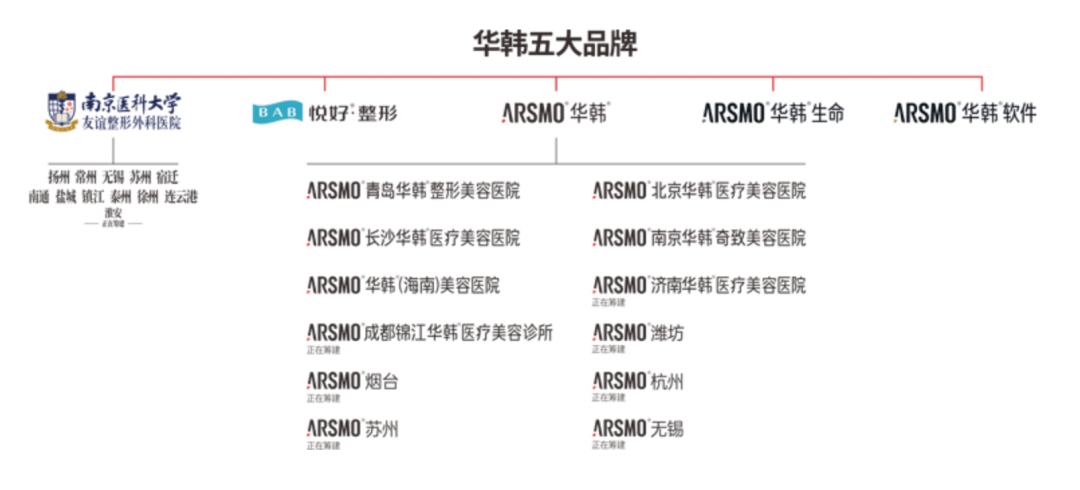
As a representative enterprise in China’s medical aesthetics industry, Huahan Co., Ltd. currently has 30 medical aesthetics institutions in 7 major provinces, initially building a hierarchical chain system [1]. The company adopts an expansion strategy of “establishing a brand image through large general hospitals and increasing regional coverage density by laying out multiple outpatient departments or clinics”, forming a layout model centered on the Friendship Plastic Surgery Hospital Affiliated to Nanjing Medical University and radiating 12 outpatient clinics in Jiangsu Province [1].
From the perspective of model characteristics, Huahan’s hierarchical chain mainly relies on existing hospitals for expansion, with all outpatient clinics basically built relying on existing hospitals, reflecting the characteristics of “hospitals replicate Friendship’s management model and technical standards, and outpatient clinics expand relying on existing hospitals” [1]. The company has introduced JCI international hospital management standards to ensure medical safety and quality, among which the Friendship Plastic Surgery Hospital Affiliated to Nanjing Medical University, Sichuan Yuehao Medical Cosmetology Hospital, Beijing Huahan Medical Cosmetology Hospital, and Nanjing Huahan Qizhi Cosmetology Hospital have successively passed JCI certification [3].
Aier Eye’s hierarchical chain model is considered the core of its business model innovation, including the following key dimensions [2][4]:
-
Preliminary Model Validation: Huahan’s hierarchical chain model has initially been proven feasible; in just over 4 years from 2021 to 2024, the number of stores expanded from 8 to 30, indicating that its cross-regional replication capability has been verified to some extent [1]. The compound annual growth rate of revenue from 2011 to 2019 reached 25.11%, and all hospitals under its umbrella were profitable in 2019, proving the effectiveness of the model [1].
-
Brand Effect Accumulation: The company expanded in Jiangsu Province using the “golden signboard” of Nanjing Medical University Friendship, with 12 outpatient clinics established relying on hospitals, forming a good brand synergy effect [1]. The continuous growth of contract liabilities (reflecting customer recharge and card issuance) indicates that customer stickiness and brand recognition are improving [1].
-
High Degree of Standardization: The company introduced JCI international hospital management standards, with 4 hospitals passing JCI certification and 2 national 5A-level medical plastic and cosmetic institutions, providing a standardized foundation for chain expansion [3].
-
Industry Characteristic Differences: There are essential differences between the medical aesthetics industry and ophthalmology. Ophthalmology is a rigid demand medical service, while medical aesthetics is consumer medical service; the average customer price dropped from 6,800 yuan in 2021 to 4,200 yuan in 2023, and customer acquisition costs continued to rise, compressing the industry’s profit margin [5]. Huahan’s net profit in 2024 is expected to decrease by 62% to 74% year-on-year, and Ruili Medical Aesthetics has been losing money for 4 consecutive years, with the industry under overall pressure [5].
-
Regulatory Environment Pressure: The medical aesthetics industry has entered an era of strict regulation; while purifying the industry ecology, some medical aesthetics institutions have exposed operational problems [5]. Compared with ophthalmology, the medical aesthetics industry faces greater compliance pressure, with uneven doctor quality and lack of authoritative certification institutions [3].
-
Talent Reserve Challenges: The medical aesthetics industry relies heavily on “famous doctors”, and there are prominent shortages of talents such as medical aesthetics design and consultation, and auxiliary technical operations [3]. Although Huahan expanded rapidly through self-construction, whether talent reserves can keep up with the expansion pace is a key challenge [1].
-
Capital Market Limitations: Huahan is listed on the New Third Board, with less information disclosure and limited financing channels, making it difficult to support large-scale expansion. Compared with Aier Eye, which is listed on the A-share market and has sufficient capital operation space, there are obvious disadvantages [1].
- There are essential differences in industry characteristics between medical aesthetics and ophthalmology, such as demand elasticity, regulatory environment, and repurchase model.
- Huahan’s current 30 institutions are mainly concentrated in 7 major provinces, with limited coverage and no national network like Aier Eye.
- Listing on the New Third Board limits the company’s capital operation capabilities, making it difficult to support large-scale rapid expansion.
- The overall industry profit is under pressure, and customer acquisition costs are rising, challenging the profitability of the chain model.
[1] Analysis of Huahan Co.'s 30 Medical Aesthetics Institutions Hierarchical Chain Model, Value Research Office, https://www.163.com/dy/article/KIA1AHHF0556DQCD.html
[2] Three Success Factors and Three Basic Capabilities of Aier Eye, Soochow Securities Research Report, http://pdf.dfcfw.com/pdf/H3_AP201910141368658607_1.pdf
[3] In-depth Research on Huahan Plastic Surgery Company, Huafu Securities, https://pdf.dfcfw.com/pdf/H3_AP202112081533496789_1.pdf
[4] Aier Eye’s Chain Philosophy, Industrial Securities, http://pdf.dfcfw.com/pdf/H3_AP201801301084081327_1.pdf
[5] Why Profit in Medical Aesthetics Industry is Declining, China Economic Net, http://www.ce.cn/xwzx/gnsz/gdxw/202504/21/t20250421_39347047.shtml
Insights are generated using AI models and historical data for informational purposes only. They do not constitute investment advice or recommendations. Past performance is not indicative of future results.
About us: Ginlix AI is the AI Investment Copilot powered by real data, bridging advanced AI with professional financial databases to provide verifiable, truth-based answers. Please use the chat box below to ask any financial question.