
Federal Reserve Faces 2026 Challenges: Leadership Transition, Political Pressure, and Economic Uncertainties
Unlock More Features
Login to access AI-powered analysis, deep research reports and more advanced features
About us: Ginlix AI is the AI Investment Copilot powered by real data, bridging advanced AI with professional financial databases to provide verifiable, truth-based answers. Please use the chat box below to ask any financial question.
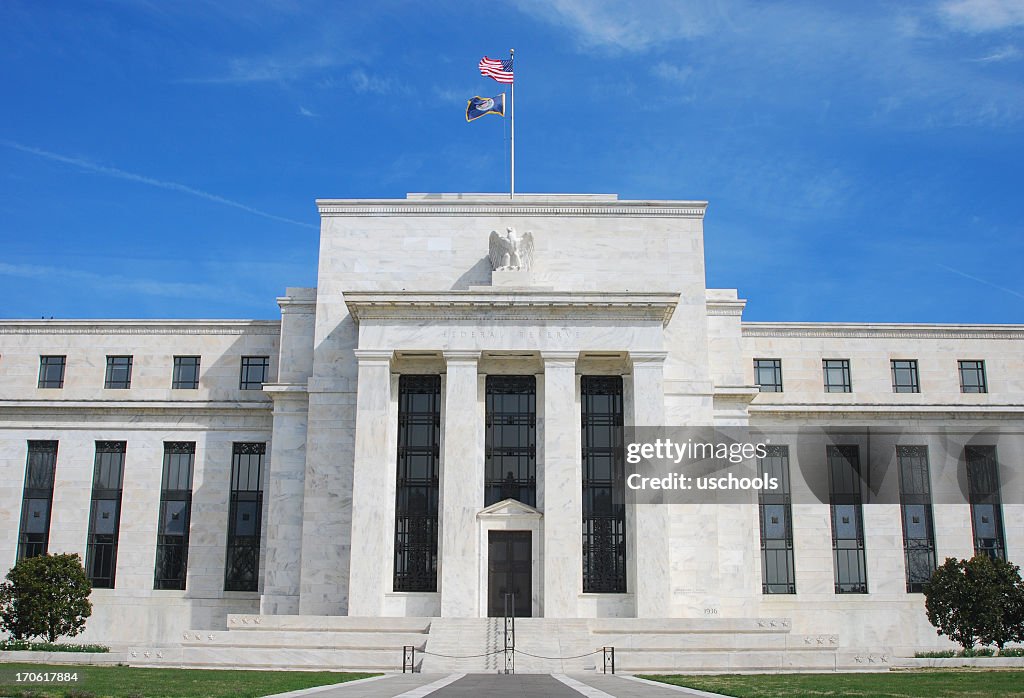
The Fed enters 2026 amid overlapping political, policy, and economic tensions after a “bruising 2025” [1], likely marked by sustained White House criticism and policy scrutiny [2]. A central challenge is the leadership transition: Powell’s term concludes in May 2026, with Trump expected to announce a replacement in early January 2026 [2]. Potential candidates include former Fed Governor Kevin Warsh (a vocal critic of current Fed leadership) [2] and National Economic Council Director Kevin Hassett [4]. Concurrently, Trump has demanded sharp benchmark interest rate cuts to 1% to “jump-start economic growth” [2], coupled with a history of personal criticism toward Powell—whom he originally appointed in 2017 [2].
Legal uncertainty adds to the Fed’s woes: a Supreme Court hearing on January 21, 2026, will rule on Trump’s authority to remove a Fed official named Cook, with the FOMC holding its first 2026 rate vote a week later [1]. Economically, as of November 2025, the U.S. manufacturing sector had 7 consecutive months of job losses [4], while Trump’s tariffs and planned corporate tax cuts (via the “One Big Beautiful Bill”) present conflicting pressures—tariffs could fuel inflation, and tax cuts might boost corporate profits and capital expenditures [3]. Wall Street anticipates gradual rate cuts in 2026 despite political noise [1].
- The Fed chair selection is a critical test of Fed independence: a dovish appointee (e.g., Warsh or Hassett) could align with Trump’s rate-cut demands, potentially undermining the Fed’s data-driven policy approach [2][4].
- Sharp rate cuts to 1% risk reigniting inflation, especially amid tariff-related price pressures, undoing 2024–2025 efforts to stabilize prices [2][3].
- The Supreme Court ruling could redefine Fed autonomy: a decision in Trump’s favor would allow White House control over monetary policy officials, breaking decades of institutional independence [1].
- Risks: Eroded Fed independence could weaken market confidence in long-term price stability [1]; sharp rate cuts combined with tariff inflation and manufacturing job losses may trigger stagflation risks in late 2026 [3][4]; legal uncertainty could disrupt Fed policy planning [1].
- Opportunities: Gradual rate cuts may temporarily reduce corporate borrowing costs and boost equity markets [3]; a well-aligned Fed chair and economic agenda could support targeted growth, though this depends on balancing inflation and employment goals.
- Fed Chair Jerome Powell’s term ends in May 2026; former President Trump will announce a replacement in early January 2026 [2].
- A Supreme Court hearing on removing Fed official “Cook” is scheduled for January 21, 2026; the FOMC will hold its first 2026 rate vote a week later [1].
- As of November 2025, the U.S. manufacturing sector had experienced 7 consecutive months of job losses [4].
- Trump has demanded the Fed cut benchmark interest rates to 1%; potential Fed chair candidates include former Fed Governor Kevin Warsh and National Economic Council Director Kevin Hassett [2][4].
- Trump’s tariffs and planned corporate tax cuts create conflicting inflation and growth pressures for the Fed [3].
Insights are generated using AI models and historical data for informational purposes only. They do not constitute investment advice or recommendations. Past performance is not indicative of future results.
About us: Ginlix AI is the AI Investment Copilot powered by real data, bridging advanced AI with professional financial databases to provide verifiable, truth-based answers. Please use the chat box below to ask any financial question.