
Impact Assessment of the Operation of Xi'an East Station and Xikang High-Speed Railway on Regional Economic Geography and Asset Values
Unlock More Features
Login to access AI-powered analysis, deep research reports and more advanced features
About us: Ginlix AI is the AI Investment Copilot powered by real data, bridging advanced AI with professional financial databases to provide verifiable, truth-based answers. Please use the chat box below to ask any financial question.
The operation of Xi’an East Station and the Xikang High-Speed Railway will deeply restructure the economic geographical pattern of the Guanzhong Plain Urban Agglomeration and the Qinba Mountains Area, and have a far-reaching impact on regional asset values. Below is a systematic assessment based on the latest information and analytical framework:
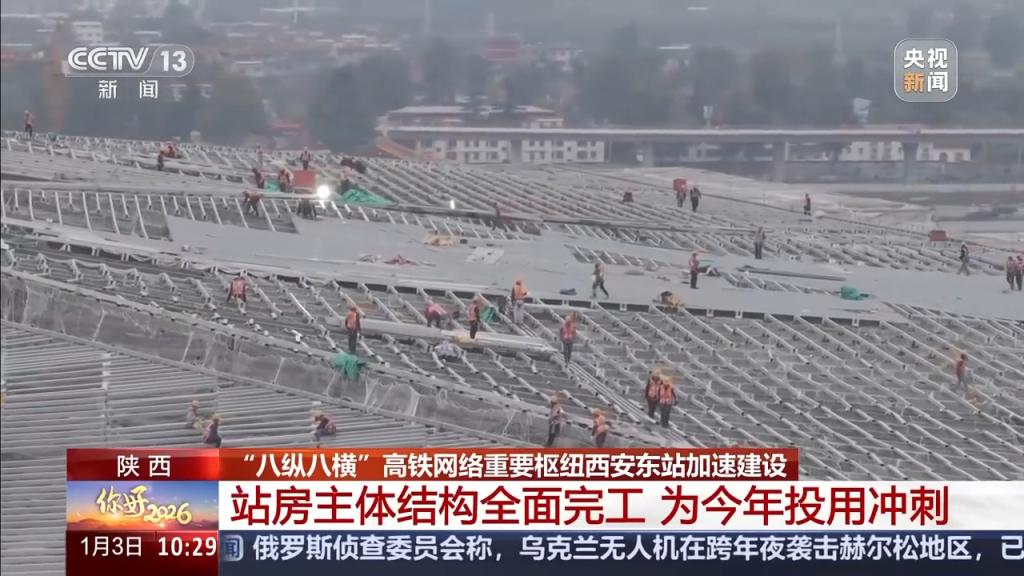
Xi’an East Station has a total construction area of approximately 394,000 square meters and a station building area of 100,000 square meters, adopting a three-story three-dimensional layout. It is the largest high-speed railway station building in Northwest China and an important hub of the national “Eight Vertical and Eight Horizontal” high-speed railway network [1]. The Xikang High-Speed Railway is a key component of the Baotou (Yinchuan)-Haikou Corridor and the Beijing-Kunming Corridor, with a newly built main line of about 171 kilometers, a design speed of 350 km/h, and a bridge-tunnel ratio of up to 94.41%, crossing the complex geological zone of the Qinling Mountains [1]. The project is expected to be put into operation synchronously with the Xikang High-Speed Railway in
As a national central city and the core of the Guanzhong Plain Urban Agglomeration, Xi’an will significantly enhance its comprehensive transportation hub function after the operation of the East Station. According to the 2025 Xi’an Municipal Government Work Report, Xi’an is promoting the “rice-shaped + five horizontal and two vertical” comprehensive three-dimensional transportation network, and the East Station and the Xikang High-Speed Railway and other projects jointly support the city’s “northward expansion” development and Xi’an-Xianyang Integration [5]. This will accelerate the agglomeration of high-end factors to Xi’an and enhance its radiating and driving effect on surrounding cities.
The Guanzhong Plain Urban Agglomeration is promoting the construction of the Guanzhong High-Tech Industrial Belt, led by Xi’an’s R&D and manufacturing and surrounding transformation and supporting facilities [5]. The opening of the high-speed railway will accelerate the flow of talents, technology, and capital within the region, and promote the coordinated development of advantageous industrial chains such as equipment manufacturing, aerospace, and semiconductors. For example, the Xi’an-Yan’an High-Speed Railway has reduced the travel time between Xi’an and Yan’an to 1 hour, enabling the energy重镇 (energy hub) to access the “2-hour economic circle” and connecting the Tongchuan Industrial Park and Luochuan Apples to form the “Red Gold Industrial Belt” [2].
The Xikang and Xi’an-Shiyan High-Speed Railways will open up fast channels from Guanzhong to Central China and South China, strengthening connections with the Yangtze River Middle Reaches Urban Agglomeration [2]. The 1-hour circle between Xi’an and Ankang allows agricultural products such as selenium-enriched tea and auricularia auricula in southern Shaanxi to be traded on the same day, attracting young people to return to their hometowns for employment [2]. At the same time, the high-speed railway network will expand the market radius of Xi’an’s cultural tourism, commerce, and modern service industries, forming a new pattern of “2.5-hour direct access to Chengdu-Chongqing, Wuhan, Taiyuan, and 5-hour radiation to Beijing, Shanghai, and Guangzhou” [2].
Due to complex terrain, the Qinba Mountains Area has long lagged in transportation. The Xikang High-Speed Railway will connect Ankang, Zhashui, Zhen’an, etc., to the high-speed railway network for the first time, significantly shortening the time and space distance from Xi’an and the whole country [1]. This provides basic conditions for the transportation of resources from the mountains and the introduction of passenger flow, which is an important support for rural revitalization.
The Qinba Mountains Area has rich ecological resources and agricultural products (such as selenium-enriched tea, gynostemma pentaphyllum, etc.), and the high-speed railway will significantly improve tourism accessibility. Referring to the case of Shaanxi’s “Village BA” going viral (Langao County), the integration of “agriculture, culture, tourism, sports, and commerce” can drive consumption growth. From January to August 2025, the county’s fixed asset investment increased by 11%, and the retail sales of consumer goods above designated size increased by 25.5% [4]. This model can be quickly replicated after the high-speed railway opens.
Ankang High-Tech Zone, as the only national high-tech zone in the Qinba Mountains Area, has formed a four-chain integration model of “innovation chain, industrial chain, space chain, and poverty alleviation chain” [4]. The high-speed railway will enhance its ability to undertake industrial spillover from Xi’an, such as new materials, electronic information, green food processing, etc. The long-term mechanism of industrial poverty alleviation (such as order agriculture) can enable more than 20,000 poor people to increase their income by more than 3,000 yuan per year [4].
- Wuhan Yangchunhu High-Speed Railway Business District: After government land acquisition, it was adjusted to residential-oriented with commercial and office supplementary, driving the revaluation of regional value [3].
- Chongqing Shapingba Longfor Guangnian, Guangzhou Baiyun Station, etc.: All achieved property value appreciation through the TOD model [3].
- Around Xi’an East Station: Located at the intersection of Xi’an International Port Area and Gaoling District, it is expected to attract the development of commercial complexes, headquarters offices, and talent apartments. Referring to the experience of Xi’an North Station, the housing prices within 3 kilometers around are expected to have a premium of15%-30%compared with non-high-speed railway areas in the same location.
- Southern Shaanxi Stations (Zhashui West, Zhen’an West, Ankang West): Due to the low base, the relative growth may be larger, especially for tourism real estate and health care properties, but the risk of over-hyping needs to be prevented.
- Core Circle (0-800 meters): Mainly for business functions, with the highest land value, suitable for hotel, commercial street, and office development.
- Secondary Circle (800-1500 meters): Mainly for residential functions, benefiting from commuting convenience, with significant housing price growth.
- Peripheral Circle (above 1500 meters): The impact is weak, but the overall improvement of regional image still brings positive spillover.
The Qinba Mountains Area has long been undervalued due to transportation disadvantages. After the high-speed railway opens:
- Ankang City: As a regional center, it will undertake population and industrial spillover from Xi’an, and the value of residential and commercial land is expected to rise.
- Counties such as Zhashui and Zhen’an: Tourism resources and characteristic agriculture will attract investment, and homestays, health care real estate, and rural tourism projects may emerge.
- Short-term Speculative Hype: Need to be vigilant against high-speed railway concepts pushing up housing prices, which are脱离 (detached from) fundamental support.
- Worsening Regional Differentiation: The gap between areas around core stations and non-station areas may widen.
- Industrial Undertaking Capacity: Southern Shaanxi needs to improve industrial supporting facilities to avoid “only passing through without staying”, ensuring that passenger flow and logistics are converted into actual economic benefits.
- Ecological Protection Pressure: The Qinba Mountains Area is an ecological function zone, so development must adhere to green development to avoid environmental damage.
- Strengthening TOD Planning: Around Xi’an East Station and stations along the line, scientifically compile detailed control plans to achieve job-housing balance and mixed functions.
- Promoting Industrial Synergy: Guide the spillover of high-end industries from Xi’an to southern Shaanxi, such as building enclave industrial parks and co-constructing R&D platforms.
- Improving Supporting Policies: Tilt towards high-speed railway沿线 (along the line) in terms of land supply, tax incentives, and talent introduction to amplify the hub economic effect.
- Focusing on Risk Prevention and Control: Strengthen real estate market supervision to prevent over-speculation; at the same time, strengthen ecological red line control.
The operation of Xi’an East Station will become an important engine for the coordinated development of the Guanzhong Plain Urban Agglomeration and historically change the location disadvantage of the Qinba Mountains Area. It is expected that by
[1] Sina Finance - Reports on the Operation of Xi’an East Station and Xikang High-Speed Railway (2026-01-03)
[2] Silk Road China - High-speed Rail Paints a Flowing Shaanxi (2025-09-24)
[3] Academic Research - Mechanism and Spatiotemporal Effect of High-Speed Rail on Land Price Impact (2024)
[4] Xinhuanet - Langao County Village BA and County Economic Development Case (2025-10-22)
[5] Shaanxi Provincial People’s Government - 2025 Xi’an Municipal Government Work Report (2025-03-31)
Insights are generated using AI models and historical data for informational purposes only. They do not constitute investment advice or recommendations. Past performance is not indicative of future results.
About us: Ginlix AI is the AI Investment Copilot powered by real data, bridging advanced AI with professional financial databases to provide verifiable, truth-based answers. Please use the chat box below to ask any financial question.