
In-depth Analysis of Tesla's Sales Decline in Europe
Unlock More Features
Login to access AI-powered analysis, deep research reports and more advanced features
About us: Ginlix AI is the AI Investment Copilot powered by real data, bridging advanced AI with professional financial databases to provide verifiable, truth-based answers. Please use the chat box below to ask any financial question.
Related Stocks
According to the latest market data, Tesla is facing unprecedented sales challenges in the European market:
- In November 2025, new car registrations in the EU were approximately 12,130 units, a 34.2% decrease from 18,430 units in November 2024; market share dropped from 2.1% to 1.4% [1]
- Excluding Norway (driven by temporary tax factors), Tesla’s registrations in continental Europe fell by 36.3% [2]
- CleanTechnica statistics show that in the first 10 months of 2025, Model Y sales in Europe were approximately 116,989 units and Model 3 sales were approximately 62,629 units, totaling about 179,600 units, a sharp drop of over 50% compared to the same period in 2024 [3]
- France: 1,942 units registered in December, a year-on-year decline of approximately 66% (some sources point to French association data) [4]
- Sweden: Sales plummeted by approximately 71% in December; full-year decline of approximately 67% [4]
- Portugal (user-provided background): New car registrations in December were -12.7% year-on-year, with a cumulative -22.3% in 2025
- Netherlands: -43.5% to 1,627 units in November; Germany: -20.2% to 1,763 units in November [2]
- Norway: 5,679 units registered in November, a year-on-year increase of approximately 90% (driven by temporary tax policies) [4]
- In November 2025, overall pure electric vehicle (BEV) registrations in the EU increased by 44.1% year-on-year; plug-in hybrid (PHEV) increased by 38.4% [1]
- Tesla’s market share in the EU BEV market has dropped from approximately 18.2% in 2023 to approximately 9.4% in Q1 2025 [6]
- Elon Musk’s political stance and public support (such as statements on Germany’s AfD and relevant UK figures) have caused changes in consumer sentiment in some European countries, especially affecting EV consumers who lean liberal [4][5][7]
- A Yale University study (not yet peer-reviewed) points out that the CEO’s political activities may have a significant negative impact on sales [7]
- Protests, store demonstrations, and vehicle vandalism incidents have occurred in some markets, putting pressure on brand reputation [8]
- The product cycle has entered the mid-to-late stage, and Model Y/Model 3 face more intense competition from substitutes in Europe (European local and Chinese brands are accelerating the launch of new models and promotions) [3]
- BYD is expanding rapidly in Europe: In the first 11 months of 2025, its registrations in Europe surged by approximately 240% year-on-year [8]
- Tesla FSD has not yet obtained regulatory approval in Europe, and the localization of high-level autonomous driving lags behind market expectations [4][8]
- EV subsidies have been reduced or policy adjustments have been made in some countries, creating relatively greater price sensitivity pressure on mid-to-high-priced Tesla vehicles [10]
- Differences in vehicle usage taxes and infrastructure advancement across European countries affect the rhythm of end-user car purchase decisions [11]
- Supply chain and regional delivery rhythms fluctuate across different quarters, leading to short-term data showing “peaks and valleys”, especially evident at the end of quarters (slower at the beginning of the quarter, rushing volume at the end) [12]
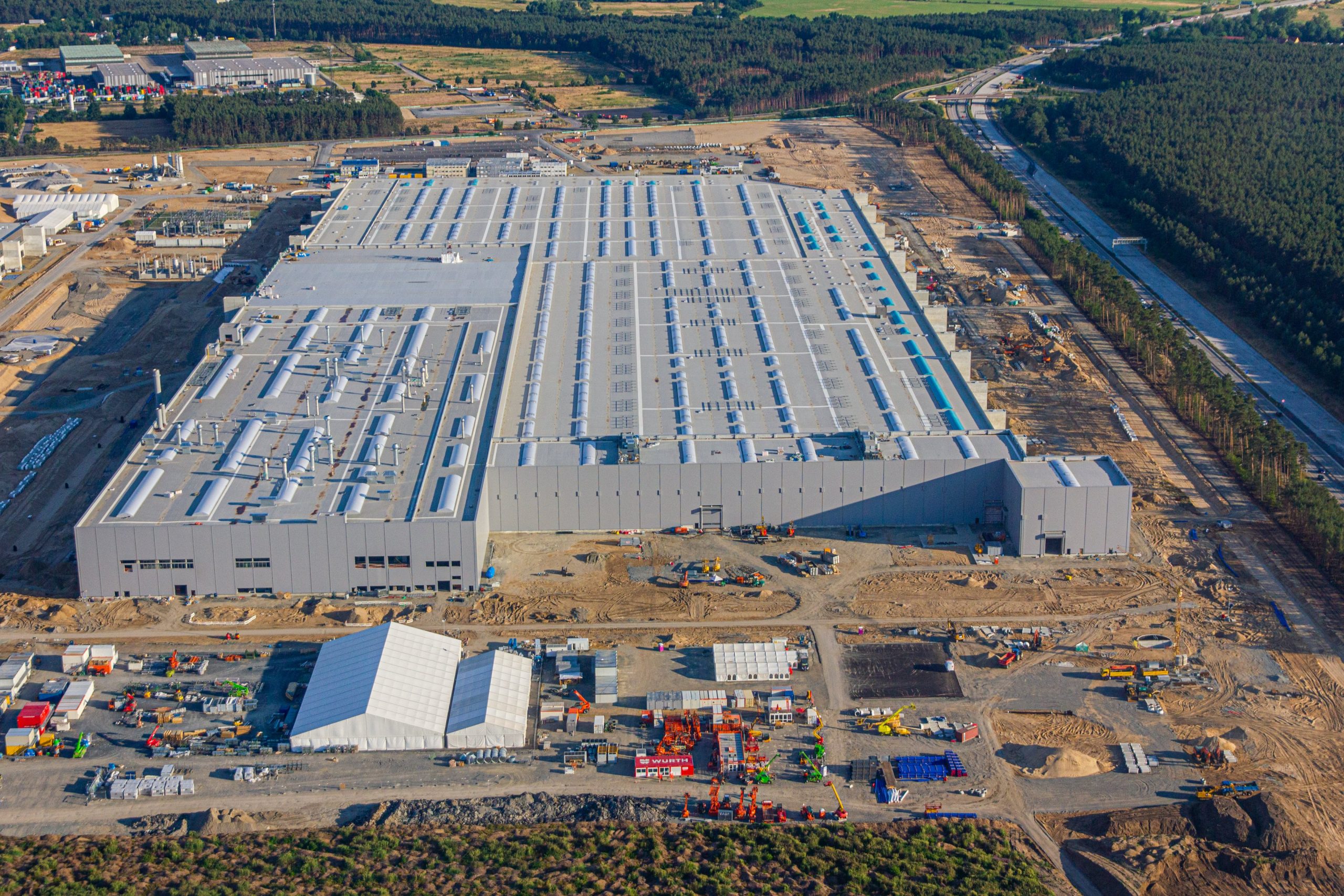
- Phased adjustments in production and delivery matching at European factories also cause monthly fluctuations in data [13]
- Tesla’s global deliveries in 2025 were approximately 1.64 million units, a year-on-year decrease of 8.6%; Q4 deliveries were 418,200 units, a year-on-year decrease of 16% [14]
- BYD’s new energy vehicle deliveries in 2025 were approximately 4.6 million units (including approximately 2.25 million pure electric vehicles), surpassing Tesla in the EV dimension to become the world’s top EV seller [14]
- Outside Europe, the U.S. and Chinese markets also face growth pressure: The Chinese market has seen a phased recovery but still faces competition and subsidy reduction impacts throughout the year; the overall坎坷 performance of overseas markets has dragged down full-year sales (FactSet estimates approximately 1.66 million units in 2025) [15][16]
- Tesla’s latest quarterly data (2025-10-22): EPS $0.50, revenue $28.09B; previous quarter (2025-07-23): EPS $0.40, revenue $22.50B [0]
- Profit margin pressure: Net profit margin is approximately 5.51%, operating profit margin is approximately 4.74%, reflecting the squeeze on profits from costs, price wars, and regional portfolio [0]
- U.S.: 48.9%; China: 21.4%; Other countries: 29.7% [0]
- Europe is an important part of “Other countries”, and its continuous decline drags down overseas revenue and affects overall growth momentum and profit margin stability
- Market capitalization: Approximately $1.41T; Current price: Approximately $438.78 (minor differences exist at different times) [0]
- Price-to-earnings ratio (TTM): Approximately 268.63x, price-to-book ratio approximately 17.70x, reflecting the market’s strong expectations for its long-term technology/AI narrative [0]
- Technical aspects (as of 2025-01-03): Closing price $410.44, Beta 1.88, sideways trend, trading range reference approximately $398.31–$422.92; no clear unilateral trend has been formed in the short term [0]
- Scenario assumptions (based on historical averages and analysts’ consensus expectations):
- Conservative: 0% revenue growth, 15.8% EBITDA margin, implied value approximately $141.11 (67.9% below market price) [0]
- Baseline: 32.7% revenue growth (referencing 5-year CAGR), 16.7% EBITDA margin, implied value approximately $147.24 (66.5% below market price) [0]
- Optimistic: 35.7% revenue growth, 17.5% EBITDA margin, implied value approximately $188.19 (57.2% below market price) [0]
- Probability-weighted implied value is approximately $158.85, significantly lower than the current transaction price, reflecting that under existing assumptions, there is significant downside risk to valuation, requiring stronger growth, profit margins, or new business realization to support [0]
- Analyst target price: Consensus target is approximately $483.00 (about +10% upside from current price), range $300–$600; consensus rating is HOLD (buy/hold/sell distribution approximately 38.8%/40.0%/21.2%) [0]
- Recent institutional trends: Many institutions maintain their ratings, but some have downgraded (e.g., Morgan Stanley downgraded to “Equal-Weight”) [17]
- Key narrative shift: The market’s pricing of Tesla is highly dependent on the long-term prospects of FSD/Robotaxi/AI. If European business continues to underperform, global growth slows, and FSD implementation节奏 is slower than expected, valuation multiples will face continuous compression risks; conversely, if FSD is approved in Europe, energy business and software monetization accelerate, valuation is expected to be revised upward [10][17]
- Expect FSD to be approved and implemented in Europe to drive brand attention and order conversion [4][8]
- Stabilize sales through regional promotions and financial plans while controlling erosion to gross profit margin [18]
- Closely track end-of-quarter delivery rhythms and output matching at European factories to avoid market expectations being misled by “peaks” in data [12][13]
- Accelerate product matrix updates and new platform launches to fill price gaps and enhance competitiveness in price wars [19]
- Expand the penetration of energy business in Europe to hedge against fluctuations in the automotive business and optimize the overall profit structure [20]
- Improve after-sales service and charging network experience to enhance user lifetime value [11]
- Advance Robotaxi and software ecosystem from narrative to large-scale implementation to improve revenue structure and profit margins through software and service revenue [10][17]
- Continuously reduce costs and increase efficiency through global production capacity and supply chain optimization to improve product pricing flexibility [21]
- Establish more regionalized and localized brand and public relations strategies to reduce the impact of single events on regional sales [22]
-
Risk Tips:
- Sustained sales decline in Europe and core markets will directly drag down growth expectations and profit margins, thereby compressing valuation multiples [0][1][2]
- If FSD implementation in Europe is slower than expected and Robotaxi commercialization节奏 slows down, the premium of stock price to technology/AI narrative will significantly回调 [10][17]
- Intensified competition pattern (especially continuous investment from Chinese and European local manufacturers) will continue price wars and limit gross profit margin recovery space [14][19]
-
Potential Catalysts:
- FSD approval in Europe and phased progress in Robotaxi commercialization [4][8]
- Launch of new platforms and more price-competitive models in Europe [19]
- Sustained high growth of energy and energy storage business to smooth fluctuations in the automotive business [20]
Tesla’s sales decline in Europe is the result of multiple factors: political and brand舆论 changes, product cycle and intensified competition, subsidy and price environment changes, and phased fluctuations in regional delivery rhythms. In the short term, this will put pressure on global deliveries and profit margins; in the medium to long term, market pricing will gradually transition from “hardware sales-driven” to “software and service-driven”. Current valuation implies extremely high growth expectations, requiring accelerated realization of FSD/Robotaxi and energy business to support. In a phase of high uncertainty, it is recommended to pay attention to quarterly delivery data, progress of FSD approval in Europe, growth rate of energy business, and changes in gross profit margin to dynamically assess the matching degree between valuation and fundamentals.
[0] Jinling API Data
[1] CleanTechnica - “Tesla Registrations Dropped 34.2% in November in European Union” (https://cleantechnica.com/2025/12/23/tesla-registrations-dropped-34-2-in-november-in-the-european-union/)
[2] Automotive World - “Tesla Europe registrations drop 36% in November” (https://www.automotiveworld.com/news/tesla-europe-registrations-drop-36-in-november/)
[3] CleanTechnica - “Tesla’s Long-Term Sales Decline in Europe — Can Cheaper Models & Full Self Driving Turn Things Around?” (https://cleantechnica.com/2025/12/11/teslas-long-term-sales-decline-in-europe-can-cheaper-models-full-self-driving-turn-things-around/)
[4] Yahoo Hong Kong Finance (Bloomberg Chinese) - “BYD electric car sales surpass Tesla, selling 2.25 million units in 2025, up 28%” (https://hk.finance.yahoo.com/news/比亞迪電車銷量拋離特斯拉-2025年賣225萬輛-上升28-183100046.html)
[5] Wall Street Journal (Chinese Edition) - “Tesla achieves rare growth in Chinese market” (https://cn.wsj.com/articles/特斯拉在中国市场罕见实现增长-61757117)
[6] Statista/Bloomberg Chart (cited by CleanTechnica) - Tesla’s market share in European EV market dropped from 18.2% in 2023 to 9.4% in Q1 2025 (corresponding chart: https://cdn.statcdn.com/Infographic/images/normal/34036.jpeg)
[7] CleanTechnica - “Tesla Press Release Predicts Sales Decline” (https://cleantechnica.com/2025/12/30/tesla-press-release-predicts-sales-decline/amp/)
[8] New York Post - “Tesla loses spot as world’s top EV seller to Chinese rival after car deliveries plunge 9% in 2025” (https://nypost.com/2026/01/02/business/tesla-loses-spot-as-worlds-top-ev-seller-to-chinese-rival-after-car-deliveries-plunge-9-in-2025/)
[9] The New York Times - “Tesla Car Sales Fell 9% in 2025, Falling Behind China’s BYD” (https://www.nytimes.com/2026/01/02/business/tesla-electric-vehicles-fourth-quarter-sales.html)
[10] Forbes - “What Does 2026 Have In Store For Tesla Stock?” (https://www.forbes.com/sites/greatspeculations/2026/01/02/what-does-2026-have-in-store-for-tesla-stock/)
[11] Reuters / EU ACEA Industry Report (via Automotive World and CleanTechnica citations) - European new energy vehicle market and policy environment (https://www.reuters.com/graphics/EUROPE-AUTOS+SALES/klpymqzyxpg/chart.png)
[12] Reuters - European October sales and Tesla monthly fluctuations (https://www.reuters.com/graphics/EUROPE-AUTOS+SALES/klpymqzyxpg/chart.png)
[13] Reuters - European Automobile Manufacturers Association (ACEA) monthly registration data (via CleanTechnica/Automotive World)
[14] Yahoo Finance / Bloomberg - BYD vs. Tesla 2025 delivery data comparison (https://hk.finance.yahoo.com/news/比亞迪電車銷量拋離特斯拉-2025年賣225萬輛-上升28-183100046.html)
[15] Wall Street Journal (Chinese Edition) - FactSet’s estimate of Tesla’s 2025 sales (https://cn.wsj.com/articles/特斯拉在中国市场罕見實現增長-c738de1e)
[16] Wall Street Journal (Chinese Edition) - FactSet’s interpretation of Tesla’s overseas market performance (https://cn.wsj.com/articles/特斯拉在中国市场罕見實現增長-61757117)
[17] Forbes - “Analyst Downgrade Puts Tesla Stock’s Risk In Focus” (https://www.forbes.com/sites/greatspeculations/2025/12/10/analyst-downgrade-puts-tesla-stocks-risk-in-focus/)
[18] Tesla Official Press Release (via CleanTechnica citation) - Delivery expectation adjustment and price strategy (https://cleantechnica.com/2025/12/30/tesla-press-release-predicts-sales-decline/amp/)
[19] Industry Media (TechCrunch/Bloomberg etc.) - Tesla’s future product line and platform planning (image: https://techcrunch.com/wp-content/uploads/2023/03/future-lineup.jpg)
[20] Tesla Energy Business Progress (via Forbes and Industry Reports) - High growth of energy storage and energy sector (https://www.forbes.com/sites/greatspeculations/2026/01/02/what-does-2026-have-in-store-for-tesla-stock/)
[21] Tesla’s Global Production Capacity and Supply Chain Layout (via Bloomberg/Reuters) - Factory expansion and cost reduction path (https://assets.bwbx.io/images/users/iqjWHBFdfxIU/ilUSIC4Lsv0M/v1/-1x-1.webp)
[22] Brand and PR Strategy Discussion (via NYT/Bloomberg etc.) - Localized communication and reputation management for European market (https://www.nytimes.com/2026/01/02/business/tesla-electric-vehicles-fourth-quarter-sales.html)
Insights are generated using AI models and historical data for informational purposes only. They do not constitute investment advice or recommendations. Past performance is not indicative of future results.
About us: Ginlix AI is the AI Investment Copilot powered by real data, bridging advanced AI with professional financial databases to provide verifiable, truth-based answers. Please use the chat box below to ask any financial question.