
Analysis Report on the Competitive Landscape of China's Sugar-Free Tea Market
Unlock More Features
Login to access AI-powered analysis, deep research reports and more advanced features
About us: Ginlix AI is the AI Investment Copilot powered by real data, bridging advanced AI with professional financial databases to provide verifiable, truth-based answers. Please use the chat box below to ask any financial question.
According to the latest market research data, the competitive landscape analysis of China’s sugar-free tea track is as follows:
In 2024, China’s sugar-free ready-to-drink tea market presented a
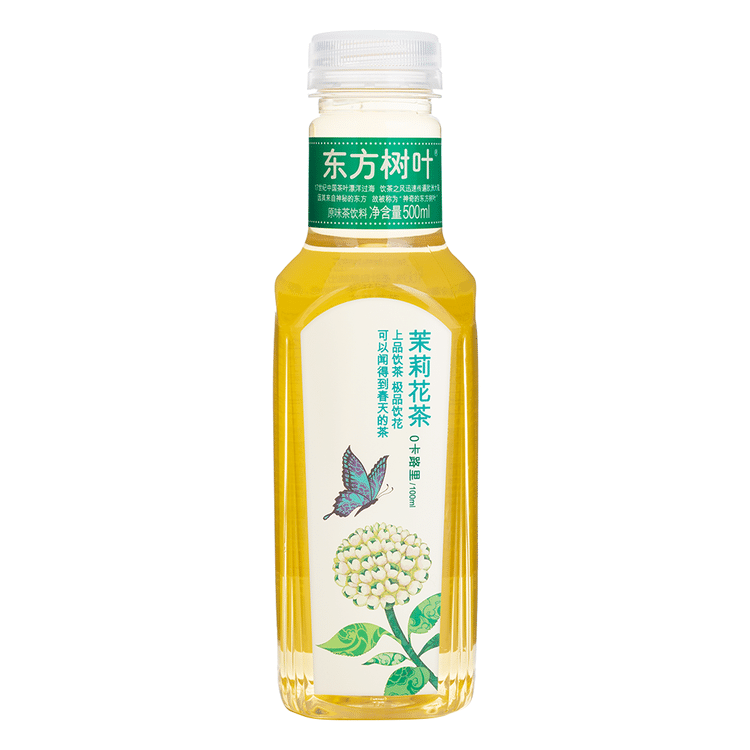
- Nongfu Spring (Oriental Leaf): Leading by a wide margin with a75%market share, occupying an absolute dominant position [1][2]
- Suntory Oolong Tea: Staying firmly in the second tier with a10%share [1][2]
- Other brands: Combined share is only15%[1]
From Q2 2024 to Q1 2025, the top 5 sugar-free ready-to-drink tea brands were: Nongfu Spring, Suntory, Master Kong, Guozishule, and Uni-President [1][2].
- Oriental Leaf: With first-mover advantage and accurate grasp of consumers’ demand for sugar-free tea, it has accumulated high awareness and reputation over the long term [1]
- Suntory Oolong Tea: Relying on brand history and professional positioning in oolong tea, it maintains its position in the second tier [2]
- Other brands: Seek development space under the shadow of giants through niche segments or differentiation strategies [1]
- Diversification of flavors: Jasmine tea has the highest share (about 31.6%), followed by oolong tea (32.4%) and Pu’er tea (14.4%) [1]
- Diversification of specifications: Expanding from traditional 350ml and 500ml to family sizes such as 900ml and 1.25L [2]
- Quality upgrade: The average unit price of mainstream tea varieties is higher than the same period in 2024, reflecting consumers’ higher requirements for quality and taste [1]
- Offline channels: Account for about 81.5%, with convenience stores as the main battlefield [1]
- Online channels: Account for 18.5%, but with rapid growth [1]
- Age structure: Young consumers under 30 account for 70.8%, which is the absolute main force [1]
- Consumption motivation: Health demands (sugar-free, refreshing) and convenience are the main purchase drivers [1]
- Concentration of leading brands will further increase: In the first half of 2025, CR5 has risen from 77.3% to 79.6%, and CR10 from 88.2% to 90.2% [2]
- Intensified price competition: Brands will compete for market share through promotions and new product pricing strategies
- Increased product homogenization: Innovation will be the key to breaking through
- Penetration into sinking markets: Leading brands like Oriental Leaf will expand to third- and fourth-tier cities [2]
- Functional extension: Adding functional ingredients (such as probiotics, vitamins, etc.) may become a new growth point [2]
- Cultural export: Chinese sugar-free tea brands may learn from Suntory’s experience and enter overseas markets [2]
Facing the fierce competition in China’s sugar-free tea market, Suntory may consider:
- Strengthen professional positioning in oolong tea: Leverage the advantages of Japanese oolong tea brand to highlight product differentiation
- Channel sinking strategy: Expand to sinking markets with existing brand influence
- Product innovation: Develop new products that meet Chinese consumers’ tastes to maintain market freshness
- Brand marketing: Strengthen penetration into young consumer groups and enhance brand vitality
[1] 2025 China Sugar-Free Tea Industry Report: From High Growth to Structural Optimization and Brand Differentiation (https://www.fxbaogao.com/detail/5123742)
[2] China Sugar-Free Tea Industry Report: Oriental Leaf Becomes Nongfu Spring’s Top Revenue Category (https://m.36kr.com/p/3529876362762629)
[3] In-depth Report on Food and Beverage Industry: In-depth Report on Soft Drink Industry (https://pdf.dfcfw.com/pdf/H3_AP202508211731875717_1.pdf)
Insights are generated using AI models and historical data for informational purposes only. They do not constitute investment advice or recommendations. Past performance is not indicative of future results.
About us: Ginlix AI is the AI Investment Copilot powered by real data, bridging advanced AI with professional financial databases to provide verifiable, truth-based answers. Please use the chat box below to ask any financial question.