
In-depth Analysis of the Franchise Model Dilemma at Pagoda Fruit Chain
Unlock More Features
Login to access AI-powered analysis, deep research reports and more advanced features
About us: Ginlix AI is the AI Investment Copilot powered by real data, bridging advanced AI with professional financial databases to provide verifiable, truth-based answers. Please use the chat box below to ask any financial question.
Related Stocks
Based on search data and financial analysis, I will provide you with a comprehensive interpretation of the franchise model dilemma at Pagoda Fruit Chain.
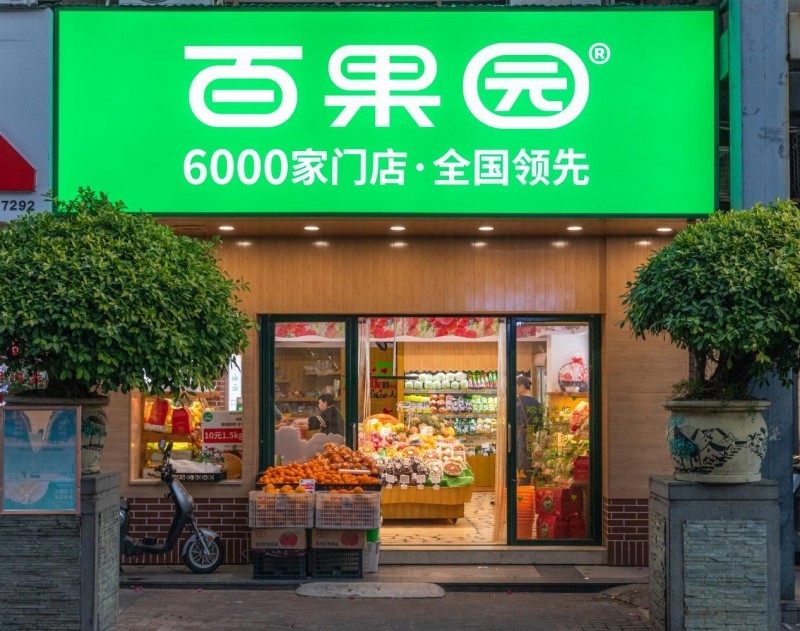
According to Pagoda’s 2024 financial report data, the company has a total of 5,127 stores, including:
- Group-managed franchise stores: 4,039 (78.8%)
- Other franchise stores: 1,077 (21.0%)
- Self-operated stores: Only 11 (0.2%)
- During the 2024 ‘315’ (Consumer Rights Day) period, Hubei Economic TV exposed malpractices such as using rotten fruits to make high-priced fruit cuts and arbitrarily defining cherry grades in a Pagoda store in Wuhan [1]
- Some store employees handle ready-to-eat fruits without a Food Health Permit
- The 12315 platform has accumulated 1,769 complaints, and the Heimaotousu platform has as many as 3,091 complaints, involving issues such as rotten fruits, overnight fruits, foreign objects, and mold [1]
- The cost of the ‘three-no return’ policy (no receipt, no physical item, no reason for return) is fully borne by franchisees [1]
- Leading some franchisees to make up for losses by selling old or substandard fruits, forming a vicious cycle
- Zhu Danpeng, a Chinese food industry analyst, pointed out: ‘Single-store operations are relatively chaotic, and the headquarters has insufficient control over franchise stores’ [1]
- The high-end strategy is misaligned with market demand, but franchisees cut prices on their own to survive
- Although low-price activities such as ‘Hao Guo Bao En (Good Fruit Repayment)’ brought customer traffic (customer visits increased by 534.1%), they further compressed profit margins [2]
| Indicator | 2023 | 2024 | Change |
|---|---|---|---|
| Operating Revenue | 11.39 billion yuan | 10.27 billion yuan | -9.8% |
| Net Profit | 360 million yuan | -390 million yuan | Turned from profit to loss |
| Gross Margin | 11.5% | 7.4% | -4.1 percentage points |
| Number of Stores | 6,093 | 5,127 | -966 |
| Market Value | 8 billion HKD | 1.45 billion HKD | -81.9% |
- Chairman’s ‘Educate Consumers’ Remarks: Yu Huiyong said ‘we will not cater to consumers’, triggering a strong public backlash, and related topics topped Weibo hot searches [1]
- ‘Fruit Assassin’ Label: ‘A monthly salary of 20,000 yuan can’t afford Pagoda’ became a hot topic on social media
- Consumers Vote with Their Feet: 966 stores closed within a year, an average of 2.64 stores per day [1][2]
Pagoda’s dilemma is essentially the combined effect of ‘strategic myopia’ and ‘management loss of control’:
- High-end Positioning Failure: In an environment where consumption grading and value-for-money are prevalent, its ‘high quality, high price’ strategy is disconnected from mainstream demand
- Franchise Model Backlash: A 99.8% franchise proportion means the headquarters has extremely weak control over terminal service quality, making it difficult to ensure brand consistency
- Supply Chain Pressure: The fruit category has naturally high losses, and franchisees’ profit difficulties lead them to take risks
Pagoda has launched strategic adjustments:
- Adjusted from ‘high-end fruit expert’ to ‘high-quality and cost-effective fruit expert’
- Increased investment in B-end business (To B revenue increased by 21.7% year-on-year)
- Laid out overseas markets and sinking markets
- Optimized single-store model, targeting to restore net profit margin to 3%-5%
However,
[1] Economic Observer Online - ‘Pagoda Chairman’s “Shocking Remarks” Stir Public Opinion, Mired in Store Closures, Food Safety, etc.’ (https://news.qq.com/rain/a/20250811A03CM400)
[2] Sina Finance - ‘In-depth Interpretation of Pagoda’s 2024 Financial Report: Growing Pains of Strategic Contraction and Long-term Value Game’ (https://finance.sina.com.cn/stock/aigcy/2025-04-02/doc-inertrwx3765593.shtml)
[3] Sina Finance - ‘Pagoda’s “Educate Consumers” Backfires, High-end Customers Poached?’ (https://finance.sina.com.cn/roll/2025-08-14/doc-infkxuai3847305.shtml)
[4] HKEX Announcement - ‘2024 Interim Report’ (https://www1.hkexnews.hk/listedco/listconews/sehk/2024/0923/2024092300628.pdf)
[5] Eastmoney.com - ‘Pagoda Group (2411) Research Report’ (https://pdf.dfcfw.com/pdf/H3_AP202504141656311608_1.pdf)
Insights are generated using AI models and historical data for informational purposes only. They do not constitute investment advice or recommendations. Past performance is not indicative of future results.
About us: Ginlix AI is the AI Investment Copilot powered by real data, bridging advanced AI with professional financial databases to provide verifiable, truth-based answers. Please use the chat box below to ask any financial question.