
Veterans Day 2025 Market Hours Analysis: Trading Impact and Settlement Considerations
Unlock More Features
Login to access AI-powered analysis, deep research reports and more advanced features
About us: Ginlix AI is the AI Investment Copilot powered by real data, bridging advanced AI with professional financial databases to provide verifiable, truth-based answers. Please use the chat box below to ask any financial question.
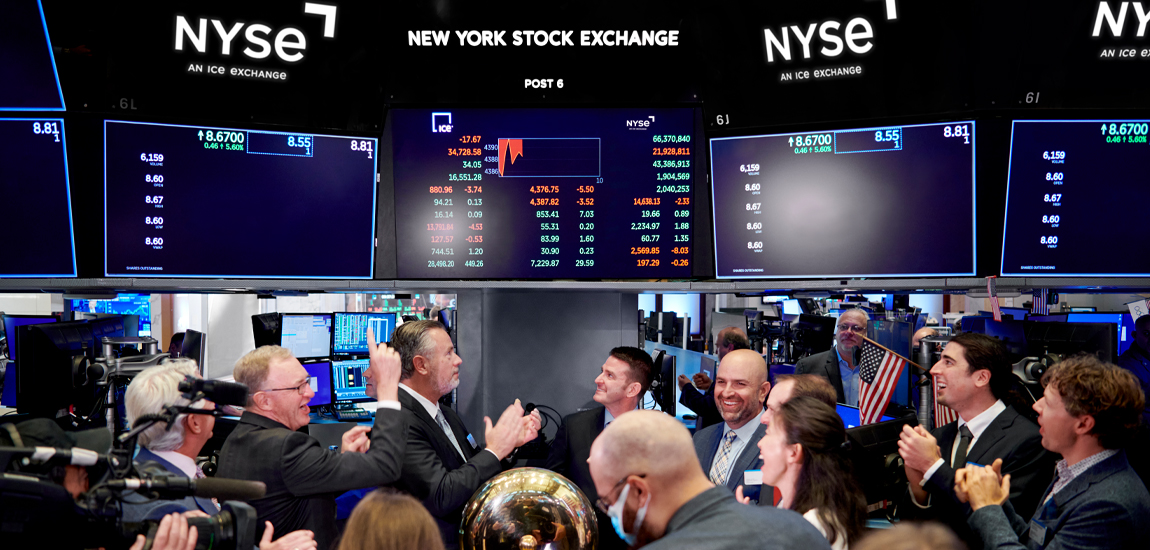
This analysis examines the market impact of Veterans Day 2025, observed on November 11, 2025, based on the Barron’s report addressing investor concerns about holiday trading hours [1]. The event created a unique partial market closure scenario where U.S. stock exchanges operated normally while bond markets and banks remained closed [2][3].
Despite the partial closure, equity markets demonstrated robust activity. Major U.S. indices showed mixed but generally positive performance on November 11, 2025 [0]:
- Dow Jones Industrial Average: Advanced 543.45 points (+1.15%) to close at 47,927.96, marking its 16th closing high of 2025
- S&P 500: Gained 30.97 points (+0.45%) to close at 6,846.61
- NASDAQ Composite: Rose 60.58 points (+0.26%) to close at 23,468.30
The market performance was influenced by progress toward resolving a government shutdown and notable sector rotation away from technology stocks, with health care, energy, and consumer staples sectors outperforming [1].
Trading volumes exhibited interesting variations across exchanges [0]:
- S&P 500 volume: Approximately 4.98 billion shares (down from 5.37 billion the previous day)
- NASDAQ volume: 6.88 billion shares (up from 5.37 billion in the prior session)
- Dow Jones volume: 455 million shares (consistent with typical levels)
The reduced S&P 500 volume likely reflected the bond market closure and altered institutional participation patterns during the holiday [1].
The closure of bond markets and banks created significant operational implications for market participants [2][3]:
- One-day settlement delay: Trades executed on November 11, 2025, experienced postponed settlement
- Example scenario: Positions sold on Monday, November 10, settled on Wednesday, November 12, instead of Tuesday
- Banking operations: Normal bank services resumed on November 12, 2025
This settlement delay is particularly relevant for active traders and institutional investors managing cash flows and margin requirements.
Veterans Day has evolved significantly in U.S. market history. The NYSE previously closed completely on Veterans Day until 1954, when it changed to remain open with a two-minute trading pause [5]. In recent years, both NYSE and NASDAQ have marked the day with a moment of silence before the opening bell, reflecting the market’s adaptation to honor the holiday while maintaining trading continuity [5].
The observed sector rotation away from technology stocks toward health care, energy, and consumer staples during the holiday trading session may indicate broader market trends [1]. This pattern suggests that institutional investors may have used the lower-volume environment to rebalance portfolios, potentially signaling sustained sector preferences beyond the holiday period.
- Settlement Risk: The one-day settlement delay increases counterparty risk exposure, particularly for leveraged positions and margin trading [2][3]
- Liquidity Risk: Reduced institutional participation may affect market depth and price discovery efficiency [1]
- Operational Risk: Banking closures impact funding operations and collateral management requirements [2]
- Portfolio Rebalancing: Lower volume environments can provide favorable conditions for executing large orders with reduced market impact
- Sector Positioning: The observed rotation patterns may offer insights into emerging market themes for the remainder of 2025
- Volatility Trading: Holiday periods often present unique volatility patterns that can be exploited through options strategies
Investors should monitor several upcoming events that could create similar market dynamics [4]:
- Thanksgiving (November 27-28, 2025): Both markets will close, with early closure on November 28
- Year-end holidays: Christmas Eve and New Year’s Eve will feature early closures
- Government shutdown resolution: Ongoing negotiations may continue to influence market sentiment
Partial market closures during holidays typically lead to [0][1]:
- Increased volatility in the days surrounding the holiday period
- Potential for wider bid-ask spreads due to reduced liquidity
- Delayed settlement times affecting cash management strategies
- Potential for exaggerated price movements in lower-volume securities
The Veterans Day 2025 trading session demonstrated the resilience and adaptability of U.S. equity markets during partial closure scenarios. While stock markets operated normally, the bond market closure created settlement delays that required careful operational planning from market participants [2][3]. The mixed performance across indices, combined with notable sector rotation patterns, provided valuable insights into investor sentiment and portfolio positioning strategies [1].
The varying volume patterns across exchanges suggest that market participants adjusted their trading strategies in response to the holiday conditions, with some segments experiencing reduced liquidity while others maintained normal activity levels [0]. These dynamics highlight the importance of understanding market structure implications during holiday periods and incorporating such considerations into trading and operational planning.
For future reference, the historical evolution of Veterans Day trading practices shows how markets have successfully adapted to honor federal holidays while maintaining essential market functions [5]. This adaptability will be crucial for navigating upcoming holiday periods in late 2025 and beyond.
Insights are generated using AI models and historical data for informational purposes only. They do not constitute investment advice or recommendations. Past performance is not indicative of future results.
About us: Ginlix AI is the AI Investment Copilot powered by real data, bridging advanced AI with professional financial databases to provide verifiable, truth-based answers. Please use the chat box below to ask any financial question.