
Core Insights from High EV Penetration Markets for Tesla's Global Strategy
Unlock More Features
Login to access AI-powered analysis, deep research reports and more advanced features
About us: Ginlix AI is the AI Investment Copilot powered by real data, bridging advanced AI with professional financial databases to provide verifiable, truth-based answers. Please use the chat box below to ask any financial question.
Related Stocks
Based on Norway’s 2025 EV market data, Tesla’s global performance and policy environment, as well as the company’s fundamentals and industry trends, high-penetration markets offer five core insights for Tesla’s global strategy:
- Norway has long implemented exemption from high import taxes, value-added taxes (VAT), road fees, and road rights privileges(e.g., free highway access, parking discounts) for EVs, supplemented by “punitive taxes” for fuel vehicles, forming a “carrot + stick” combination that pushed pure EV penetration from 88.9% in 2024 to 95.9% in 2025 [1, 2].
- Starting January 1, 2026, a VAT of up to approximately $5,000 will be imposed on each EV, leading to a concentrated car-buying spree at the end of 2025 [1].
- Proactive channel and delivery layout: Accelerate localized delivery and inventory management before policy changes to avoid demand fluctuations caused by policy switches.
- Dynamic pricing and promotions: Use subsidy windows for targeted offers (e.g., limited-time interest-free loans, trade-in subsidies) while planning an exit transition period in advance.
- Government relations lobbying: Collaborate with industry partners to promote “tax neutrality” or “carbon tax-linked” policies as alternatives to direct subsidies, reducing the impact of policy withdrawal.
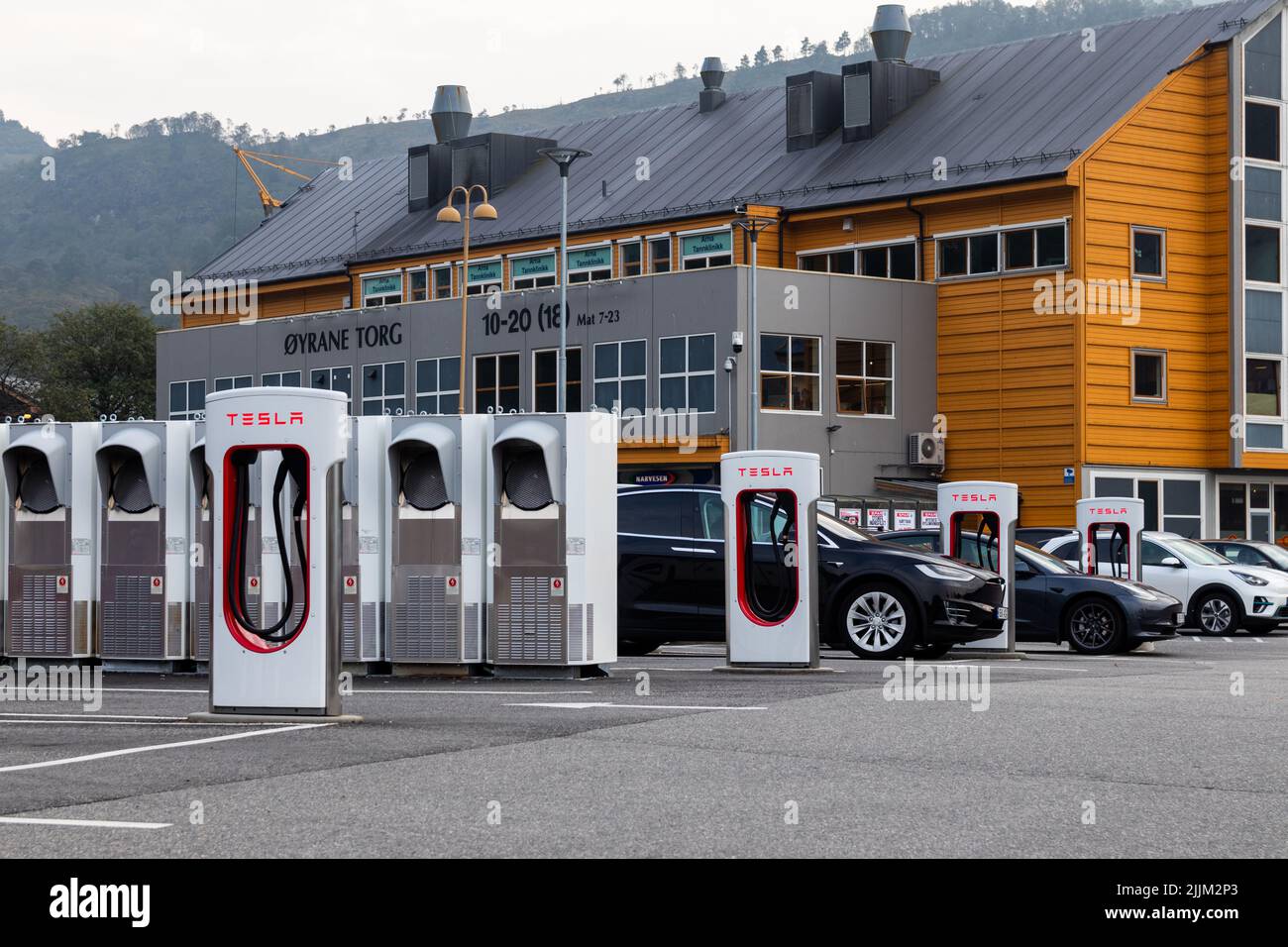
- The government-led construction of free charging networks covering every town, even demolishing gas stations to convert them into charging stations, eliminated users’ range anxiety [2].
- Charging convenience is regarded as a “core factor” for consumers choosing EVs.
- Supercharger network density: Speed up supercharger station deployment in high-potential markets (e.g., Canada, South Korea, Australia), taking supercharger coverage density as a prerequisite for market entry.
- Third-party cooperation: Co-build charging hubs (malls, highways, office buildings) with energy companies and real estate developers to improve station reach.
- Intelligent scheduling and openness: Gradually open V3/V4 superchargers to non-Tesla vehicles, increasing network utilization and enhancing brand ecosystem influence.
- Model Y, with its range, performance, and brand aura, aligns with Norway’s high-end, eco-friendly, and tech-sensitive consumer preferences [1, 3].
- Chinese brands like BYD have rapidly increased market share with price and range advantages, showing a segmented space for price-sensitive consumers [1].
- Price ladder improvement: Launch more affordable models (e.g., Model 2/entry-level Model 3) to cover the mid-end market while maintaining the high-end image of Model S/X.
- Regional configuration: Strengthen thermal management and battery insulation in cold regions (Northern Europe, Canada); provide higher-range versions and portable charging solutions in areas with underdeveloped charging infrastructure.
- Service localization: Build service centers and mobile maintenance fleets in emerging markets to shorten service radius and improve after-sales experience.
- Tesla faces declines in some European markets: registrations fell 66% in France in December 2025 and 71% in Sweden; BYD is rapidly penetrating Europe and Asia-Pacific with cost advantages and cost-effectiveness [4].
- Tesla’s full-year deliveries in 2025 decreased by 8.6% year-over-year, with Q4 deliveries reaching approximately 418,227 units, a year-over-year decrease of about 15.7% [0, 5].
- Core differentiation:
- FSD and AI: Strengthen localized adaptation of autonomous driving (regulations, maps, road habits) and convert FSD subscription into a high-margin business.
- Energy integration: Deeply integrate Powerwall, Megapack with home and enterprise energy management to provide a vehicle-energy-storage integrated solution.
- Brand and community: Continue to strengthen the identity of environmental protection and technology, and enhance user stickiness through user communities and co-creation activities.
- Supply chain and cost: Use vertical integration advantages to further reduce costs (4680 batteries, integrated die-casting, localized procurement) and maintain price competitiveness.
- Subsidy withdrawal and VAT introduction are signs of policy withdrawal, leading to pre-demand fluctuations [1].
- Policy monitoring system: Establish a policy tracking mechanism for major global markets (subsidies, taxes, licenses, road rights) to assess the timing and magnitude of policy withdrawal.
- Demand smoothing strategy: Guide installment purchases, car leasing, and transfer to corporate/leasing markets before policy exit to mitigate demand fluctuations.
- Diversified market hedging: Redistribute resources between markets with policy withdrawal, such as shifting some production capacity to regions still with policy dividends (emerging markets, differentiated policy layout in U.S. states).
Based on the above insights, Tesla can optimize its global layout through the following paths:
- High-penetration markets (Norway, Northern Europe): Continue to leverage brand and charging advantages, launch winter-edition models and energy packages; discuss carbon taxes and green funds with governments as alternatives to direct subsidies.
- Growth markets (China, some European countries): Strengthen localized R&D (local maps, voice, and autonomous driving adaptation), accelerate the introduction of lower-priced models, and penetrate sinking markets through direct sales and e-commerce.
- Potential markets (Southeast Asia, Latin America, Middle East): Prioritize charging infrastructure, moderate prices, and after-sales service networks; use installments and leasing to lower the car-buying threshold.
- Energy and service synergy: Deploy Powerwall and Megapack in regions with strong policy incentives, package vehicle sales with photovoltaics/energy storage to form a “vehicle + energy + storage” closed loop.
Norway’s success in high EV penetration shows that
- Proactive use of policies and cycle management;
- Supercharger and energy infrastructure first;
- Product localization and price gradient;
- Building differentiated barriers with FSD and energy ecosystem;
- Establishing policy early warning and regional switching mechanisms.
By systematizing Norway’s experience and replicating it in different regional markets, Tesla is expected to maintain its leading position in the globally competitive EV market.
[1] IT Home — “Unmatched: Norway’s 2025 EV Penetration Rate Reaches 95.9%, Closer to 98% in December”
[2] Sina Finance — “Global No.1 in New Energy Penetration! Norway’s 2025 New Car EV Rate Hits 96%”
[3] Netcom Auto — “European EV Battle Shifts: Tesla Cools Down, Why Are Northern and Southern Europe So Different?”
[4] Benzinga — “Tesla’s European Slump Worsens Despite Cheaper Models”
[5] Business Wire — “Tesla Fourth Quarter 2025 Production, Deliveries & Deployments”
Insights are generated using AI models and historical data for informational purposes only. They do not constitute investment advice or recommendations. Past performance is not indicative of future results.
About us: Ginlix AI is the AI Investment Copilot powered by real data, bridging advanced AI with professional financial databases to provide verifiable, truth-based answers. Please use the chat box below to ask any financial question.