
Impact of LED Cinema Hall Technology on the Competitive Landscape of Traditional Theaters and Valuation of Film Theater Stocks (2025)
Unlock More Features
Login to access AI-powered analysis, deep research reports and more advanced features
About us: Ginlix AI is the AI Investment Copilot powered by real data, bridging advanced AI with professional financial databases to provide verifiable, truth-based answers. Please use the chat box below to ask any financial question.
Related Stocks
In 2025, China’s film market showed significant recovery and growth. According to data from the National Film Administration, the national film box office reached 51.832 billion yuan, a year-on-year increase of 21.95%; the number of moviegoers in urban theaters reached 1.238 billion, a year-on-year increase of 22.57%; the box office of domestic films was 41.293 billion yuan, accounting for 79.67%[1]. This indicates that domestic content continues to dominate the market and movie-watching demand has rebounded strongly.
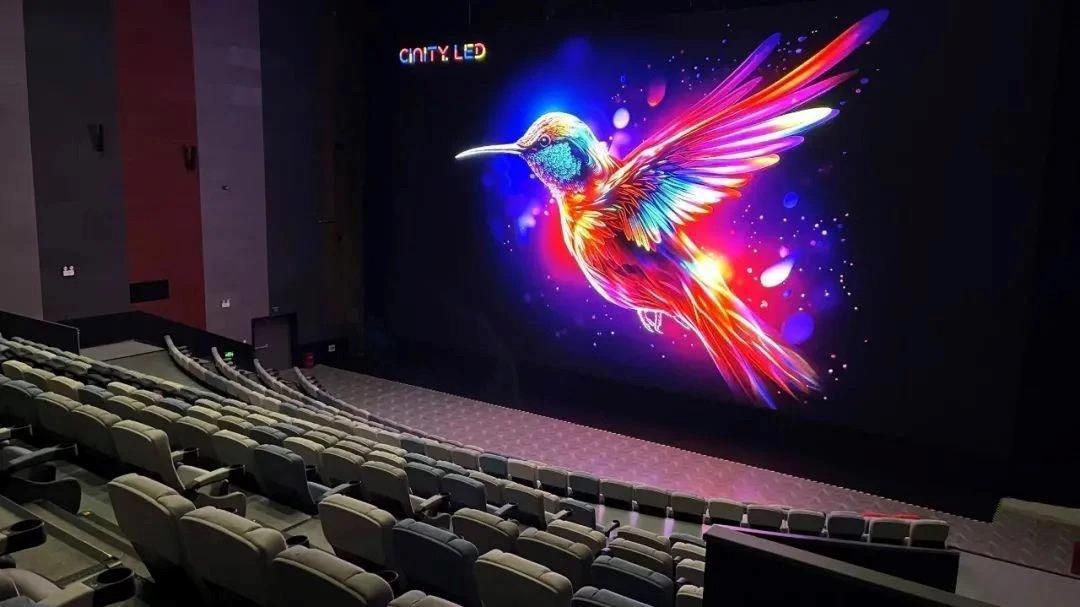
At the same time, the “hardware upgrade” of Chinese cinemas has accelerated significantly. Public information shows that by the end of 2025, the number of LED cinema halls in China ranked first in the world, and the Lunar New Year box office hit an eight-year high[1]. Although the current tool does not provide the specific number and penetration rate of LED cinema halls, industry reports and conference news show that leading theaters (such as Wanda) and display manufacturers (such as Samsung) are promoting high-end display solutions (including LED) in cinema halls, and exploring monetization paths such as “entertainment complexes” and IP commercialization[1][3].
Based on available industry information and reports, the core comparative advantages of LED cinema halls over traditional projection include:
- Picture quality: Brightness, contrast, color gamut, and grayscale consistency are usually better than traditional projection (especially in environments with complex light-shielding conditions);
- Maintenance and structure: No projection lens, no light attenuation and replacement of bulbs or laser modules, simpler mechanical structure, which can reduce the frequency and complexity of long-term maintenance;
- Operational flexibility: No need for screen focusing, no projection light path occupation, more flexible design of cinema hall layout, suitable for non-traditional movie-watching scenarios (sports events, concert live broadcasts, corporate events, etc.);
- Content experience: Often more advantageous in high dynamic range (HDR), high frame rate, and 3D content, which can support richer immersive experiences and business models (such as “entertainment complexes”).
Although the above information mostly comes from industry and technical reports rather than the tool data of this time, its logic is consistent with the technical routes of mainstream manufacturers. At the same time, the promotion of LED cinema halls also faces:
- Higher unit capital expenditure; the initial investment per hall is significantly higher than traditional projection equipment (though operating costs may be amortized over time);
- Fast technology iteration, with uncertainty in depreciation and subsequent upgrade investment;
- Large stock of existing cinemas, asset update rhythm and capital pressure limit rapid penetration.
A horizontal comparison of four representative film/theater-related companies (data as of the current tool return):
| Company | Stock Price (CNY) | Market Cap (100M CNY) | P/E | P/B | ROE(%) | Net Profit Margin (%) | 1-Year Change (%) | Current Ratio |
|---|---|---|---|---|---|---|---|---|
| Wanda Film | 11.32 | 239.1 | -59.71 | 3.11 | -5.38 | -3.25 | -6.37 | 1.12 |
| Jinyi Film & Television | 11.30 | 42.5 | 116.22 | 44.78 | 31.75 | 3.33 | 40.72 | 0.87 |
| Enlight Media | 16.38 | 480.5 | 22.18 | 4.47 | 21.31 | 57.63 | 76.32 | 4.23 |
| Huayi Brothers | 2.17 | 60.2 | -16.91 | 22.88 | -108.67 | -126.68 | -16.22 | 0.31 |
Data source and notes: Market cap, valuation, and financial indicators are all from Jinling API (company overview and real-time quotes)[0].
Key observations:
- Enlight Media: Outstanding profit quality and growth (high ROE, high net profit margin, significant increase in the past year), indicating that the comprehensive ability of content + channels has obvious advantages against the background of the rise of domestic films.
- Jinyi Film & Television: Small market cap but high ROE, top gain in one year, but weak liquidity (current ratio <1), relatively limited financial flexibility for capital expenditure and new technology investment.
- Wanda Film: Largest market cap, but currently in loss, negative ROE, slight decline in recent year; traditional theater assets are heavy and upgrade pressure is large; its assets and brand have potential advantages in high-endization, but short-term profit is under pressure.
- Huayi Brothers: Sustained loss, deeply negative net profit margin and ROE, extremely low liquidity, maximum financial pressure, limited space for new technology investment.
Without obtaining specific penetration rate and single-hall ROI tool data of LED cinema halls, we summarize the following structural impacts (qualitative level) based on industry reports and the above company data:
- Leading companies with capital and brand advantages (such as Wanda) are more capable of taking the lead in deploying high-end screening such as LED cinema halls, improving single-hall revenue and attendance rate, and exploring non-ticket revenue (such as derivatives, catering, and retail) in the direction of “entertainment complexes”[1].
- Small and medium-sized theaters may have a slow upgrade rhythm under capital expenditure pressure, easily falling into a negative cycle of “equipment aging - attendance rate decline - profit shrinkage”, accelerating industry clearance and integration.
- Domestic film box office accounts for nearly 80%[1], companies with high-quality content resources and project incubation capabilities (such as Enlight Media) can form better “content + hardware” synergy when cooperating with LED high-end screening, improving box office conversion and brand premium.
- Traditional theaters focusing on “screening” may have weakened bargaining power if they lack upstream content support, and need to rely more on hardware upgrades and comprehensive formats to enhance competitiveness.
- High-end screening improves single-hall output value, but also brings higher capital expenditure and depreciation pressure. Valuation needs to balance “revenue growth” and “cash flow/depreciation burden”.
- Companies with high profit quality and sufficient cash reserves (such as Enlight Media) are more stable in promoting new technologies and are easily favored by the market.
- Companies with heavy assets but temporarily in loss (such as Wanda) need to pay attention to their investment rhythm, profit inflection point, and operating leverage risk; the market may give them a “transformation premium”, but at the same time require a clearer profit recovery path.
- Stock price drivers still mainly come from box office performance, content cycle, and macro consumption. LED cinema halls are more of “quality improvement” rather than “total volume driver”, with limited elasticity to current profits;
- Valuation differentiation may intensify: Companies with high-quality content + financial health (such as Enlight Media) continue to enjoy valuation premiums; the valuation repair of traditional theaters (such as Wanda) depends on performance reversal and capital expenditure control;
- Investors will closely track the landing rhythm of high-end screening, changes in single-hall output and attendance rate, and whether the proportion of non-ticket revenue increases.
- If LED penetration rate continues to rise (industry report trends point to rapid popularization, but the tool does not provide specific ratios), theater companies will face the pressure of “falling behind if not upgrading”, extending the capital expenditure cycle;
- The competitive landscape tilts towards “high-end experience + comprehensive format”, leading companies may further integrate resources, improve market share and pricing power;
- The valuation framework needs to include the “technology upgrade cycle”: The average capital expenditure of the industry increases, profit volatility rises, the market may require a higher rate of return (WACC upward), the overall valuation center of the sector may move down, but leading companies enjoy “alpha premium”.
- Need to observe whether there is disruptive substitution (such as high-end home entertainment, streaming media shortening the window period). At present, there is no extensive policy or industry evidence of a significant shortening of the window period in China, but there have been discussions globally (such as concerns about the impact of the Warner acquisition on the streaming media window)[1];
- The value of cinemas lies in “social + immersive experience”, and LED cinema halls strengthen the latter, providing support for long-term existence. The investment logic will shift from “box office elasticity” to the comprehensive value of “experience + scene operation”.
- Structural opportunities: Priority is given to leading companies with high-quality content output, financial health, and the ability to promote hardware upgrades;
- Be alert to the profit and leverage risks of traditional heavy-asset theaters, especially targets with negative ROE, tight liquidity, and large debt pressure;
- LED technology is a “catalyst”, which changes the competitive logic in the short term but is not the main reason for directly improving valuation; the real valuation driver still lies in whether the closed loop of “content - channel - experience” can be run through.
- Excessive capital expenditure in the industry leads to deterioration of cash flow and lower-than-expected return on investment;
- Weak macro consumption affects movie-watching frequency and box office;
- Box office fluctuations and schedule uncertainty;
- Major changes in the window period or distribution model (although there is no clear signal in China from the current tool, it needs to be tracked continuously);
- Technology route iteration and unexpected depreciation.
For more accurate quantitative judgment, it is recommended to enable the “in-depth research mode” to obtain:
- National/company-specific number and penetration rate of LED cinema halls, single-hall output and attendance rate data;
- Disclosure of capital expenditure, depreciation policy, and single-hall transformation plan of listed companies;
- Industry comparable valuation (EV/EBITDA, P/CF) and comparable project return rate;
- Specific cooperation and shipment data of technology suppliers (such as Samsung, Christie, etc.) in the Chinese market;
- More detailed financial data and models for DCF and scenario analysis.
[1] Comprehensive Web Search and News (2025 China Film Market Data, LED Cinema Hall and Industry Trends):
- Yahoo Finance (Hong Kong) — China’s total film box office last year was 51.832 billion yuan, with 1.238 billion moviegoers (https://hk.finance.yahoo.com/news/).
- Yahoo Finance (Hong Kong) — China’s total film box office last year reached more than 51.8 billion yuan, an increase of nearly 22% year-on-year (https://hk.finance.yahoo.com/news/).
- NBC News — Disney hopes ‘Avatar: Fire and Ash’ reignites China’s passion for Hollywood films (https://www.nbcnews.com/pop-culture/pop-culture-news/disney-avatar-fire-ash-china-hollywood-box-office-rcna249623).
- The Hollywood Reporter — Animation Fuels China’s Box Office Surge (https://www.hollywoodreporter.com/movies/movie-news/china-animation-box-office-surge-1236445442/).
- Engadget — Projectors won us over in 2025 (https://www.engadget.com/home/home-theater/projectors-won-us-over-in-2025-143655492.html).
- Gizmodo — What Is a Micro RGB TV and Why You’re Gonna See Them Everywhere (https://gizmodo.com/what-is-a-micro-rgb-tv-and-why-youre-gonna-see-them-everywhere-2000700764).
- WSJ (Chinese) — Warner Acquisition: The Last Straw to Crush Cinemas? (https://cn.wsj.com/articles/warner收購案-壓垮電影院的最後一根稻草-218df896).
[2] Jinling API Data (Theater Company Finance, Quotes, Market Conditions):
Insights are generated using AI models and historical data for informational purposes only. They do not constitute investment advice or recommendations. Past performance is not indicative of future results.
About us: Ginlix AI is the AI Investment Copilot powered by real data, bridging advanced AI with professional financial databases to provide verifiable, truth-based answers. Please use the chat box below to ask any financial question.