
Impact of Potential Tariff Delay on US Furniture Retailers: Analysis and Scenarios
Unlock More Features
Login to access AI-powered analysis, deep research reports and more advanced features
About us: Ginlix AI is the AI Investment Copilot powered by real data, bridging advanced AI with professional financial databases to provide verifiable, truth-based answers. Please use the chat box below to ask any financial question.
Related Stocks
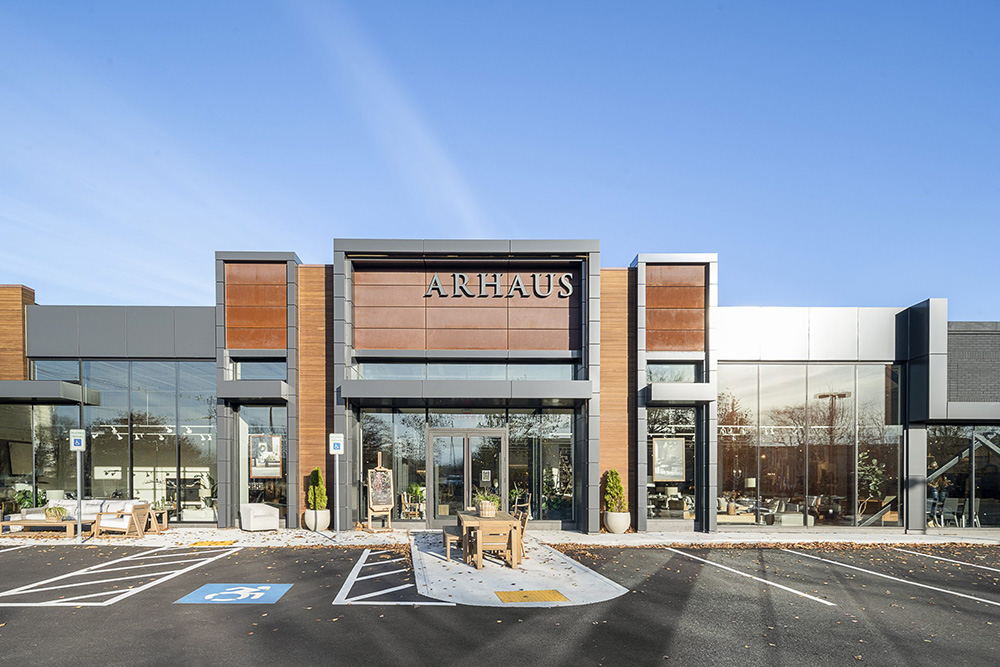
Based on currently available authoritative information, no official announcement or credible media report regarding a “one-year tariff delay” has been retrieved. A Politico report indicates that the 25% tariff was implemented in October 2025, and companies have begun raising prices to cope with cost pressures (e.g., Arhaus estimates the 2025 tariff impact at $12 million and 2026 impact at $50-60 million, and plans to protect profits through price increases) [1, 2]. If an official “one-year delay” decision is issued in the future, the following analysis framework and scenario calculations will still apply; the figures will be updated accordingly based on the new policy’s effective date and tax rates.
Under this premise, I will analyze based on the “implemented + planned tariff increase” benchmark and provide a scenario illustration of “if delayed for one year”.
- Current tariff policy status (based on retrieved authoritative sources): A 25% tariff on upholstered furniture and kitchen cabinets has been imposed on most countries since October 14, 2025; according to current plans, the tariff on upholstered furniture will be raised to 30% on January 1, 2026, and that on kitchen cabinets to 50% [2]; the EU, Japan, South Korea, etc., have differential tax rates [2].
- Delay assumption: If an official decision to “postpone the above-mentioned increases (to 30%/50%) by one year” is issued in the future, the new tax rates originally scheduled to take effect on January 1, 2026 will be delayed to January 1, 2027. In this scenario, enterprises can defer the digestion of short-term cost pressures and gain more adjustment time (supply chain transfer, inventory structure optimization, pricing strategy implementation, etc.).
For ease of evaluation, the following scenario pressure calculations for three types of typical retailers are provided (anchored on net profit margin):
| Company | Current Net Profit Margin | Pre-Tariff Profit Margin Space | Direct Pressure from Increase to 30%/50% | Buffer Effect If Delayed One Year |
|---|---|---|---|---|
| Wayfair (W) | -2.66%[0] | Insufficient (sustained loss) | Significant short-term pressure, stronger erosion | Gains time for supply chain/operation optimization, but still relies on price increases and inventory management |
| Lovesac (LOVE) | 1.05%[0] | ≈4-5 percentage points (operating profit margin 8.75%) | 5 percentage points incremental tariff → net profit turns negative | Delay reduces short-term loss probability, gains smoother window for price increases and turnover optimization |
| La-Z-Boy (LZB) | 4.29%[0] | ≈5-6 percentage points (operating profit margin 5.83%) | 5 percentage points incremental tariff → net profit nearly zero | Delay helps lock in import proportion from non-tax-increase countries and localization progress in advance |
| Williams-Sonoma (WSM) | 13.97%[0] | ≈18 percentage points (operating profit margin 18.12%) | Has thick buffer space | Delay strengthens its premium capability and structural optimization space |
| RH | 3.22%[0] | ≈10-11 percentage points (operating profit margin 10.59%) | Still has buffer but less elasticity | Delay helps smooth costs without significantly sacrificing brand premium |
Note: The above “direct pressure” is an illustrative static calculation (assuming the full tariff is reflected in costs and no hedging measures are taken). The actual impact will be mitigated by the following factors: adjusting import sources (from non-tax-increase or low-tax-rate regions), increasing localization and North American production ratios, pre-positioning inventory (e.g., locking in low-tax-rate inventory in advance), optimizing product structure, phased price increases, and exchange rate hedging, etc.
-
High-profit premium brands (represented by WSM): Net profit margin 13.97%, operating profit margin 18.12%[0]. Strategies:
- Prioritize low-tax-rate import sources (differential tax rate regions such as the EU/Japan/South Korea)[2];
- Accelerate U.S. local/North American capacity layout (e.g., localization of high-end product lines);
- Selective price increases (relying on brand stickiness and high customer unit price);
- If delayed for one year, can further shorten the global supply chain restructuring cycle and consolidate relative bargaining advantages.
-
Medium-profit enterprises with strong manufacturing and channel integration capabilities (LZB, RH): Net profit margins of 4.29% and 3.22%, operating profit margins of 5.83% and 10.59%[0]. Strategies:
- Accelerate import source diversification (transfer orders to low-tax-rate countries);
- Increase local manufacturing or outsourcing proportion to avoid high tariffs;
- Refined inventory management (pre-purchasing and turnover optimization);
- If delayed for one year, has more space to maintain gross profit margin without significant price increases.
-
Thin-profit or even loss-making pure online retailers (represented by W): Net profit margin -2.66%, operating profit margin -1.50%[0]. Strategies:
- Share tariff costs with suppliers through platform ecology (partial pass-through, partial profit sharing);
- Strengthen data-driven pricing and dynamic promotions to protect profit margins;
- Optimize SKU and inventory structure to reduce exposure to high-tax categories;
- If delayed for one year, gains a more relaxed time window for subsequent price increases and supply chain adjustments, but profit recovery still requires effective execution.
- Final timeline and tax rate structure for policy implementation: Whether there is an official “one-year delay” decision still depends on the announcement; current scenario analysis is based only on assumptions;
- Transfer pricing and cost pass-through capability: Enterprises with high brand power and high customer unit prices have stronger pass-through capabilities;
- Supply chain restructuring cycle: U.S. local/North American capacity construction and order redistribution usually take 12-24 months;
- Demand-side price sensitivity and consumption cycle: In a high-interest rate environment, price increase elasticity is limited, which may sacrifice sales volume;
- Secondary/chain reactions: Changes in upstream raw material prices, shipping costs, and exchange rates may amplify or offset the impact of tariffs.
-
Supply chain and cost management:
- Accelerate import source diversification, prioritize layout in low-tax-rate or non-tax-increase countries;
- Promote U.S. local/North American manufacturing or OEM layout to shorten supply radius;
- Under compliance, optimize inventory rhythm and procurement timing to lock in low-cost inventory.
-
Pricing and product portfolio:
- Calculate tariff sensitivity by category and channel, formulate a phased price increase path;
- Adjust product portfolio to increase the proportion of high-margin/low-tariff exposure products;
- Pass on costs more smoothly for high-value, low-sensitivity categories.
-
Finance and hedging:
- Lock in costs through long-term procurement contracts and exchange rate hedging;
- Optimize working capital and improve inventory turnover to reduce capital occupation and warehousing costs.
-
Investor perspective:
- Short-term: Pay attention to inventory and tariff exposure disclosures (e.g., quantitative guidance on “tariff impact amount”);
- Medium-term: Track localization progress and changes in import source structure;
- Long-term: Prefer targets with brand premium, supply chain resilience, and sufficient profit buffers (e.g., WSM, LZB).
- Timeline: The tax rate increases originally scheduled to take effect on January 1, 2026 (30% for upholstered furniture/50% for cabinets) are delayed to January 1, 2027;
- Quantitative implications: Enterprises can continue to operate at the lower tax rate (25%) in 2026, with an additional one-year buffer period for:
- Reducing the direct impact of incremental tariffs on profits;
- Accelerating the progress of supply chain diversification and localization;
- Promoting price increases and product structure optimization more smoothly;
- Improving the efficiency of inventory pre-positioning and capital utilization.
Before an official “one-year delay” announcement is made, enterprises should still advance their plans based on the “implemented + planned tariff increase” scenario; if an official delay decision is issued later, the pressure calculations and execution rhythm can be recalibrated according to this framework.
[0] Jinling API Data (company financial indicators and market data)
[1] Politico - ‘Only so long’ before Trump’s tariff costs hit consumers, businesses warn (https://www.politico.com/news/2025/12/08/trumps-tariff-costs-consumers-00679261)
[2] Trade Compliance Resource Hub - Trump 2.0 tariff tracker (https://www.tradecomplianceresourcehub.com/2025/12/28/trump-2-0-tariff-tracker/)
Insights are generated using AI models and historical data for informational purposes only. They do not constitute investment advice or recommendations. Past performance is not indicative of future results.
About us: Ginlix AI is the AI Investment Copilot powered by real data, bridging advanced AI with professional financial databases to provide verifiable, truth-based answers. Please use the chat box below to ask any financial question.