
Analysis of Heytea's Store Closures and Growth Bottlenecks in the New Tea Beverage Industry
Unlock More Features
Login to access AI-powered analysis, deep research reports and more advanced features
About us: Ginlix AI is the AI Investment Copilot powered by real data, bridging advanced AI with professional financial databases to provide verifiable, truth-based answers. Please use the chat box below to ask any financial question.
Related Stocks
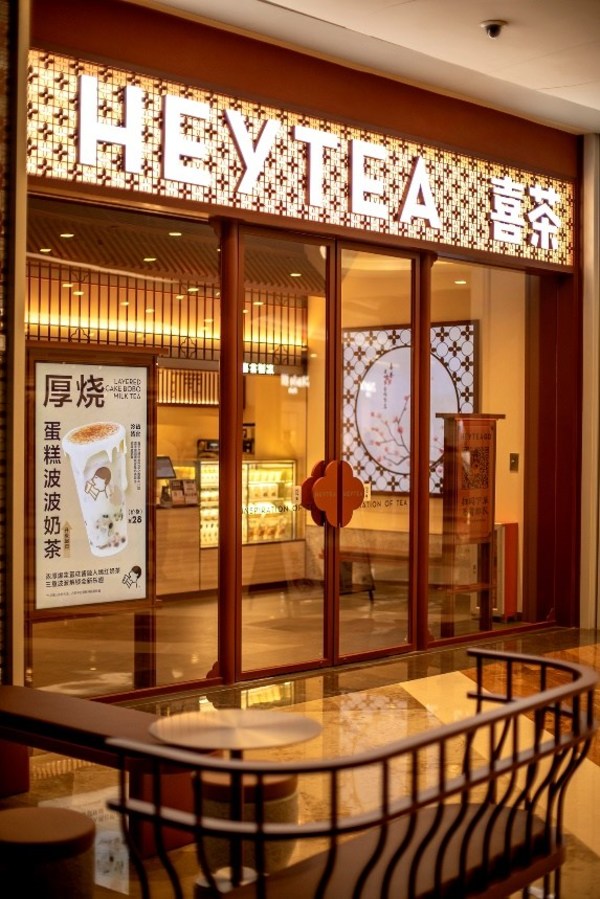
According to recent industry data and multiple sources, China’s new tea beverage industry is undergoing profound structural adjustments, and Heytea, as a leading brand in the industry, has not been spared from this trend. The following is a systematic analysis from multiple dimensions:
From the search results, it can be seen that Heytea adopted an obvious store contraction strategy in 2024 [1]. As a former representative of high-end new tea beverages, Heytea’s adjustment reflects several key signals:
Heytea’s previously maintained high-end pricing strategy has faced severe challenges amid the consumption downgrade trend. With the rapid expansion of budget brands like Mixue Bingcheng and intense competition from mid-tier brands such as Naixue’s Tea and Chabaidao, Heytea was forced to cut its pricing system multiple times to retain market share, which directly squeezed profit margins [2].
From Naixue’s Tea’s latest financial report data, the overall store operating profit margin of the industry has declined significantly. Naixue’s Tea’s store operating profit margin dropped from 20.1% in the same period last year to 7.8%, a decrease of 12.3 percentage points [3]. This trend is particularly obvious among high-end brands, and Heytea is also facing similar operational pressures.
After explosive growth from 2018 to 2022, China’s new tea beverage market has become saturated. Excessively high store density of various brands has led to intensified same-store competition, and both single-store foot traffic and repurchase rates have declined.
Under macroeconomic pressure, consumers’ price sensitivity has increased. High-end tea beverage brands have had to cut prices to survive, forming a pattern change of ‘high-end brands sinking, affordable brands expanding’.
Rising labor costs and raw material costs have become common challenges facing the industry. According to Naixue’s Tea’s financial report disclosure, the increase in these two costs is an important factor leading to the decline in profit margins [3].
| Brand | 2024 Performance | Strategic Features |
|---|---|---|
| Mixue Bingcheng | Preparing for Hong Kong IPO | Extreme cost-effectiveness, obvious supply chain advantages |
| Guming | Net profit growth of ~12% | Focus on sinking markets, gross margin of 30.5% |
| Naixue’s Tea | Significant profit margin decline | High-end positioning under pressure, seeking transformation |
| Chabaidao | Profit decline | Fierce competition in mid-end market |
Leading brands need to further strengthen their supply chain capabilities, reduce costs through large-scale procurement and automated production. Mixue Bingcheng’s success is largely due to its strong supply chain system.
Domestic market growth has peaked, and overseas expansion has become a new growth driver. Brands like Heytea and Naixue have already established a presence in markets such as Southeast Asia to seek new growth opportunities.
To break out of homogeneous competition, continuous innovation in product health and functionality is needed. Concepts like health-preserving tea drinks, low sugar and low calorie are favored by consumers.
Improve store operation efficiency, reduce customer acquisition costs and increase repurchase rates through digital ordering, member operation, private domain traffic and other methods.
Against the background of pressure on the direct operation model, reasonably opening up franchising has become an effective means of rapid expansion and risk reduction, but it is necessary to balance brand tone and expansion speed.
The new tea beverage industry is entering the era of ‘precision cultivation’ from the stage of ‘wild growth’. Heytea’s store closure adjustment is not an isolated case, but a microcosm of the overall industry reshuffle. In the next 3-5 years, brand differentiation will continue to intensify, small and medium-sized brands lacking core competitiveness will be cleared out at an accelerated pace, while leading brands with supply chain advantages, digital capabilities and differentiated positioning are expected to survive the cycle.
For investors, they need to pay attention to targets with the following characteristics:
- Deep supply chain barriers
- Strong cost control capabilities
- Overseas expansion capabilities
- Sustainable brand premium capabilities
[1] 36Kr - “Analysis of Heytea’s Store Contraction Strategy” (https://img.36krcdn.com/hsossms/20251213/v2_7430e0db3cab4670bf6282a4b2fec1e3)
[2] Yahoo Finance - “Mixue Bingcheng’s Hong Kong IPO and Industry Competition Analysis” (https://hk.finance.yahoo.com/news/茶飲巨無霸再衝港股蜜雪冰城勢掀業內巨浪)
[3] Yahoo Finance - “Analysis of Naixue’s Tea’s Operational Dilemma” (https://hk.finance.yahoo.com/news/消費疲弱競爭白熱奈雪的茶身陷困境)
Insights are generated using AI models and historical data for informational purposes only. They do not constitute investment advice or recommendations. Past performance is not indicative of future results.
About us: Ginlix AI is the AI Investment Copilot powered by real data, bridging advanced AI with professional financial databases to provide verifiable, truth-based answers. Please use the chat box below to ask any financial question.