
Analysis of the Profound Impact of the Shenzhen Stock Exchange's Revision to the "Stock Listing Rules"
Unlock More Features
Login to access AI-powered analysis, deep research reports and more advanced features
About us: Ginlix AI is the AI Investment Copilot powered by real data, bridging advanced AI with professional financial databases to provide verifiable, truth-based answers. Please use the chat box below to ask any financial question.
Okay, I have collected sufficient information to analyze the impact of the Shenzhen Stock Exchange’s (SZSE) revision to the “Stock Listing Rules” on the A-share market. Let me conduct an in-depth analysis from two dimensions: investor protection and company valuation.
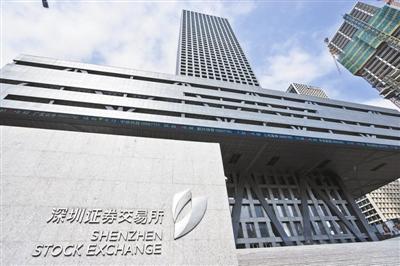
On December 31, 2025, the Shenzhen Stock Exchange (SZSE) publicly solicited comments on the revision of the “Stock Listing Rules” and the “Guidelines for Standardized Operation” for the Main Board and ChiNext Board [1]. The core objective of this revision is to
- Refined Duties: The board secretary’s responsibilities in organizing and coordinating the company’s information disclosure affairs, promoting compliance with corporate governance, and facilitating effective internal and external communication are further clarified.
- Expanded Scope: New responsibilities for the board secretary in investor relations management, public opinion management, and shareholder shareholding management are added.
- Embed into Operational Processes: Require the board secretary’s duties to be embedded into the company’s daily operational management processes.
- Clarify Cooperation Obligations: Clearly state that directors, senior executives, and functional departments should actively cooperate with the board secretary in performing duties.
- Perfect Reporting Mechanism: Establish a reporting mechanism for unsmooth performance of duties to ensure the board secretary can exercise authority effectively.
- Strict Qualification Requirements: Require the board secretary to have the necessary work experience for performing duties.
- Standardize Recruitment Procedures: Standardize the recruitment and dismissal procedures for directors and senior executives to prevent unqualified individuals from taking office.
- Improve Compensation Constraints: Require companies to improve the incentive and constraint mechanism for directors’ and senior executives’ compensation.
- Refine Fiduciary Duties: Strengthen internal constraints and accountability for the board secretary’s performance of duties.
- Maintain Independence: Improve regulatory requirements for maintaining the independence of listed companies.
- Standardize Related Party Competition: Clarify matters related to the standardization of related party competition.
- Enhanced Information Transparency: By strengthening the board secretary’s core responsibility in information disclosure, ensure the truthfulness, accuracy, completeness, and timeliness of information disclosure.
- Reduced Information Asymmetry: The board secretary is entrusted with investor relations management duties, enabling small and medium investors to understand the company’s operational status more timely and fully.
- Prevent Insider Trading: A sound support mechanism for the board secretary’s performance of duties helps prevent insider information leakage and unfair transactions.
- Facilitated Exercise of Rights: The rules require companies to provide convenience for investors to exercise shareholder rights, such as the “one-click” online voting service which has been promoted in many listed companies.
- Smooth Communication Channels: Strengthen two-way communication with investors through multiple channels including the Hudongyi Platform, performance briefings, and investor exchange meetings.
- Appeal Handling Mechanism: Require timely and proper handling of investor inquiries, complaints, and suggestions, and regular feedback to the board of directors.
- Include improving the quality of listed companies as an important content.
- Reduce the phenomenon of infringing on small and medium investors’ rights and interests through non-compliant means.
- Require listed companies to continuously enhance their core competitiveness and reward investors with profit levels and development prospects.
- Checks and Balances: Improve a scientific, standardized, legally defined, clear, coordinated, and effective check-and-balance governance system.
- Role of Specialized Committees: Strengthen the role of specialized committees such as the board’s audit committee to help the board make scientific and efficient decisions.
- Function of Independent Directors: Give full play to the role of independent directors in participating in decision-making, supervision and balance, and professional consultation in the board of directors.
- Reduced Risk Premium: Improved governance level and increased transparency in information disclosure will reduce the risk premium required by investors, thereby boosting valuation.
- Liquidity Premium: A good governance structure will attract more institutional investors, improve stock liquidity, and bring liquidity premium.
- Certainty Premium: Standardized operational mechanisms reduce uncertainty and provide a more solid foundation for valuation.
- Benefit for High-Quality Companies: Companies with standardized governance and transparent information disclosure will gain further market recognition.
- Pressure on Companies with Weak Governance: For companies with governance issues, the implementation of new rules may expose potential risks and lead to valuation pressure.
- Improved Decision-Making Quality: Standardized board operations and independent director systems improve the quality of major decisions.
- Strengthened Risk Control: A sound internal control system and risk prevention capacity reduce operational risks.
- Optimized Resource Allocation: A perfect corporate governance mechanism ensures resources flow to high-return areas.
- Enhanced Innovation Drive: A good governance environment provides institutional guarantees for long-term corporate innovation.
- According to Securities Times analysis, as the quality of listed companies improves, the total market value of A-shares increased from about 65 trillion yuan in August 2024 to over 100 trillion yuan in August 2025. This is not just a numerical change but also reflects the enhancement of investor confidence [3].
- The rules emphasize that listed companies should strengthen cash dividends and market value management, which will directly improve investor returns and valuation indicators.
- Improved Profit Quality: Standardized financial management and information disclosure make profits more sustainable.
- Improved Growth Expectations: Improved governance level helps companies implement long-term strategies and improve growth expectations.
- Improved Net Asset Quality: Standardized related party transactions and external guarantee management improve net asset quality.
- Increased ROE: Effective incentive and constraint mechanisms improve capital use efficiency.
- Enhanced Cash Flow Stability: Standardized governance mechanisms reduce unexpected losses and improve the predictability of cash flows.
- Reduced WACC: Lower risk leads to a decrease in the cost of equity capital, thereby reducing the weighted average cost of capital (WACC).
- Board Secretary Performance Evaluation: Focus on companies whose board secretaries have won honors such as “Golden Board Secretary” and “5A Rating”.
- Information Disclosure Quality: Choose listed companies with high information disclosure ratings.
- Perfect Governance Structure: Prioritize companies with a high proportion of independent directors and standardized operation of specialized committees.
- Continuous Governance Improvement: Focus on companies that proactively improve governance mechanisms and continuously enhance standardized operation levels.
- Investor Relations Management: Value companies that communicate with investors and respond to market concerns in a timely manner.
- Shareholder Return Awareness: Focus on companies that pay attention to cash dividends and actively conduct market value management.
- Observe Implementation Efforts: Need to pay attention to the implementation efforts and regulatory practices after the official release of the rules.
- Increased Compliance Costs: Some companies may face pressure from increased compliance costs in the short term.
- Exposure of Governance Risks: Strict supervision may expose potential governance issues of some companies.
The SZSE’s revision of the “Stock Listing Rules” is another important measure in the construction of China’s capital market infrastructure system. From the perspective of investor protection, the new rules will effectively protect the legitimate rights and interests of small and medium investors by
From the perspective of company valuation, although there may be fluctuations in the short term due to increased compliance costs and market differentiation,
[1] Sina Finance - SZSE Solicits Public Comments on Revision of “Stock Listing Rules” and Other Business Rules (https://finance.sina.com.cn/jjxw/2025-12-31/doc-inhesxnm5168202.shtml)
[2] Shanghai Securities News - Resolution Announcement of the 42nd Meeting of the 12th Board of Directors of Sichuan Changhong Electric Co., Ltd. (https://paper.cnstock.com/html/2025-12/30/content_2164142.htm)
[3] Securities Times - Protecting the Rights and Interests of Small and Medium Investors and Improving the Quality and Returns of Listed Companies Are Top Priorities (https://www.stcn.com/article/detail/3529226.html)
Insights are generated using AI models and historical data for informational purposes only. They do not constitute investment advice or recommendations. Past performance is not indicative of future results.
About us: Ginlix AI is the AI Investment Copilot powered by real data, bridging advanced AI with professional financial databases to provide verifiable, truth-based answers. Please use the chat box below to ask any financial question.