
Analysis of the Impact of Yuan3.0 Flash Open Source on the Competitive Landscape of Domestic AI Large Models
Unlock More Features
Login to access AI-powered analysis, deep research reports and more advanced features
About us: Ginlix AI is the AI Investment Copilot powered by real data, bridging advanced AI with professional financial databases to provide verifiable, truth-based answers. Please use the chat box below to ask any financial question.
Based on search results, I will analyze the impact of this event from multiple dimensions.
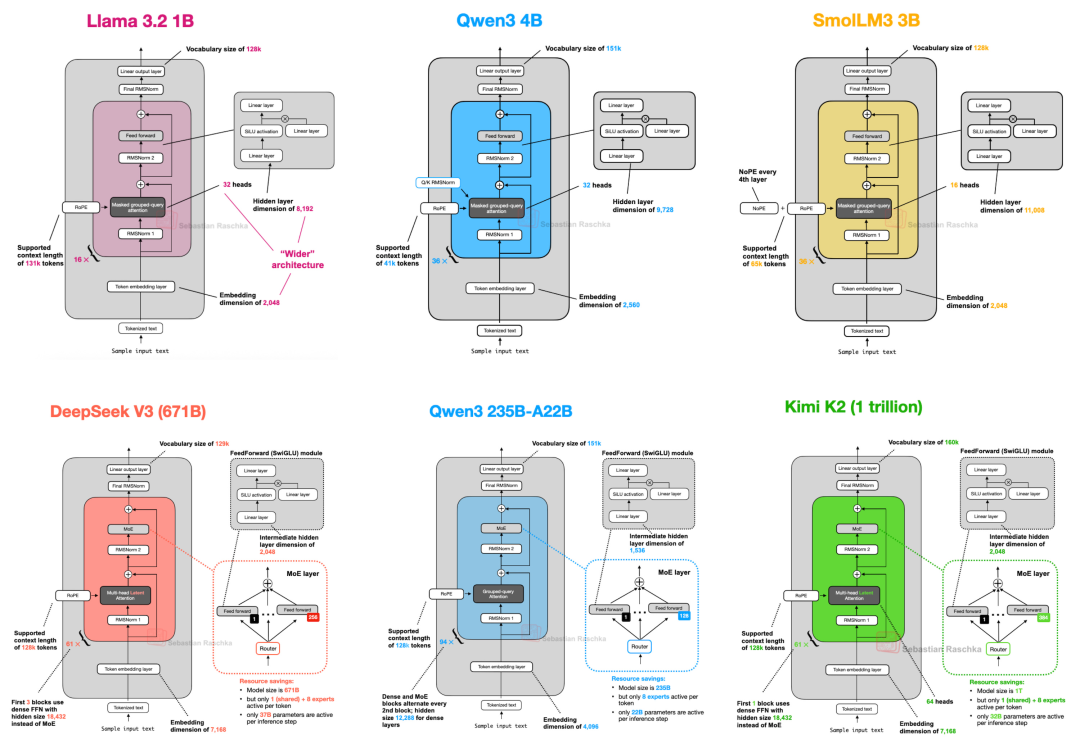
Yuan3.0 Flash adopts a
- Balance between parameter scale and efficiency: The total model parameters reach 40B, but through the MoE architecture, only about 3.7B parameters are activated per inference, which greatly reduces the inference cost [1]
- Improved computational efficiency: Compared to traditional dense models where all parameters are activated in each inference, the MoE architecture dynamically selects expert sub-models, significantly reducing computational load and being suitable for efficient inference [4]
- Multimodal capability: The model has multimodal processing capabilities and has made breakthroughs in the fusion of visual-language-control three modalities [3]
From the search results, domestic AI large models have formed a clear division of labor:
- Qwen (Tongyi Qianwen): Focuses onbroad coverageand performs well in generality and ease of use
- DeepSeek: Focuses oncutting-edge efficiencyand has gained global attention through extreme cost control and high-performance inference
- Hunyuan (Hybrid Yuan): Focuses on theinfrastructurelevel
- Yuan3.0 Flash: May seek differentiated competitive advantages inmultimodal inferenceandenterprise-level applications[2]
According to search results, the “Hundred Models War” has quietly ended in 2025, and the competition logic of the AI industry has undergone a fundamental transformation [1]:
- From model performance to full ecosystem competition: The focus of competition has shifted from pure model performance competition to a full-end ecosystem competition covering software, hardware, and ecology
- Open source drives application explosion: Open-source models like DeepSeek with “low cost + high efficiency” have promoted the explosion of applications in vertical fields such as “AI + Health” and “AI + Education”, accelerating market reshuffling [1]
The open-sourcing of Yuan3.0 Flash will further
Search results show that Chinese open-source AI models are having an important impact globally:
- Download volume exceeds U.S. models: In July 2025, the download volume of Chinese open-source models on the HuggingFace platform exceeded that of U.S. models for the first time [2]
- Form a complete open-source stack: China has formed a complete open-source model stack of “Qwen (breadth) - Hunyuan (infrastructure) - DeepSeek (cutting-edge efficiency)”, which is similar to Meta’s Llama ecosystem but has China’s scale, distribution, and iteration cycle [2]
- Technology recognized globally: Open-source models like DeepSeek have gained wide recognition in the global developer community; engineers value their technical efficiency—this feature is increasingly important in a world with limited GPU supply and high costs [2]
The open-sourcing of Yuan3.0 Flash will further enrich this ecosystem, especially in multimodal and enterprise-level applications.
The impact of open-source large models on enterprise applications is mainly reflected in:
- Reduced access threshold: Enterprises do not need to invest huge funds to develop their own models; they can directly carry out customized development based on open-source models
- Accelerated commercialization process: According to search results, the scale of China’s AI Agent market reached 5.54 billion yuan in 2023, and it is expected to soar to 852.035 billion yuan in 2028, with a compound annual growth rate of 72.7% [1]
- Promote vertical field penetration: Open-source models enable AI applications to quickly penetrate into various vertical fields such as finance, medical care, education, and manufacturing
- Pricing pressure: Open-source models erode the pricing power of proprietary vendors [2]
- Intensified ecosystem competition: Competition is no longer just about model competition but ecosystem competition
- Growth in cloud service demand: Even if models are open-source, enterprises still need cloud vendors to provide computing power support and deployment services
- Upper-layer application opportunities: Tech giants can focus on building upper-layer applications and services based on open-source models
- Reduced R&D costs: They can quickly build products based on open-source models without training large models from scratch
- Accelerated product iteration: The rapid iteration of the open-source ecosystem provides more technical options for startups
- Intensified competition: Lower technical thresholds mean more competitors enter the market
- Increased difficulty in differentiation: Need to find a unique value proposition to stand out in competition
- Reduced AI application costs: Open-source models lower the technical and cost thresholds for AI applications
- Enhanced customization capabilities: Enterprises can customize open-source models according to their own needs
According to search results, the competition in the AI industry has entered a new stage:
- Full-end ecosystem collaboration: From pure model performance competition to full-end ecosystem competition covering software, hardware, and ecology [1]
- Increased importance of hardware carriers: Smart hardware such as AI glasses and AI phones have become the main carriers of AI applications; 2026 is expected to be the first year of AI phones [1]
- “Good enough” rather than “most advanced”: China does not need to “win” in cutting-edge benchmark tests; it only needs its open-source models to be “good enough to be widely adopted”, “cheap enough for experiments”, “flexible enough for enterprise deployment”, and “visible enough to influence global development norms” [2]
- Deepening in vertical fields: Open-source models will be deeply applied in vertical fields such as finance, medical care, and education
- Enhanced Agent capabilities: Large model Data Agents are becoming the core direction for enterprises to build next-generation data capabilities, which can automatically complete the entire link from multi-source access, real-time cleaning, model optimization to decision recommendations based on business goals [1]
Although open-source models bring many opportunities, they also face challenges:
- Commercialization difficulties: Zhipu AI had revenue of 312 million yuan last year but a net loss of 2.958 billion yuan; MiniMax’s annual loss was about 3.27 billion yuan—high computing power costs and talent competition are the main reasons for burning money [4]
- Compliance risks: Data compliance, copyright, and other issues are still major challenges facing the industry; MiniMax is facing a joint lawsuit by the six major Hollywood studios, accusing its AI video tools of infringing on film and television copyrights [4]
- Technical homogenization: The popularity of open-source models may lead to technical homogenization; enterprises need to find differentiated competitive advantages
The impact of Yuan3.0 Flash’s open-source on the competitive landscape of domestic AI large models is mainly reflected in:
- Technical level: Achieve a balance between parameter scale and inference efficiency through the MoE architecture, providing a new technical option for multimodal AI applications
- Market level: Further enrich China’s open-source AI model ecosystem and strengthen its competitiveness in the global AI field
- Application level: Reduce the development threshold of enterprise AI applications and promote explosive growth of AI applications in vertical fields
- Competition level: Promote the AI industry to shift from model competition to ecosystem competition and accelerate the end of the “Hundred Models War”
Overall, the open-sourcing of Yuan3.0 Flash is a sign of the maturity of China’s AI industry, indicating that domestic AI enterprises have shifted from purely pursuing model scale and performance to a sustainable development path that pays more attention to efficiency, applications, and ecosystem construction. This trend will help promote the implementation of AI technology in more vertical fields and accelerate the process of AI industrialization.
[1] Yahoo Finance - “The ‘Hundred Models’ dividend is gone? The AI battlefield shifts to phones and glasses; 2026 is the key year for hardware explosion” (https://hk.finance.yahoo.com/news/百模-紅利吃完了-ai戰場轉向手機-眼鏡-2026成硬體爆發關鍵年-084009275.html)
[2] Forbes - China’s Open-Source AI Leap Is Quietly Rewriting The Global Playbook (https://www.forbes.com/sites/viviantoh/2025/12/15/chinas-open-source-ai-leap-is-quietly-rewriting-the-global-playbook/)
[3] East Money - Large Language Models in 2025 (https://finance.eastmoney.com/a/202512303605772636.html)
[4] Yahoo Finance - Competing to be China’s first large model stock! Zhipu and MiniMax apply for Hong Kong IPO one after another; experts point out “three major hidden concerns” (https://hk.finance.yahoo.com/news/搶當中國大模型第-股-智譜-minimax相繼申請赴港上市-專家直指-021002108.html)
[5] Tencent Cloud - What is the biggest difference between Deepseek and Open AI large models? (https://cloud.tencent.com/developer/article/2493086)
Insights are generated using AI models and historical data for informational purposes only. They do not constitute investment advice or recommendations. Past performance is not indicative of future results.
About us: Ginlix AI is the AI Investment Copilot powered by real data, bridging advanced AI with professional financial databases to provide verifiable, truth-based answers. Please use the chat box below to ask any financial question.