
Enlightenment from the Rise Model of South Korea's Semiconductor Industry for China's Semiconductor Sector and Evolution of the Memory Chip Competition Landscape
Unlock More Features
Login to access AI-powered analysis, deep research reports and more advanced features
About us: Ginlix AI is the AI Investment Copilot powered by real data, bridging advanced AI with professional financial databases to provide verifiable, truth-based answers. Please use the chat box below to ask any financial question.
Now let’s systematically analyze the enlightenment from the rise model of South Korea’s semiconductor industry for China’s semiconductor sector and the future competition landscape of the memory chip industry.
South Korea’s semiconductor industry success core lies in
- Unprecedented policy support: The 1986 Semiconductor Industry Revitalization Plan provided Samsung with the Yongin Industrial Park at a land price of only 10% of the market price and exempted it from corporate income tax for 10 years [4]
- Continuous capital injection: The 2019 ‘Semiconductor Materials, Equipment, and Components 2.0 Plan’ injected 5 trillion KRW (approximately 420 million USD) into Samsung and SK Hynix to break through ‘chokepoint’ materials such as photoresist and high-purity hydrogen fluoride [4]
- Tax incentive policies: In recent years, the ‘Semiconductor Superpower Strategy’ has been implemented, which aims to increase the self-sufficiency rate of semiconductor materials, parts, and equipment from 30% to 50% by raising tax credit rates [5]
South Korea’s semiconductor industry began with foreign manufacturers setting up factories in the 1960s, using cheap labor for simple parts assembly; its meaningful development started in the 1980s with the four major chaebols: Samsung, LG, Hyundai (later spun off into Hynix), and Daewoo [3]. Its technical leap characteristics:
- Seize technology window periods: South Korea seized the demand for new memory chips during the transition from mainframes to consumer electronics to achieve technological leapfrogging [3]
- Reverse engineering + talent introduction: During the US-Japan competition, South Korea aggressively attracted talents with high salaries; Samsung poached 70% of Toshiba’s engineers with triple salaries [3]
- Continuous R&D investment: It took only one year to move from 64K DRAM to 1M DRAM; in 1992, it developed 64M DRAM simultaneously with the US and Japan [5]
South Korea formed an industrial structure dominated by chaebols and supported by small and medium-sized enterprises [3]:
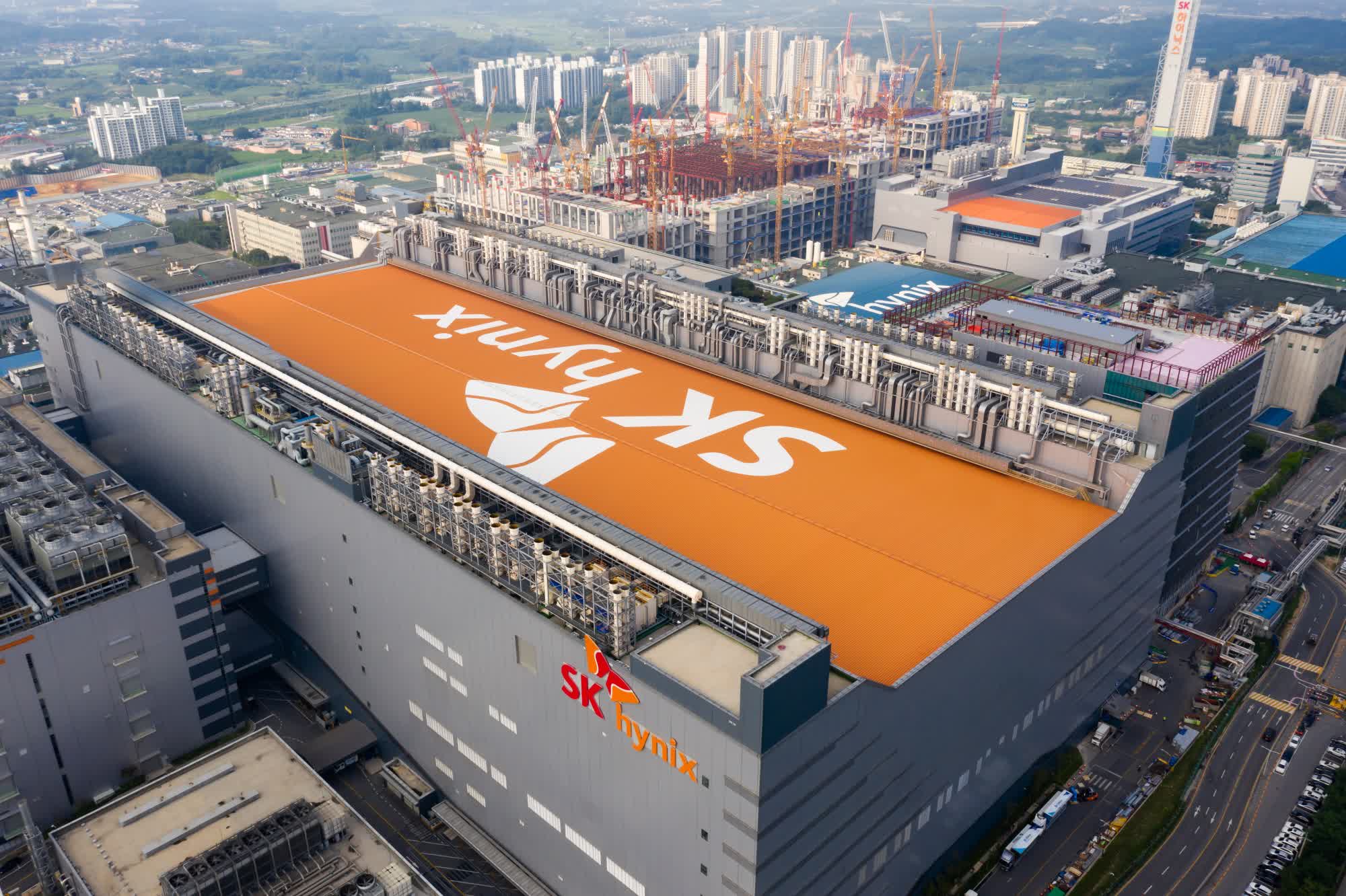
- Leading chaebols like Samsung and SK Hynix adopt the IDM model, forming a complete chain of core technology creation, upstream equipment and material supply, and overseas end-demand [3]
- Small and medium-sized enterprises develop around leading enterprises, providing materials, equipment, and by-product processing for Samsung and Hynix, forming industrial chain synergy [3]
- ‘Iron triangle’ of government-enterprise collaborationbecame the core weapon against technology blockades [4]
By 2020, South Korea’s semiconductor industry had achieved remarkable results:
- Global monopoly position: Samsung and SK Hynix control 72% of the global DRAM market and 56% of the NAND market [4]
- Economic pillar status: Semiconductor exports reached 99.1 billion USD, accounting for 19.3% of South Korea’s total exports, equivalent to the sum of the three major industries of automobiles, ships, and steel [4]
- Increased localization rate of equipment: Jumped from 32% in 2015 to 48% in 2020 [4]
South Korea’s semiconductor industry has serious structural problems:
- Distorted industrial structure: In 2020, 83% of South Korea’s semiconductor exports came from memory chips [4]
- Cyclical fluctuation risk: In 2018, DRAM prices plummeted by 30%, directly causing South Korea’s GDP growth rate to drop by 0.4 percentage points; when global consumer electronics demand shrank in 2022, Samsung’s semiconductor division’s operating profit plummeted by 97% [4]
- Insufficient ecosystem building: In the material field, Japan occupies 52% of the photoresist market, while South Korean enterprises account for less than 8% [4]
- Decline in the number of engineers: The number of semiconductor engineers in South Korea peaked at 135,000 in 2020 and has continued to decline since then [4]
- Decline in talent attractiveness: The number of applicants for the electronic engineering major at Seoul National University decreased by 43% compared to 2010 [4]
- Aging problem: The average age of new engineers at Samsung rose to 31.2 years old in 2024 [4]
The lesson of South Korea’s over-reliance on memory chips warns China:
- Diversified development: Should not only focus on memory chips but also comprehensively develop multiple fields such as logic chips, analog chips, and power semiconductors
- Full industrial chain layout: Refer to TSMC’s model to build a ‘equipment supplier-foundry-design company’ golden triangle [4]
- Ecosystem construction: Not only need to break through core technologies but also build a complete industrial ecosystem
- Continuous investment from the National Integrated Circuit Industry Investment Fund: China has continuously supported the semiconductor industry through policy tools such as the National Integrated Circuit Industry Investment Fund [2]
- Tax incentive policies: Made in China 2025 and the 15th Five-Year Plan provide policy support in multiple fields [2]
- Full industrial chain development: China’s policies focus on full industrial chain development rather than a single product line [2]
- University-enterprise cooperation in cultivation: Refer to TSMC’s model of co-building a ‘Semiconductor College’ with National Tsing Hua University (Taiwan) [4]
- Talent incentive mechanism: Provide competitive salaries and career development opportunities
- International talent introduction: Attract top semiconductor talents globally
China’s unique advantages compared to South Korea:
- 1.4 billion population market scale: Provides a huge domestic demand market for semiconductor industry development [4]
- Complete industrial system: Has the foundation for full industrial chain collaborative development [4]
- Rich application scenarios: Has extensive application scenarios in emerging fields such as 5G, AI, and new energy vehicles
According to the latest data, in the global NAND market in Q1 2024, the three giants Samsung, SK Hynix, and Micron together accounted for 64% of the market share [1], showing the strong strength of South Korean enterprises in the memory chip field.
The memory chip industry is facing profound transformation:
- Surge in demand for HBM (High Bandwidth Memory): Demand for HBM for AI training and inference is growing rapidly
- Accelerated technology iteration: The number of 3D NAND stacking layers continues to increase; Yangtze Memory Technologies Co. (YMTC)'s Xtacking architecture has achieved 294-layer stacking [4]
- Emerging application scenarios: Emerging applications such as AI, autonomous driving, and cloud computing drive the growth of memory chip demand
China has made significant progress in the memory chip field:
- Yangtze Memory Technologies Co. (YMTC): Has completed share reform to pave the way for listing, with a valuation exceeding 100 billion RMB, and its technical strength has reached the international advanced level [1][4]
- Changxin Memory Technologies Co. (CXMT): Gradually breaking through in the DRAM field and narrowing the gap with international giants
- Accelerated domestic substitution: Against the backdrop of US sanctions, domestic enterprises have increased their procurement of domestic memory chips
The memory chip industry competition landscape will show the following trends:
- Multipolar competition landscape: From a South Korea-US duopoly to a China-South Korea-US tripartite confrontation
- Intensified technological competition: Accelerated competition in stacking layers, process technology, performance indicators, etc.
- Impact of geopolitical factors: US technology blockades against China will accelerate China’s independent and controllable process
- Driven by emerging applications: Emerging applications such as AI, 5G, and IoT create new market opportunities
- Ecosystem competition: From single product competition to full industrial chain ecosystem competition
The rise of South Korea’s semiconductor industry is actually a product of combining
Thirty years later, China has reconstructed the underlying logic of the semiconductor competition with
In the new era where artificial intelligence and quantum computing are reshaping industrial rules, the moat of single technical advantage is accelerating its collapse; only those who master the composite capabilities of
China’s semiconductor industry is in a critical period from catching up to surpassing; it must not only learn from the successful experience of the South Korean model but also avoid its structural traps, build a healthier and more sustainable industrial ecosystem, and achieve true independent control and innovative development.
[0] Jinling API Data - Samsung Electronics Real-Time Quote (December 30, 2025)
[1] Yahoo Finance - “Completed Share Reform to Pave the Way for Listing, YMTC Valued at Over 160 Billion RMB” (https://hk.finance.yahoo.com/news/完成股改為上市鋪路-長江存儲估值逾千六億-022701761.html)
[2] Yahoo Finance - “US Sanctions Failed? Former US Commerce Secretary Talks About Huawei Again” (https://hk.finance.yahoo.com/news/美國制裁失效-美國前商務部長再談華為-兩屆美國政府都未-054003425.html)
[3] Zhitong Finance - “Apocalypse of Global Semiconductor Industry Transfer” (https://m.zhitongcaijing.com/contentnew/appcontentdetail.html?content_id=150404)
[4] Tencent News - “South Korea’s Semiconductor Industry: What’s Wrong?” (https://news.qq.com/rain/a/20250224A09HCN00)
[5] Science Press - “Analysis and Thinking on the Development of South Korea’s Semiconductor Industry” (https://kexue.cspress.com.cn/uploadfile/202509/5f9f70020106477.pdf)
Insights are generated using AI models and historical data for informational purposes only. They do not constitute investment advice or recommendations. Past performance is not indicative of future results.
About us: Ginlix AI is the AI Investment Copilot powered by real data, bridging advanced AI with professional financial databases to provide verifiable, truth-based answers. Please use the chat box below to ask any financial question.