
Deep Analysis of the Contradiction Between High Customer Unit Price and Low Profitability at Ruipai Pet Healthcare
Unlock More Features
Login to access AI-powered analysis, deep research reports and more advanced features
About us: Ginlix AI is the AI Investment Copilot powered by real data, bridging advanced AI with professional financial databases to provide verifiable, truth-based answers. Please use the chat box below to ask any financial question.
Based on search results, I provide a systematic analysis of the core contradiction between high customer unit price and low profitability at Ruipai Pet Healthcare for you.
From publicly disclosed financial data, Ruipai Pet Healthcare shows a typical characteristic of ‘increasing revenue without increasing profits’ [1]:
- Operating revenue from 2022 to 2024 was 1.455 billion yuan, 1.585 billion yuan, and 1.758 billion yuan respectively
- It reached 943 million yuan in the first half of 2025, maintaining a steady growth trend
- Net profit performance: -58.713 million yuan in 2022, -251 million yuan in 2023, and significantly narrowed in 2024
- Although it achieved a net profit of 15.54 million yuan in the first half of 2025, the net profit margin was only 1.6%
- Operating profit margin was only 9.3%, far lower than the level of general consumer goods enterprises
- Gross margin over the past three years was 22.4%, 21%, and 22% respectively
- It rose to 24.8% in the first half of 2025, which is already the highest level in the industry [1][2]
The scarcity of veterinary talent leads to high salary costs. Ruipai clearly stated in its prospectus that it needs to attract professional talents by improving compensation packages [1]. This cost has the following characteristics:
- Rigid characteristic: Once salaries are raised, it is difficult to reduce them back
- Continuous growth: Industry talent competition drives up salary levels
- Low substitutability: Professional veterinarians have a long training cycle and are difficult to replenish quickly
The threshold for opening a compliant pet hospital is relatively high:
- Need to be equipped with various professional inspection facilities (CT, MRI, ultrasound, etc.)
- Surgical equipment and anesthesia systems require huge investments
- Equipment maintenance costs occur continuously
- Technology updates rapidly, requiring continuous investment [3]
The market size of pet-specific drugs is limited:
- Domestic pet drug R&D and production scale is small
- Many core drugs rely on imports
- Procurement costs are higher than human drugs
- Limited bargaining power for large-scale procurement [1]
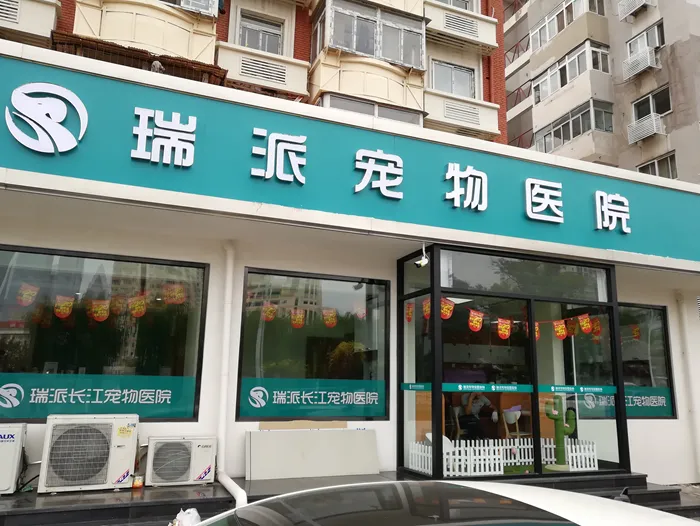
Ruipai adopts a rapid expansion strategy of ‘acquisition + integration’:
- As of June 2025, there are 548 pet hospitals
- Among them, 120 are self-built and 428 are acquired hospitals
- This model brings heavy financial burdens [2]
- As of June 2025, the goodwill book value is as high as 1.792 billion yuan
- In 2023, due to underperformance of some hospitals, a goodwill impairment provision of 137 million yuan was made
- Directly led to the expansion of net loss to 251 million yuan that year [3]
- Diagnostic service revenue accounts for more than 90%
- Single business structure, weak anti-risk ability
- Highly sensitive to medical service prices and doctor costs [3]
- Early institutions predicted that the market size could reach 136 billion yuan by 2026
- But the actual industry size in 2024 was only 36.6 billion yuan
- The target achievement time is almost delayed by nearly a decade
- Industry development speed is lower than expected [1]
- New Ruipeng, the industry leader, accumulated losses of over 3.7 billion yuan from 2020 to 2022
- Capital-driven rapid expansion leads to industry-wide losses
- Price competition compresses profit margins [2]
Pet healthcare has
- Medical attribute: High professional threshold, service pricing refers to human medical care
- Consumption attribute: Pet owners have strong willingness to spend on their ‘fur babies’ and low price sensitivity
This characteristic allows the customer unit price to remain at a high level, but it also means that cost rigidity is transmitted to terminal prices.
- Labor, equipment, and drug costs continue to rise
- Terminal pricing is already at a high level, with limited room for further price increases
- Profit margins are squeezed by both upstream and downstream
- Acquisition integration costs offset scale advantages
- Longer management radius reduces operational efficiency
- Regional differences lead to inconsistent service standards
- Goodwill impairment risk may continue to affect profits
- Labor cost上涨 pressure remains
- Dependence on a single business leads to weak anti-risk ability
- Intensified industry competition may further compress profit margins
- Long-term growth trend of the pet economy is clear
- Ruipai has scale advantages in industry integration
- Capital market attention provides financing support
[1] Yahoo Finance - Pet healthcare has low profits and is prone to losses; does Ruipai have few investment highlights? (https://hk.finance.yahoo.com/news/寵物醫療利潤低易虧損-瑞派投資亮點乏善足陳-232148566.html)
[2] 36氪 - Is running a pet hospital easy? The answer is in Ruipai’s prospectus (https://m.36kr.com/p/3611594421077249)
[3] The Paper - 100 million cats and dogs, leading to an IPO (https://m.thepaper.cn/newsDetail_forward_32259877)
Insights are generated using AI models and historical data for informational purposes only. They do not constitute investment advice or recommendations. Past performance is not indicative of future results.
About us: Ginlix AI is the AI Investment Copilot powered by real data, bridging advanced AI with professional financial databases to provide verifiable, truth-based answers. Please use the chat box below to ask any financial question.