
Photovoltaic Cell Enterprises: Calculation of Silver Cost Pressure and Gross Margin Pressure Levels
Unlock More Features
Login to access AI-powered analysis, deep research reports and more advanced features
About us: Ginlix AI is the AI Investment Copilot powered by real data, bridging advanced AI with professional financial databases to provide verifiable, truth-based answers. Please use the chat box below to ask any financial question.
Related Stocks
Photovoltaic cell enterprises are facing unprecedented silver cost pressure. According to the latest market data, the London spot silver price once exceeded the $69/ounce mark on December 22, 2025, with a cumulative increase of about 138% [1]. The skyrocketing silver prices have brought huge cost pressure to the photovoltaic industry.
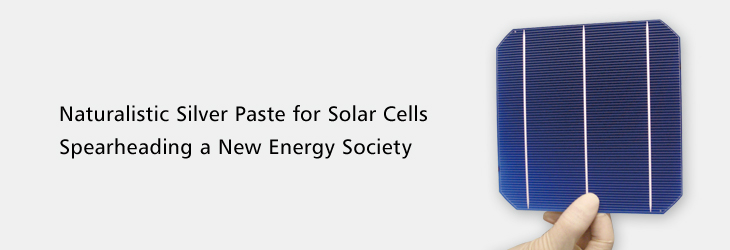
As a key material directly affecting the conversion efficiency of photovoltaic cells, silver paste has the characteristics of large usage, high cost, and high technical threshold. According to industry data, silver paste costs account for more than 50% of the non-silicon costs (excluding depreciation and VAT) of photovoltaic cells [2]. This proportion means that large fluctuations in silver prices will have a significant impact on the profitability of photovoltaic cell enterprises.
银浆成本占比 = (银浆单价 × 单位电池银耗量) / 电池总成本
Take TOPCon cells as an example:
- Current silver consumption: 80-85mg/W (Q3 2025 data) [1]
- Silver content in silver paste: approximately 70-80%
- Silver powder price: approximately 18,000-19,000 yuan/kg (December 2025 data) [3]
Assume a TOPCon cell production capacity of 1GW, silver consumption of 82mg/W, and silver powder price of 18,500 yuan/kg:
- Unit silver paste cost = 82mg/W × 18.5 yuan/g = 1.517 yuan/W
- If the cell selling price is 0.35 yuan/W (considering current price war pressure), the silver paste cost proportion exceeds 40%
毛利率变化率 = Δ白银价格 × 银浆成本占比 / 电池售价
| Silver Price Change | Silver Paste Cost Proportion (30%) | Silver Paste Cost Proportion (40%) | Silver Paste Cost Proportion (50%) |
|---|---|---|---|
| +10% | -0.86% | -1.14% | -1.43% |
| +20% | -1.71% | -2.29% | -2.86% |
| +50% | -4.29% | -5.71% | -7.14% |
| +100% | -8.57% | -11.43% | -14.29% |
From actual cases, Dike Co., Ltd. saw a 70.03% year-on-year decline in net profit in the first half of 2025, with gross margin dropping to 7.86% [1]. This data fully illustrates the huge impact of silver cost pressure on enterprise profitability.
单瓦毛利 = 电池售价 - 硅片成本 - 银浆成本 - 其他非硅成本 - 折旧摊销
- Silicon wafer cost: approximately 0.15-0.20 yuan/W
- Other non-silicon costs: approximately 0.08-0.12 yuan/W (including energy, labor, equipment depreciation, etc.)
- Silver paste cost: fluctuates with silver prices, rose significantly in H2 2025
Assume cell selling price is 0.35 yuan/W, silicon wafer cost is 0.18 yuan/W, and other non-silicon costs are 0.10 yuan/W:
- When silver paste cost is 1.0 yuan/W: gross profit =0.35-0.18-1.0-0.10=-0.93 yuan/W (loss)
- When silver paste cost is0.8 yuan/W: gross profit=0.35-0.18-0.8-0.10=-0.73 yuan/W (loss)
- When silver paste cost is0.5 yuan/W: gross profit=0.35-0.18-0.5-0.10=-0.43 yuan/W (loss)
This calculation shows that under current market selling prices, silver paste cost has become a key variable determining whether cell enterprises incur losses.
###3. Impact of Technological Cost-Reduction Paths on Gross Margin
####3.1 Trend of Silver Paste Consumption Reduction
| Technology Route | Silver Consumption Change | Cost Reduction Magnitude |
|---|---|---|
| Multi-busbar technology | Reduced by about80% in three years | Significant |
| Silver-coated copper paste (about 20% silver content) | Over50% reduction compared to standard process | Large |
| Pure copper paste | From 6mg/W to0.5mg/W | Extremely large |
| Electroplated copper technology | Completely silver-free | Completely resolved |
####3.2 Marginal Contribution of Technology Substitution to Gross Margin
Assume traditional silver paste cost accounts for 40%, after adopting silver-coated copper (20% silver content):
- Silver paste cost decreases by about50%
- Marginal improvement in gross margin=40%×50%=20 percentage points
If completely silver-free is achieved:
- Silver paste cost proportion drops to 0
- Marginal improvement in gross margin=40 percentage points (theoretical value)
###4. Industry Chain Transmission and Profit Differentiation
####4.1 Pressure on Upstream Silver Paste Enterprises
Silver paste enterprises are in the “sandwich layer”, facing double pressure:
- Upstream: volatile silver prices, need to bear inventory impairment risks
- Downstream: photovoltaic manufacturers extend payment terms, increasing capital turnover pressure
Typical Cases:
- Dike Co., Ltd.:70.03% YoY decline in net profit in H12025, gross margin 7.86% [1]
- Juhe Materials:39.58% YoY decline in net profit attributable to parent company in 2025 interim report [1]
####4.2 Responses of Downstream Cell Module Enterprises
In the face of cost pressure, the response strategies of cell module enterprises include:
- Technology Upgrade: Accelerate the introduction of low-silver technologies such as silver-coated copper and electroplated copper
- Product Price Increase: Promote price increases of cells and modules
- Capacity Adjustment: Some enterprises consider production suspension and holidays [3]
###5. Investment Recommendations and Risk Warnings
####5.1 Monitoring Indicators for Gross Margin Pressure Levels
It is recommended to focus on tracking the following indicators:
- Silver futures price trend
- Silver paste market price changes
- Progress of enterprise silver consumption reduction
- Product selling price trend
- Inventory turnover and impairment provisions
####5.2 Valuation Impact Analysis
In the DCF valuation model, the impact of cost structure changes on intrinsic value:
Δ内在价值 = Σ(Δ毛利率 × 历史销量 × 折现因子)
For enterprises with high gross margin sensitivity, silver cost fluctuations may lead to significant valuation adjustments.
###6. Conclusion
The silver cost pressure faced by photovoltaic cell enterprises is multi-dimensional and deep-seated. Through sensitivity analysis, for every10 percentage points increase in silver paste cost proportion, gross margin may decrease by about 3-5 percentage points. In the current market environment, the core competitiveness of enterprises will depend on:
- Speed of silver reduction through technology
- Cost transmission capability
- Inventory management efficiency
- Maturity of technology substitution
It is recommended that investors focus on leading enterprises with self-supply capability of silver paste and leading technological cost reduction, and avoid targets with high gross margin pressure risks.
[1]36Kr - “Silver Chokes: Photovoltaic Industry Forced to Launch ‘Silver Reduction’ Breakout Battle” (https://m.36kr.com/p/3579663513287810)
[2]China.com Finance - “Photovoltaic Breakthrough: ‘Anti-Involution’ Struggle and Value Reconstruction in the Comprehensive Adjustment Period” (https://finance.china.com/xiaofei/13004691/20251209/49058345.html)
[3]OFweek Solar Photovoltaic Network - “Continuous Breakthroughs in Photovoltaic ‘Silver-Free’ Technology” (https://www.kesolar.com/headline/289924.html)
Insights are generated using AI models and historical data for informational purposes only. They do not constitute investment advice or recommendations. Past performance is not indicative of future results.
About us: Ginlix AI is the AI Investment Copilot powered by real data, bridging advanced AI with professional financial databases to provide verifiable, truth-based answers. Please use the chat box below to ask any financial question.