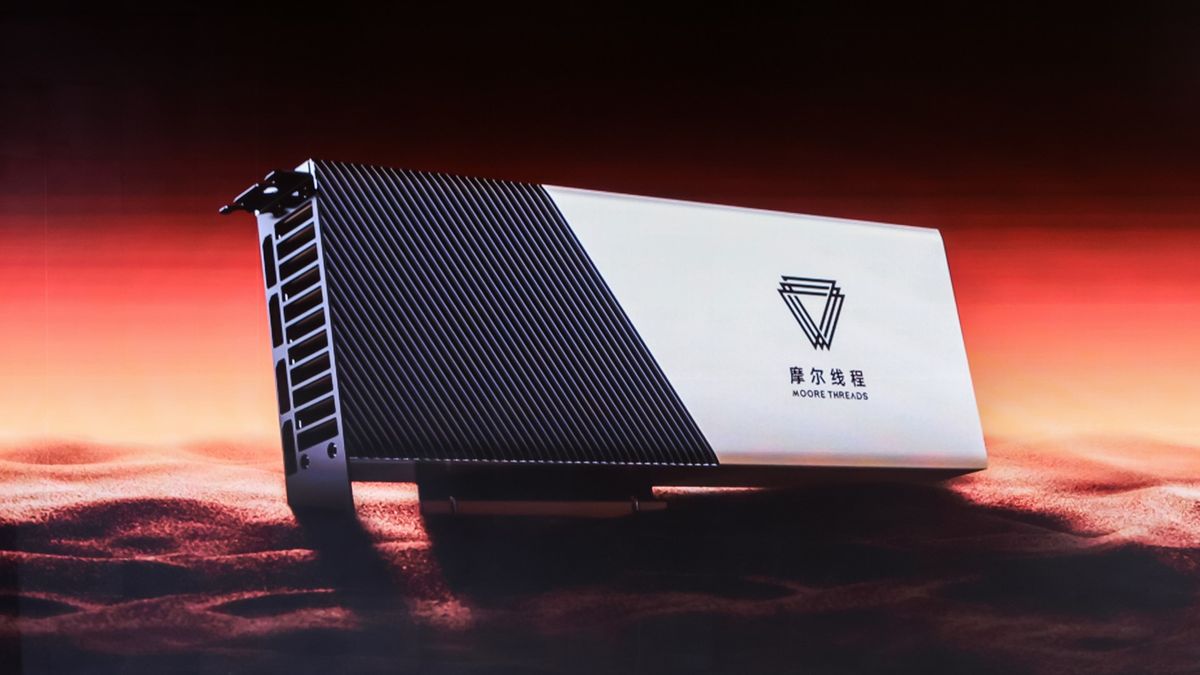
Based on your question, I will conduct an in-depth analysis of the four domestic GPU leaders from two dimensions:
commercial breakthrough prospects
and
investment value of differentiated technological routes
.\n\n## 1. Industry Background: In-depth Analysis of NVIDIA’s CUDA Ecological Barriers\n\n### 1.1 Four Moats of the CUDA Ecosystem\n\nNVIDIA’s CUDA ecological barrier is far beyond the technical level; it is a four-layer locking system composed of
hardware + software + developers + application scenarios
[1]:\n\n
Layer 1: Mature Technical Ecosystem
\n- Over 4 million global CUDA developers [1]\n- Rich function libraries\n- Mainstream deep learning frameworks like PyTorch and TensorFlow are deeply integrated with CUDA [1]\n- Open-source code for the latest AI papers in academia is almost all verified on NVIDIA GPUs [1]\n\n
Layer 2: Customer Code Asset Lock-in
\nOnce a customer accesses the CUDA ecosystem, the switching cost is as high as tens of millions of dollars. Migration faces three major challenges [1]:\n-
Performance regression risk
: Translated code can hardly achieve the same performance on other hardware\n-
Result verification cost
: In fields like scientific computing and finance, significant resources must be invested to verify algorithm accuracy\n-
Maintenance disaster
: Maintaining two highly optimized codebases is a nightmare for engineering teams\n\n
Layer 3: Talent Training System
\nTeaching equipment in computer science departments and AI labs of universities worldwide is almost all NVIDIA GPUs [1]. Newly graduated AI engineers are likely already proficient in CUDA programming, so enterprises using non-NVIDIA chips need to spend huge costs training employees.\n\n
Layer 4: Network Effect and Scale Advantage
\nThe network value of CUDA shows super-linear growth (Metcalfe’s Law: network value is proportional to the square of the number of users) [1]. NVIDIA’s data center business gross margin is stable at 72%-75%, far exceeding AMD’s 50-53% [1]; this gap of more than 20 percentage points is a direct reflection of the value of CUDA’s moat.\n\n—\n\n## 2. Differentiated Technological Routes and Commercialization Progress of the Four Domestic GPU Leaders\n\n### 2.1 Moore Threads: Full-Function GPU Route\n\n#### Technological Route\n-
Positioning
: The only domestic manufacturer to achieve mass production and sales of full-function GPUs [2]\n-
Product coverage
: Scenarios like graphics rendering, AI computing, video encoding and decoding [2]\n-
Core technology
: Independently developed MUSA architecture,
CUDA-compatible
, reducing developer migration costs [2]\n-
Product matrix
: Four generations of GPU architecture chips covering multiple application fields\n-
Cluster capability
: Launched the “Kua’e 10,000-card Intelligent Computing Cluster” in 2024, with single-cluster computing power reaching 10,000 PFlops [2]\n\n#### Commercialization Progress\n
Financial Data
:\n-
Rapid revenue growth
: 2022: 46 million yuan →2023:124 million yuan →2024:438 million yuan →H1 2025:702 million yuan [2][3]\n-
Narrowing losses
:2022 loss:1.84 billion yuan →2023 loss:1.674 billion yuan →2024 loss:1.492 billion yuan →H12025 loss:271 million yuan [3]\n-
R&D investment
: Cumulative R&D investment from 2022 to H12025 is 4.366 billion yuan, with R&D personnel accounting for over70% [2][3]\n-
Gross margin improvement
:2023:25.87% →2024:70.71% →H12025:69.14% [3]\n\n
Capital Performance
:\n- Listed on the STAR Market on December5,2025, with an issue price of114.28 yuan\n- Surged723.49% in5 trading days after listing, with a maximum market value of442.3 billion yuan [2]\n- Retail subscription multiple reached2751x, setting an A-share record in three years [2]\n- As of December11,2025, market value is about359.5 billion yuan [4]\n\n
Market Position
:\n- In 2024, its market share in domestic AI intelligent computing, graphics acceleration and intelligent SoC product segments is
less than1%
[2]\n- International manufacturers like NVIDIA still dominate the domestic GPU market [2]\n\n#### Investment Value Assessment\n
Advantages
:\n✅ High ceiling for full-function positioning: dual tracks of gaming graphics cards + data centers [4]\n✅ MUSA compatibility with CUDA reduces migration costs: a highlight of technological breakthroughs [2]\n✅ Founding team with NVIDIA background: Founder Zhang Jianzhong was former NVIDIA Global Vice President and General Manager of Greater China [2]\n✅ Steep revenue growth curve: CAGR from2022 to H12025 exceeds200%\n✅ Gross margin quickly rose to over70%: indicating enhanced product competitiveness\n\n
Risks
:\n⚠️ Continuous losses: cumulative loss exceeds5 billion yuan, expected to achieve profitability as early as2027 [2]\n⚠️ Market value bubble risk: static price-to-sales ratio is as high as123x, higher than the industry average of111x [2]\n⚠️ Intense competition in full-function route: gaming graphics cards face competition from AMD and Intel; AI training faces competition from NVIDIA and Huawei\n⚠️ Extremely low localization rate: segment market share less than1%, penetration improvement takes time [2]\n⚠️ Included in the Entity List: listed in the U.S. Entity List in2023, supply chain restricted [2]\n\n
Investment suggestion
: ⭐⭐⭐(Three stars)\n- Suitable for investors with higher risk appetite\n- Key observation points:2025-2026 commercialization volume progress, MUSA ecosystem construction progress\n\n—\n\n### 2.2 Muxi Semiconductor: Cloud Intelligent Computing Route with AMD Genes\n\n#### Technological Route\n-
Positioning
: Cloud intelligent computing market, high-performance general-purpose GPU [4]\n-
Core team
: Three co-founders are from AMD, benefiting from AMD gene support [4]\n-
Product matrix
:\n -
Xisi N Series
: Intelligent computing inference\n -
Xiyun C Series
: Training-inference integration/general computing (main product, accounting for nearly70% of2024 revenue) [4]\n -
Xicai G Series
: Graphics rendering\n-
Technological breakthrough
:
The first fully domestic general-purpose GPU Xiyun C600 realizes closed-loop full-process domestic supply chain
, with outstanding comprehensive performance [4]\n\n#### Commercialization Progress\n
Financial Data
:\n- Net loss attributable to parent company was350 million yuan in the first nine months of2025, with the loss narrowing compared to the same period last year [4]\n-
Production and sales rate exceeded100% starting in2025
, entering the revenue acceleration stage [4]\n- Gross margin is comparable to the industry average [4]\n- Compared with peers like Hygon Information and Moore Threads, revenue scale is below the industry average [4]\n\n
Capital Performance
:\n- Listed on the STAR Market on December17,2025, with an issue price of104.66 yuan [4]\n-
Closed at829.9 yuan on the first day, up693%, with a total market value of332 billion yuan
[4]\n- Online issuance received nearly3000x subscriptions [4]\n- Total fundraising amount is nearly4.2 billion yuan, with strategic placement attracting institutions like the National Artificial Intelligence Industry Investment Fund [4]\n\n
Market Expectation
:\n- Expected to achieve break-even as early as
2026
[4]\n\n#### Investment Value Assessment\n
Advantages
:\n✅ AMD gene support: founding team with AMD background, high maturity of technological route [4]\n✅ Production and sales rate exceeded100%: commercialization entered acceleration stage [4]\n✅ Fully domestic supply chain: Xiyun C600 realizes domestic closed-loop, in line with independent and controllable strategy [4]\n✅ Focus on cloud intelligent computing market: avoids competition in consumer market\n✅ Strategic investment from national industry fund: strong policy support\n\n
Risks
:\n⚠️ Small revenue scale: still lags behind peers like Hygon Information and Moore Threads [4]\n⚠️ High dependence on single product: Xiyun C500 series products [4]\n⚠️ Not yet profitable: loss of350 million yuan in the first nine months of2025 [4]\n⚠️ Surge of693% on the first day of listing: high valuation bubble risk\n⚠️ Uncertain profit time point: expected to break even as early as2026 [4]\n\n
Investment suggestion
: ⭐⭐⭐⭐(Four stars)\n- AMD genes + fully domestic supply chain + cloud focus = relatively clear commercialization path\n- Key observation points: continuous improvement of production and sales rate, mass production progress of new product Xiyun C600\n\n—\n\n###2.3 Biren Technology: Aggressive Route for High-End Training Clusters\n\n#### Technological Route\n-
Positioning
: High-performance general-purpose GPU, targeting AI training, inference and scientific computing [4]\n-
Technical features
: Focus on
high-end training clusters
, adopting
Chiplet technology
\n-
Technological breakthrough
: Launched BR100 in2022, with computing power parameters exceeding NVIDIA’s flagship A100 at the time, some indicators close to the early level of H100,
setting a domestic computing power record
[4]\n-
Benchmark positioning
: China’s version of NVIDIA’s high-end chip business (benchmarking H100/A100) [4]\n\n#### Commercialization Progress\n
Financial Data
:\n-
Rapid revenue growth
:2022:499,000 yuan →2023:62.03 million yuan →2024:336 million yuan [4]\n-
Annual compound growth rate up to2500%
[4]\n-
Outstanding orders exceed1.2 billion yuan
: expected to continue supporting future performance growth [4]\n-
Continuous losses
: Adjusted net losses from2022 to2024 were1.04 billion yuan,1.05 billion yuan and770 million yuan respectively, with a total loss of2.86 billion yuan in three years [4]\n\n
Capital Performance
:\n- Has officially obtained备案 from China Securities Regulatory Commission, planning to list on the Hong Kong Stock Exchange [4]\n- Current valuation has reached15.5 billion yuan [4]\n- Plans to raise4.85 billion US dollars (about34 billion Hong Kong dollars), expected to become the “first GPU stock in Hong Kong” [4]\n- Entry fee is about3960 Hong Kong dollars, expected to list on January2,2026 [4]\n\n#### Investment Value Assessment\n
Advantages
:\n✅ Excellent technical strength: BR100 computing power benchmarks A100/H100, reaching international first-class level [4]\n✅ Revenue CAGR 2500%: extremely amazing growth rate [4]\n✅ Outstanding orders over1.2 billion yuan: future performance is guaranteed [4]\n✅ Pure high-end computing power positioning: the most “pure” in domestic substitution direction [4]\n✅ Hong Kong listing expectation: may benefit from the demonstration effect of A-share GPU companies\n\n
Risks
:\n⚠️ Severe losses: total loss of2.86 billion yuan in three years [4]\n⚠️ High R&D investment pressure: high-end route requires continuous huge R&D investment\n⚠️ Technological iteration risk: doubt whether it can continue to benchmark NVIDIA’s latest products\n⚠️ Most intense market competition: directly challenging NVIDIA, Huawei Ascend and other high-end training chips\n⚠️ Hong Kong liquidity: may not be as high as A-share speculation enthusiasm\n⚠️ High risk and high return: clear positioning but maximum risk [4]\n\n
Investment suggestion
:⭐⭐⭐⭐⭐(Five stars, high risk and high return)\n- Suitable for investment pursuing high growth and able to bear high volatility risk\n- Key observation points: mass production of BR100/BR200 series, conversion rate of outstanding orders, performance after listing in Hong Kong\n\n—\n\n###2.4 Enflame Technology: Inference Scenario Route Bound to Tencent Cloud\n\n#### Technological Route\n-
Positioning
: Bound to Tencent Cloud services,
deeply cultivating inference scenarios
\n-
Core strategy
: Deeply bound with cloud service providers, providing end-to-end inference solutions\n-
Application scenarios
: Large model inference, cloud computing services\n\n#### Commercialization Progress\n- In the listing counseling stage, planning to list on the Shanghai STAR Market [4]\n-
Detailed financial data not yet disclosed
\n\n#### Investment Value Assessment\n
Advantages
:\n✅ Bound to Tencent Cloud: backed by large customers, clear commercialization path\n✅ Focus on inference track: avoid fierce competition in training chips\n✅ Fast growth of inference market: with the landing of large model applications, inference demand explodes\n\n
Risks
:\n⚠️ High customer concentration: over-reliance on Tencent as a single customer\n⚠️ Unclear technical details: lack of public technical parameter comparison\n⚠️ Financial data not disclosed: unable to evaluate commercialization progress\n⚠️ Uncertain listing time: in counseling stage, progress lags behind the other three\n\n
Investment suggestion
:⭐⭐(Two stars)\n- Insufficient information transparency, it is recommended to wait for more public information before making a judgment\n- Key observation points: listing progress, financial data disclosure, depth of Tencent Cloud cooperation\n\n—\n\n##3. Key Challenges and Opportunities for Commercial Breakthrough of Domestic GPU\n\n###3.1 Core Challenges\n\n####1. CUDA Ecological Barrier\n-
Developer migration cost
: Switching from CUDA to other platforms requires huge learning cost and workload [1]\n-
Code asset lock-in
: The migration cost of a large number of algorithm codes developed by enterprises based on CUDA is as high as tens of millions of dollars [1]\n-
Performance optimization gap
: Even if compatible with CUDA, performance optimization on other hardware still requires a lot of work\n\n####2. Process Technology Limitations\n- Moore Threads, Biren Technology and others are included in the U.S. “Entity List”, unable to use TSMC’s 7nm or below advanced processes [2]\n- Relying on domestic mature processes (14nm/28nm), naturally lagging in performance-power ratio\n\n####3. Continuous Loss Pressure\n- The four leaders are all in serious loss status: Moore Threads’ cumulative loss exceeds5 billion yuan [3], Biren’s three-year loss is2.86 billion yuan [4]\n- High R&D investment + commercialization less than expected = capital chain pressure\n\n####4. Extremely Low Market Share\n- Domestic GPU’s market share in domestic market segments was less than1% in2024 [2]\n- International manufacturers like NVIDIA still dominate\n\n###3.2 Strategic Opportunities\n\n####1. Geopolitics Driven Independent Controllability\n- U.S. export ban on high-end chips like H100/A100/H200 [4]\n- As the core of computing power in the AI era, hardware independent controllability has risen to the national strategic level [3]\n- China considers new chip industry funding support, with a scale possibly up to500 billion yuan [4]\n\n####2. Differentiated Breakthrough in Inference Market\n-
Training vs Inference Demand Differences
:\n - Training requires 10,000-card clusters, inference only needs a few to dozens of cards [1]\n - Training has extremely high requirements for interconnection, while inference is relatively loose\n - Inference scenarios are more scattered, and customer groups are more extensive\n-
DSA (Domain-Specific Architecture) Chip Opportunities
:\n - DSA chips optimized for specific scenarios have performance advantages in inference\n - Inference demand grows faster, with larger market space\n - DSA chips do not need full-function CUDA compatibility, and ecological barriers are lower\n\n####3. Closed-Loop Ecosystem in Vertical Fields\n-
Government affairs, finance, state-owned enterprises
: Data cannot leave the country, must use independent and controllable hardware\n-
Specific industry scenarios
:\n - Muxi: vertical fields of government enterprises/finance\n - Enflame: Tencent Cloud inference scenarios\n - Huawei Ascend: build internal closed-loop “small ecosystem” relying on “chip-cloud integration” mode [1]\n\n####4. Localization of Network Effects\n- U.S. embargo forces Chinese developers to learn domestic platforms like CANN [1]\n- Although there is an initial “pitfall road”, the ecosystem will gradually mature with more developers’ investment\n-
Historical experience
: The rise of Chinese Internet giants (Alibaba, Tencent, ByteDance) mostly relies on local network effects\n\n—\n\n##4. Comprehensive Evaluation and Suggestions for Investment Value\n\n###4.1 Ranking of Technological Route Investment Value (by Commercialization Certainty)\n\n| Rank | Company | Technological Route | Investment Value Star | Key Advantages | Core Risks |\n|------|---------|---------------------|-----------------------|----------------|------------|\n|
1
|
Muxi Semiconductor
| AMD Genes + Cloud Intelligent Computing | ⭐⭐⭐⭐ | Production and sales rate exceeds