
In-depth Analysis of Investors' Underlying Logic, Value Investing, and Behavioral Finance
Unlock More Features
Login to access AI-powered analysis, deep research reports and more advanced features
About us: Ginlix AI is the AI Investment Copilot powered by real data, bridging advanced AI with professional financial databases to provide verifiable, truth-based answers. Please use the chat box below to ask any financial question.
Changes in investors’ underlying logic fundamentally reshape decision-making patterns, and this transformation has a profound impact on long-term investment performance:
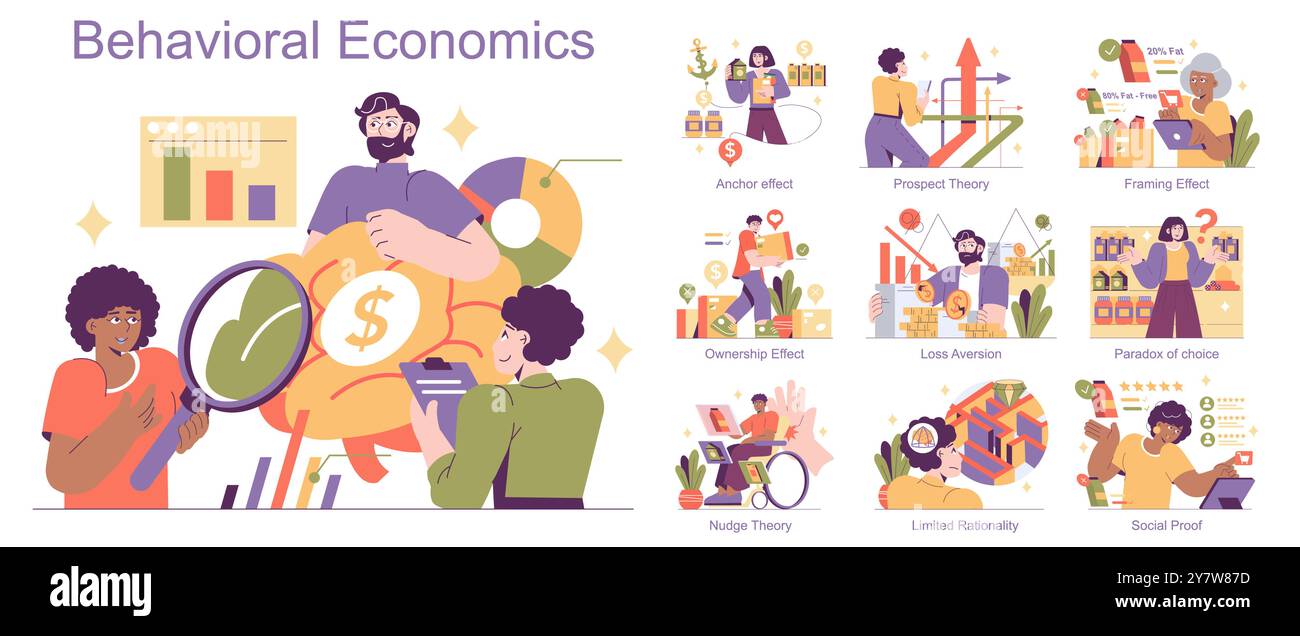
According to investment psychology research, identifying and controlling cognitive biases directly affects investment performance [2]:
| Cognitive Bias | Negative Impact on Performance | Improvement After Adjusting Underlying Logic |
|---|---|---|
| Confirmation Bias | Miss risk signals, over-concentrated positions | Multi-angle verification, reduce selective information reception |
| Loss Aversion | Stop losses too early, miss long-term compounding | Establish stop-loss and take-profit disciplines, reduce emotional impact |
| Overconfidence | Frequent trading, cost erodes returns | Acknowledge cognitive limitations, rely on systematic decision-making |
| Herd Mentality | Chase highs and sell lows, buy high and sell low | Contrarian thinking, independent judgment of market cycles |
Value investing and behavioral finance have a profound complementary relationship, not opposition:
| Principle | Behavioral Finance Correspondence | Performance Impact Mechanism |
|---|---|---|
| 1. Diligently learn investment knowledge | Reduce information asymmetry, improve decision quality | Knowledge accumulation leads to more accurate fundamental analysis |
| 2. Understand yourself | Metacognition ability | Identify personal cognitive biases, avoid repeated mistakes |
| 4. Correlational rather than causal thinking | Tolerate ambiguity, accept probabilistic conclusions | Make more robust decisions in uncertain environments |
| 5. Statistical and probabilistic thinking | Quantitative thinking, Bayesian updating | Avoid representativeness bias, dynamically adjust expectations |
| Principle | Behavioral Finance Correspondence | Performance Impact Mechanism |
|---|---|---|
| 3. Contrarian thinking | Contrarian investment strategy, overcome herd mentality | Obtain excess returns at extreme market moments |
| 7. Mindset management | Emotional regulation, reduce cortisol impact | Maintain rationality, avoid emotion-driven trading |
| 8. Break narcissism and learn humbly | Reduce overconfidence bias | Continuously improve, acknowledge mistakes and adjust quickly |
| 12. Acknowledge irrational behavior requires repeated practice | Willpower training, habit formation | Internalize rational decision-making into automatic behavior |
| Principle | Behavioral Finance Correspondence | Performance Impact Mechanism |
|---|---|---|
| 6. Strategic thinking | Long-term perspective, reduce myopic loss aversion | Reduce unnecessary trading, lower transaction costs |
| 9. Family support | Social support system, reduce emotional stress | Stabilize emotions, avoid irrational decisions under pressure |
| 10. Focus on important things | Reduce decision fatigue | Protect limited self-control resources |
| 11. Dialectical and cyclical thinking | Mean reversion thinking, avoid extrapolation bias | Identify market cycles, avoid wrong judgments at extreme points |
Changes in investors’ underlying logic affect long-term performance through three paths:
- Cognitive Upgrading Path: Shift from intuition-dominated to analysis-dominated thinking, from causal thinking to probabilistic thinking, improving decision quality
- Emotional Control Path: Reduce emotional interference in decisions through systematic methods and disciplinary constraints
- Behavioral Cultivation Path: Internalize rational thinking into habits, maintain calm during extreme market moments
Value investing and behavioral finance are not opposites but complementary. Value investing provides a practical framework for profiting from behavioral biases, while behavioral finance provides theoretical explanations for the effectiveness of value investing. Successful investors need to master both the core concepts of value investing (margin of safety, Mr. Market, circle of competence) and the insights of behavioral finance (cognitive biases, emotional management, probabilistic thinking), integrating them into a complete investment system.
These 12 principles form a complete framework from knowledge, cognition, emotion to behavior, providing investors with a systematic method to understand the market from a behavioral finance perspective and seize opportunities from a value investing perspective. Adhering to these principles in the long run can significantly improve investment performance, maintain rationality amid market fluctuations, and accumulate wealth through compound growth [1][2][3][4][5].
[1] Wall Street Journal - “90-Year-Old Takes Active End of Life: The Final Choice of Decision Theory Master Kahneman” (https://cn.wsj.com/articles/90岁主动结束生命-决策理论大师卡内曼的最后抉择-9e28036a)
[2] Yahoo Finance Hong Kong - “[Investment Psychology] Common Psychological Biases You Need to Know for Smart Investing” (https://hk.finance.yahoo.com/news/投資心理學-精明投資你需要認識的常見心理偏誤-050521757.html)
[3] Investopedia - “Understanding Common Types of Bias in Investing” (https://www.investopedia.com/terms/b/bias.asp)
[4] Charlie Munger - Wikipedia (https://zh.wikipedia.org/wiki/查理·芒格)
[5] Baidu Encyclopedia Charlie Munger (https://baike.baidu.com/item/查理·芒格/4325934)
Insights are generated using AI models and historical data for informational purposes only. They do not constitute investment advice or recommendations. Past performance is not indicative of future results.
About us: Ginlix AI is the AI Investment Copilot powered by real data, bridging advanced AI with professional financial databases to provide verifiable, truth-based answers. Please use the chat box below to ask any financial question.