
In-depth Analysis of the Xibei Pre-made Dish Controversy and Investment Insights for Chinese Full-service Restaurant Chains
Unlock More Features
Login to access AI-powered analysis, deep research reports and more advanced features
About us: Ginlix AI is the AI Investment Copilot powered by real data, bridging advanced AI with professional financial databases to provide verifiable, truth-based answers. Please use the chat box below to ask any financial question.
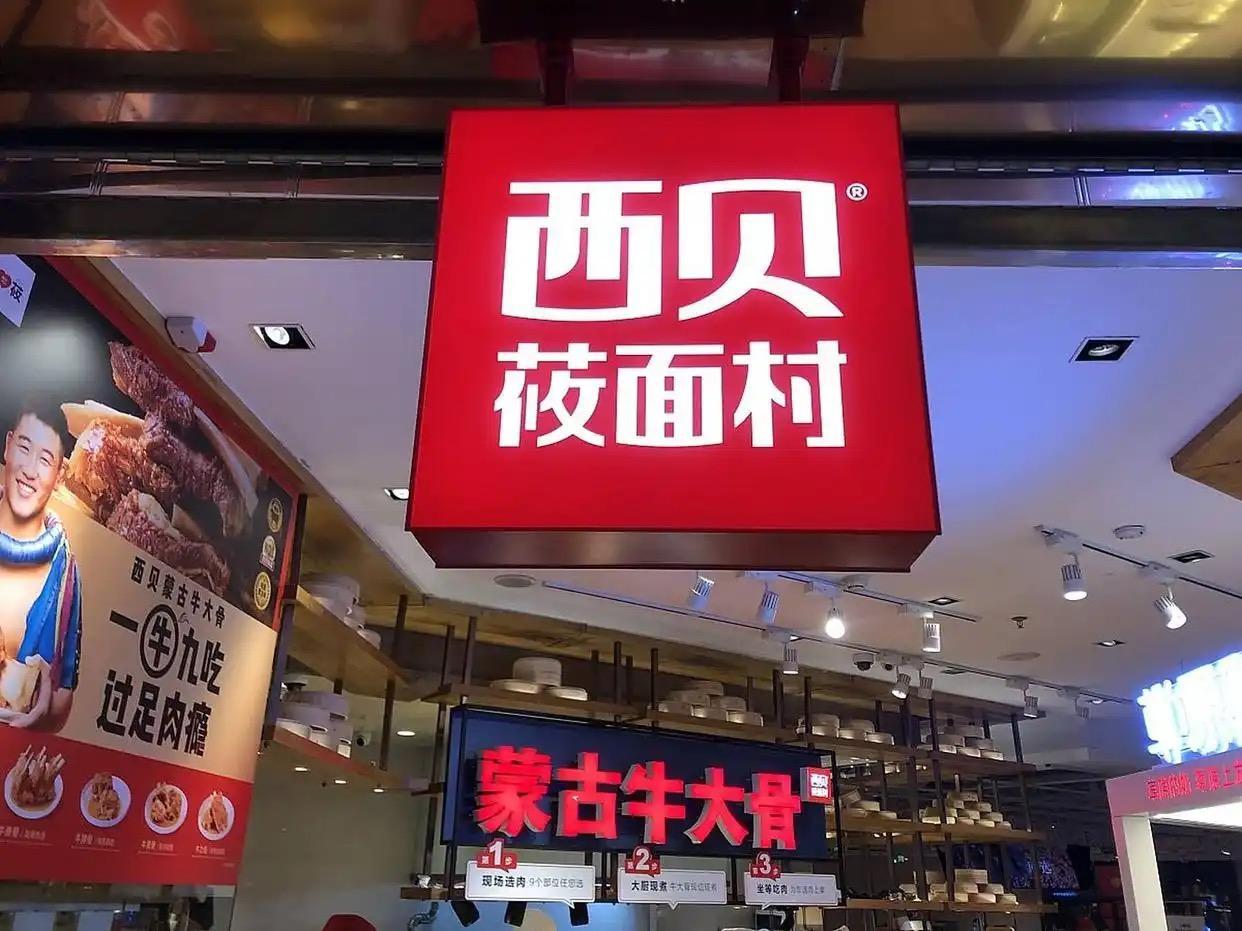
In September 2025, online influencer Luo Yonghao posted a complaint on Weibo after dining at Xibei: “
However, this strategy of “confronting public opinion head-on” backfired. Within 48 hours, Xibei opened live broadcasts of kitchen operations in stores nationwide, but it turned into a “
The core of this controversy lies in the fact that
However, consumers’ understanding of pre-made dishes is:
100 days after the incident, Jia Guolong thoroughly reflected in an interview with Southern Weekend: “
Xibei’s self-rescue measures included:
- Proactively reduced prices by 20%, but did not take the low-price route
- Increased labor coststo improve service density in stores
- Moved more processing links to storesto restore the smoky atmosphere of Chinese food, such as lamb skewers being cut, skewered, and grilled on-site; pork chop semi-finished products adjusted to raw ribs stir-fried in stores [3]
- Fully transparent open-kitchen operations: processes like on-site lamb skewer preparation, fresh dumpling wrapping, on-site chicken soup simmering, and fresh meat sauce stir-frying were moved to the front of customers [3]
In December 2025, the effects of Xibei’s self-rescue actions gradually became apparent, with long queues reappearing at stores. The brand had passed its most difficult period [2].
The impact of pre-made dishes on the catering industry is profound and long-lasting [4]. On one hand, the widespread adoption of pre-made dishes
According to calculations by the China Merchants Bank Research Institute,
This may differ from some consumers’ impressions: in a fully competitive catering industry, the costs reduced by chain restaurants using central kitchens have long been reflected in prices. A mall investment manager bluntly stated: “
Under the impact of pre-made dishes, catering enterprises may face further differentiation in the future [4]:
In 2024, the scale of China’s pre-made dish market reached
From a global perspective, pre-made dishes are not a new thing. In countries like the United States and Japan, the penetration rate of pre-made dishes has long exceeded
The chain rate of China’s catering industry is continuously increasing. According to Meituan data, the national catering chain rate steadily rose from 15% in 2020 to 23% in 2024,
The catering chain rate in the Greater Bay Area is even higher, reaching 26% in 2022, outperforming the national average [9]. According to statistics from the Guangdong Provincial Department of Agriculture and Rural Affairs, the output value of pre-made dishes in Guangdong Province exceeded
It is worth noting that pre-made dishes initially entered from the mid-to-low-end catering market, with insufficient connection to the standards and requirements of the catering industry. Overall, the
However, consumers’ attitudes towards pre-made dishes are not entirely negative [5]. On social platforms, netizens often share their experiences of making pre-made dishes at home. Many consumers also say that they will choose to buy pre-made dishes
According to a survey, about 90% of consumers hope to reduce cooking time while maintaining meal quality [11]. This provides huge development potential for the C-end market of pre-made dishes.
From “confronting public opinion head-on” to “speaking with actions”, Jia Guolong completed the transformation from “emotional confrontation” to “rational breakthrough” [2]. Looking back at the Xibei incident, Jia Guolong’s mistakes were at least in two aspects [2]:
After the Xibei pre-made dish incident, the entire Chinese catering industry began to reflect and transform:
Micun Rice Bowl, once ridiculed by netizens as “even scallions are pre-made”, also launched
This trend of on-site cooking has some followers and some onlookers. Wang Hongtao, vice president and secretary-general of the China Chain Store & Franchise Association, told Southern Weekend: “
Over the past 20 years, the core proposition of the Chinese full-service restaurant chain industry has been:
This requires investors to not only look at supply chain efficiency, single-store models, and standardization levels when evaluating catering enterprises but also pay attention to:
- Experience density: Are enough on-site preparation links and smoky atmosphere retained?
- Emotional value: Has the brand established an emotional connection with consumers?
- Differentiated positioning: Is it avoiding homogeneous competition?
Xibei’s case shows that
The collective shift of the catering industry after the Xibei incident shows that
- Public traceability: Establish a dish traceability system to公示食材来源 and processing methods
- Transparent kitchen: Open-kitchen operations so consumers can see the production process
- 分级标识: Such as Tai Er Sauerkraut Fish’s ABCD classification to clearly inform consumers of the pre-made degree
- Authentic communication: Admit the use of central kitchens but emphasize on-site secondary processing and preparation links
Investors should pay attention to enterprises’ clear positioning in the following three models:
- Representative enterprise: Saizeriya
- Investment logic: Achieve cost advantages through large-scale pre-production and win with low prices
- Risk reminder: Low brand premium, easy to fall into price wars
- Representative enterprise: Transformed Xibei
- Investment logic: Central kitchen ensures food safety and stability; on-site preparation provides smoky atmosphere
- Key capability: Balance management of the ratio between pre-made and on-site preparation
- Representative enterprise: Boutique Hunan cuisine restaurants
- Investment logic: Insist on on-site production, provide differentiated experiences, and maintain high customer unit prices
- Risk reminder: Difficult to scale, high dependence on chefs
The essence of pre-made dishes is
- Have their own bases and cold chain storage and transportation capabilities
- Have raw material safety, traceability, and supply stability capabilities
- Case: Shuanghui Group achieved internationalization through mergers and acquisitions of global supply chains [10]
- Have large-scale production capacity and nationwide channel networks
- Provide customized products and solutions for large chain catering customers
- Focus enterprises: Anjoy Food, Qianwei Central Kitchen, LIGO Food [11]
- Established brand advantages on the consumer side
- Strong product innovation capabilities to launch products that meet consumer scenario needs
- Case: Shuhai Supply Chain relies on Haidilao’s global store layout [10]
The Xibei incident shows that in the social media era,
- Management learning ability: Jia Guolong’s transformation from “confrontation” to “apology” reflects the entrepreneur’s reflection and growth
- Organizational resilience: Xibei maintained zero penalties in 80+ regulatory inspections nationwide during the crisis [7]
- Crisis transformation capability: Turn crises into opportunities for brand upgrading and business model optimization
In March 2024, six departments jointly issued the “Notice on Strengthening Pre-made Dish Food Safety Supervision and Promoting High-quality Industrial Development”, which clarified the definition and scope of pre-made dishes,
The draft of the “National Food Safety Standard for Pre-made Dishes” led by the National Health Commission has passed review and will soon seek public comments [1]. This will eliminate non-compliant small workshops,
Currently, China’s pre-made dish market is still dominated by the B-end, but the C-end market is rising rapidly. With:
- Accelerated pace of life
- Shrinking family size(from an average of 4 people to 2.6 people)
- Increasing single population
- Rising female employment rate
Demand for pre-made dishes on the C-end will continue to grow. Investors should pay attention to enterprises that have established brand awareness on the C-end.
Chinese food going global is gaining momentum, which also drives the export of pre-made dishes [5]. Many Chinese food brands going overseas often face:
- Chef shortage
- High difficulty in product standardization
- Unstable local ingredient supply
Pre-made dishes and frozen foods can just solve these problems for enterprises, which provides an opportunity for the development of pre-made dishes [5]. Investors should pay attention to catering and pre-made dish enterprises that have established supply chains and channel networks overseas.
The future development direction of pre-made dishes is:
- Ingredient pre-made + catering snackification
- High还原度 technology: Make pre-made dishes close to on-site preparation taste
- Health and nutrition orientation: Low salt, low fat, clean labels
- Digital customization: Personalized recommendations based on consumer preferences
Investors should pay attention to enterprises with core competitiveness in food technology, preservation technology, and taste restoration.
- Focus on enterprises that find the optimal solution in the balance between efficiency and experience, such as transformed Xibei and Tai Er
- Layout upstream of the pre-made dish industry chain, pay attention to enterprises with large-scale production capacity and channel networks, such as Anjoy Food and Qianwei Central Kitchen
- Seize the opportunity of Chinese food going global, pay attention to catering and pre-made dish enterprises that have established supply chains overseas
- Invest in C-end brand building, pay attention to enterprises that have established awareness and trust on the consumer side
- Focus on technological innovation, enterprises with breakthroughs in taste restoration, preservation technology, and food technology
- Policy risk: Strict food safety supervision leads to increased compliance costs
- Public opinion risk: Consumers’ stigma towards pre-made dishes has not been fully eliminated
- Homogenization risk: Pre-made dish technology thresholds are relatively low, easy to fall into price wars
- Valuation risk: Valuations of some pre-made dish enterprises are already high, need to be alert to bubbles
- Execution risk: Transformation from “pre-made” to “on-site preparation” requires strong management capabilities and cost control capabilities
The Xibei pre-made dish incident is not just a simple public opinion event, but
From efficiency priority to experience priority, from complete standardization to moderate differentiation, from hidden central kitchens to transparent open kitchens, Chinese full-service restaurant chain brands are exploring a new path
For investors, it is necessary to跳出 traditional catering investment thinking frameworks. When evaluating enterprises, not only look at supply chain efficiency and single-store models but also pay attention to:
- Ability to create consumer emotional value
- Balance management ability between pre-made and on-site preparation
- Trust-building through transparent communication
Insights are generated using AI models and historical data for informational purposes only. They do not constitute investment advice or recommendations. Past performance is not indicative of future results.
About us: Ginlix AI is the AI Investment Copilot powered by real data, bridging advanced AI with professional financial databases to provide verifiable, truth-based answers. Please use the chat box below to ask any financial question.