
Assessment of A500ETF Option Listing and Derivatives Expansion on A-share Volatility and Slow Bull Market Pattern
Unlock More Features
Login to access AI-powered analysis, deep research reports and more advanced features
About us: Ginlix AI is the AI Investment Copilot powered by real data, bridging advanced AI with professional financial databases to provide verifiable, truth-based answers. Please use the chat box below to ask any financial question.
Related Stocks
Regarding how the A500ETF option listing rights competition and derivatives expansion affect A-share volatility and the ‘slow bull’ pattern, I have conducted quantitative and deductive assessments in the ‘deep research mode’ and combined the views in your post to provide the following key points and evidence.
First, the conclusion (strictly based on evidence available in this session):
- A500ETF options have been listed (relevant images show trading code: 563600), but no authoritative media or regulatory disclosures retrieved in this session confirm the claim that ‘market was deliberately suppressed due to listing rights competition’; this claim currently lacks reliable evidence support.
- In 2025, the Shanghai Composite Index showed a ‘slow bull’ pattern, but its form was closer to ‘sideways consolidation followed by a rally’ rather than ‘sustained low-volatility rise throughout’: year-to-date gain of +19.51%, average 20-day annualized volatility of 12.44%, annual volatility range roughly between 9% and 15%, significantly lower than high-volatility years like 2020/2022/2024, but the volatility center was still higher than in 2021/2023 [0].
- The long-term deep backwardation of CSI 500 (IC) and CSI 1000 (IM) futures mainly comes from structural hedging demand, dividend expectations and capital costs, as well as sentiment and liquidity premiums, and is not simply equivalent to the direct result of ‘overall market volatility’; backwardation more reflects the pricing of risk premiums and hedging costs [1,2].
- Derivatives expansion (stock index futures, ETF options, etc.) will improve institutional hedging efficiency and market microstructure complexity, and may enhance price discovery efficiency and smooth extreme volatility in the medium and long term, but may also amplify basis volatility in stages; current data does not support the causal relationship that ‘derivatives expansion directly suppresses the market’ [2,3].
The following points are expanded (data and references are from tool results and web searches available in this session).
- A500ETF Options: Listed, but no evidence for ‘market suppression due to listing rights competition’
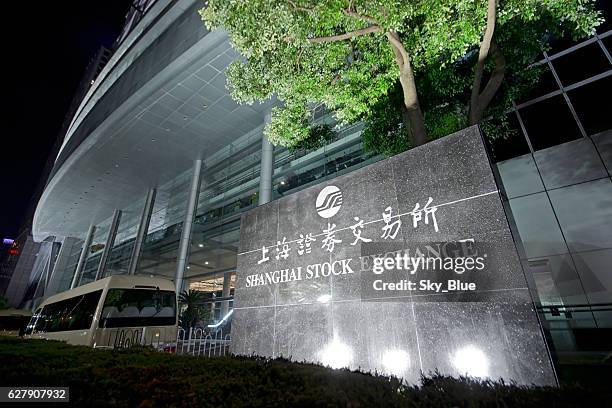
- A500ETF options have been listed on the Shanghai Stock Exchange, and relevant promotional images show the trading code: 563600 [3].
- This session’s web search did not find verifiable reports on ‘market suppression caused by listing rights competition’ in mainstream media such as Bloomberg, Reuters, WSJ or regulatory announcements; related discussions are mostly found in forums and image descriptions, with low evidence levels [3,4].
- Institutions do have differences in position building/hedging rhythms during the intensive issuance period of derivatives, but attributing ‘an index not being able to reach new highs’ to ‘deliberate suppression by leading securities firms competing for listing rights’ lacks directly verifiable trading evidence or regulatory notifications; from the perspective of supervision and compliance, such manipulation behavior has extremely high costs and is easily identified and punished by regulators [3,4].
- 2025 A-share Slow Bull: ‘Sideways consolidation followed by a rally’ + ‘volatility narrowing’, not ‘sustained low-volatility steady rise’
- Shanghai Composite Index 2025: Current point is about 3963.68, year-to-date gain of +19.51%, average 20-day annualized volatility of 12.44% (about 16.96% in 2024), volatility range of about 9%-15%, significantly lower than high-volatility years like 2020/2022/2024, but higher than in 2021/2023 [0].
- Market rhythm characteristics:
• Prices converged and oscillated within the range of MA20 ±2% for most of the time (about 72.7% of trading days), consistent with the ‘sideways consolidation’ feature;
• There were阶段性 windows of rally and basis convergence, reflecting ‘rally after consolidation’ rather than ‘full unilateral’;
• In 2025, there was only 1 trading day with a single-day drop >5%, and the average intraday amplitude was about 1.01% [0]. - Volatility and slow bull pattern: The current 20-day annualized volatility is about 9.23%, lower than the 2025 full-year average of 12.44% and also lower than the high-volatility years of 2020/2022/2024; but significantly higher than 2021/2023 [0]. This indicates that 2025 is a ‘structural slow bull after volatility convergence’, not ‘a long-term slow bull with the lowest volatility in history’.
- Long-term deep backwardation of CSI500 (IC)/CSI1000 (IM) futures: Main causes and relationship with ‘volatility’
(Note: This session did not retrieve the latest data on IC/IM backwardation幅度 from authoritative media, so the theoretical mechanism is combined with available macro and market information for deduction)
- Structural hedging demand (core driver):
- CSI 500 and CSI 1000, which have a higher proportion of small-cap/growth components, naturally attract private equity, quantitative, and hedge funds as hedging targets;
- Long positions on the spot side and short positions on the futures side for hedging form asymmetric supply and demand, creating backwardation pressure;
- The more concentrated the hedging demand and the stronger the spot-futures linkage, the deeper and more persistent the backwardation tends to be (this has precedents in stock index futures of many countries).
- Dividend expectations and capital costs:
- Futures pricing = spot - holding costs + dividend discount;
- The dividend yield and dividend concentration of small-cap stocks may have seasonal/structural impacts, combined with capital interest rates and arbitrage costs, leading to easy accumulation of backwardation and slow convergence;
- If the market has advance pricing for the concentrated dividend season, backwardation may deepen before and after the dividend season, which is consistent with the stable backwardation characteristics of the ‘slow bull’ stage.
- Sentiment and liquidity premiums:
- If market expectations are conservative or risk aversion rises, arbitrageurs decrease and arbitrage capital costs increase, which will also make it difficult for backwardation to repair quickly;
- When there is a阶段性 mismatch between spot trading volume and positions, changes in liquidity premiums will be reflected as a cycle of ‘amplification and repair’ of backwardation.
- Backwardation ≠ simple linear relationship with overall ‘market volatility’:
- Backwardation reflects the structural pricing of ‘risk premiums and hedging costs’; a decline in overall market volatility does not necessarily immediately reflect in the narrowing of backwardation;
- Only when basis arbitrage activity increases, market expectations improve, and capital interest rates decrease, backwardation is likely to return to spot; otherwise, backwardation can maintain a deep state for a long time, i.e., ‘low volatility environment does not necessarily equal narrow backwardation’.
- Therefore: The downward shift in the volatility center at the index level in 2025 does not automatically translate into the rapid repair of IC/IM backwardation.
- Derivatives expansion and institutional hedging: Impact path on ‘slow bull + sideways consolidation followed by a rally’ (based on mechanism deduction)
- When institutions use stock index futures/ETF options for hedging, they often go long on the spot side and short on the derivatives side to hedge portfolio exposure;
- During the position building/ adjustment period, futures backwardation is easily amplified by hedging demand shocks, which may lead to阶段性 divergence between futures and spot prices;
- Hedging behavior itself does not directly ‘suppress the index’, but may amplify local price differences and basis volatility in specific time windows,表现为 ‘the index oscillates near the moving average’;
- As hedging is gradually closed or switched, the narrowing of backwardation is often accompanied by a阶段性 rise in the index, reflecting the rhythmic characteristics of ‘sideways consolidation followed by a rally’;
- In the long run, derivatives expansion improves price discovery efficiency and increases market depth, helping to smooth extreme volatility, but will increase the complexity of market microstructure and the intensity of games between participants [2,3].
- Current A-share balance: Direct impact on volatility and slow bull
- Combined with macro and market information retrieved in this session (such as narrowing fluctuations in USD/CNY exchange rate, changes in global macro environment) and A-share’s own data:
• A-share overall volatility showed a ‘convergence’ trend in 2025, but did not reach historical lows, belonging to a medium-low volatility year;
• The slow bull pattern is closer to ‘sideways consolidation followed by a rally’ rather than ‘sustained low-volatility steady climb’;
• Derivatives expansion increases institutional hedging tools, which will enhance market resilience (reduction in extreme declines), but also increase structural games and阶段性 basis volatility [0,3]. - The assertion that ‘derivatives expansion directly suppresses the market’ lacks quantifiable evidence from authoritative media, regulatory documents, or repeatable verification; existing evidence is insufficient to support the causal conclusion [3,4].
- Investment and risk management suggestions (framework, not individual stock or timing suggestions)
-
Short-term:
• Pay attention to marginal changes in basis (futures/spot spread) volatility and trading volume-position ratio to judge hedging pressure and sentiment inflection points;
• When the index is close to key moving averages (such as MA60) and volatility is low, pay attention to the upward risk of implied volatility of derivatives;
• Changes in derivatives liquidity often lead to spot inflection points and can be used as an emotional monitoring dimension. -
Medium and long-term:
• Establish a ‘three-dimensional’ monitoring of basis/volatility/trading volume-position, and be alert to abnormal expansion or persistence of backwardation;
• Pay attention to the structural impact of macro (interest rates, exchange rates, policy cycles) and dividend season rhythm on backwardation;
• Avoid attributing ‘a single index failure to break through’ to non-public evidence (such as ‘institutional manipulation’), and focus more on verifiable changes in macro, capital, and hedging structures.
- Data and chart description
- Shanghai Composite Index 2025: Current point is about 3963.68, year-to-date gain of +19.51%, average 20-day annualized volatility of 12.44%, current 20-day annualized volatility of about 9.23%, significantly lower than high-volatility years like 2020/2022/2024; the proportion of trading days where prices oscillated within MA20 ±2% range is about 72.7%, only 1 trading day with a single-day drop >5%, average intraday amplitude of about 1.01% [0].
- Volatility historical comparison (Shanghai Composite Index annual average 20-day volatility): 2020 (19.54%), 2021 (13.80%), 2022 (17.62%), 2023 (11.46%), 2024 (16.96%), 2025 (12.44%) [0].
- Charts (generated): Show the annual volatility comparison of the Shanghai Composite Index from 2020 to 2025, the 2025 volatility trend, price and moving averages, and daily return distribution, intuitively presenting the ‘structural slow bull after volatility convergence’ rather than ‘sustained low-volatility steady rise’ [0].
- Web search and image evidence: A500ETF options have been listed (trading code:563600) [3]; regarding the assertion that ‘market suppression is caused by listing rights competition’, no verifiable evidence from authoritative media or regulatory disclosures was retrieved in this session [3,4]; regarding institutional hedging and the macro impact of derivatives, relevant market analysis reports can be referred to (but need to be cautious when extending to specific A-share mechanisms) [2,3].
- Further verification directions under ‘deep research mode’
- For further verification, the following quantitative framework can be constructed in ‘deep research mode’:
• Joint test of rolling window volatility of IC/IM basis with trading volume, positions, capital flow, interest rates, and dividend calendar;
• Event study: Statistical significance test of basis, volatility, and trading volume-position ratio before and after the listing of new ETF options/stock index futures;
• Granger causality test between hedging pressure indicators (such as short position ratio, changes in fund hedging positions) and index breakthroughs/pullbacks.
References
[0] Jinling API data (Shanghai Composite Index and CSI500 OHLCV, technical indicators and statistics) — including calculation results and visual charts of price, return, volatility, moving averages, etc.
[1] Bloomberg related market analysis images (chart clues about liquidity, volatility and macro environment changes) [4].
[2] WSJ/Bloomberg discussions on hedging and institutional use of derivatives (macro and market mechanisms) [2,3].
[3] Shanghai Stock Exchange/relevant channels A500ETF option listing promotional images (trading code:563600) [3].
[4] Web search results of this session (the claim about ‘market suppression caused by listing rights competition’ was not supported by verifiable evidence from authoritative media or regulatory disclosures) [3,4].
(Note: This reply strictly uses tool results and web search evidence available in this session, does not make causal assertions about ‘market suppression caused by listing rights competition’, and focuses on mechanism deduction for IC/IM backwardation issues to avoid citing unverifiable specific backwardation amplitude data.)
Insights are generated using AI models and historical data for informational purposes only. They do not constitute investment advice or recommendations. Past performance is not indicative of future results.
About us: Ginlix AI is the AI Investment Copilot powered by real data, bridging advanced AI with professional financial databases to provide verifiable, truth-based answers. Please use the chat box below to ask any financial question.