
Kweichow Moutai (600519) In-depth Analysis of Quality Moat and Investment Value
Unlock More Features
Login to access AI-powered analysis, deep research reports and more advanced features
About us: Ginlix AI is the AI Investment Copilot powered by real data, bridging advanced AI with professional financial databases to provide verifiable, truth-based answers. Please use the chat box below to ask any financial question.
Related Stocks
As of December 28, 2025, Kweichow Moutai’s stock price is
- Price-to-Earnings Ratio (P/E): 19.68x
- Price-to-Book Ratio (P/B): 6.89x
- Enterprise Value/Operating Cash Flow: 20.09x[0]
Calculated using the DCF valuation model, the intrinsic value under the conservative scenario is 1,088.56 yuan (a 23% discount from the current price), the base scenario is 1,577.11 yuan (an 11.5% premium from the current price), and the optimistic scenario can reach 2,565.42 yuan (an 81.4% premium)[0].
Moutai’s profitability is
- Return on Equity (ROE): 36.48%—— An extremely rare high level
- Net Profit Margin: 51.51%—— Meaning 51.51 yuan of net profit for every 100 yuan of revenue
- Operating Profit Margin: 71.37%—— Reflecting super strong pricing power and cost control capabilities[0]
Financial structure is extremely robust:
- Current Ratio: 6.62
- Quick Ratio: 5.18
- Debt Risk Rating: Low Risk[0]
Such high profitability combined with low financial leverage is a manifestation of a typical
Moutai Town has a
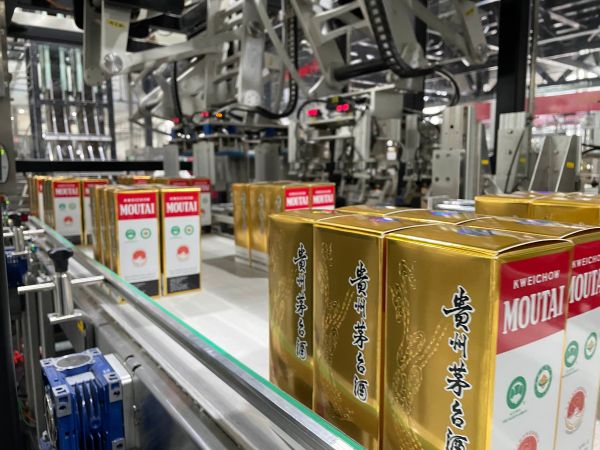
The production process of Moutai liquor is a typical
| Craft Link | Specific Content | Time Span |
|---|---|---|
| 1 | 1-year production cycle | 12 full months |
| 2 | Double Ninth Festival first feeding (xiasha) and second feeding (caosha) | - |
| 9 | 9 cooking sessions | Repeated distillation for liquor extraction |
| 8 | 8 fermentation sessions | High-temperature stacking and pit fermentation |
| 7 | 7 liquor extraction sessions | Graded storage |
The complete process includes
- Extremely high time cost: A batch of base liquor takes at least 5 years from feeding to factory release (1 year of brewing +4 years of aging)
- Extremely high capital occupation: A large amount of capital is locked up in base liquor inventory
- Extremely slow expansion speed: Production capacity is limited by the number of pits and time cycles
Ordinary liquor enterprises even if copy the process flow, can hardly bear such a long
Moutai’s
The taste of Moutai liquor is a balanced system determined by
The liquor industry mainly has three major flavors: Luzhou-flavor, sauce-flavor, and light-flavor.
- Use mud pits; the older the pit, the better
- Process differentiation: Wuliangye uses the “moving pit method” (fermented grains circulate in different pits), while Luzhou Laojiao uses the “original pit method” (fermented grains ferment in the same pit)[3]
- Single grain vs multi-grain: Luzhou Laojiao uses single sorghum, Wuliangye uses 5 grains[3]
- Advantages: Fast capacity expansion, high degree of process standardization
- Disadvantages: Fierce homogeneous competition, difficult to form absolute differentiation
- High-temperature starter making, high-temperature stacking, high-temperature distillation
- Long production cycle (1 year), large grain consumption (“five jin of grain for one jin of liquor”)[1]
- Advantages: High flavor complexity, strong aging value-added ability
- Disadvantages: Capacity constrained, large capital occupation
Although there are hundreds of sauce-flavor liquor enterprises in Moutai Town, there is a
- Core production area restriction: Moutai Distillery is located in the core area of Moutai Town (within 7.5 square kilometers), while other enterprises are not in the core area, leading to differences in microbial environment
- Insufficient old liquor reserves: Moutai has decades of old liquor reserves for blending; even if new brands have the same process, they lack aged base liquor
- Brand awareness and social currency attribute: Moutai’s“hard currency” statusin business banquets and gift markets is difficult to shake
- “12987” process flow (publicly available, learnable)
- Raw material selection (red sorghum, wheat)
- Basic brewing technology
- Micro-ecological environment of the core production area
- Decades of accumulated old liquor reserves
- Experience and intuition of blending masters
- Brand premium and social attribute
Moutai launched low-alcohol products such as 39°,43°,38°, and 33° as early as 1986, but
This indicates that
Moutai’s
| Source | Explanation | Sustainability |
|---|---|---|
| Scarcity | Capacity constrained, supply short of demand | High (slow capacity expansion) |
| Brand premium | Occupation of “national liquor” mindset | High (deep brand moat) |
| Aging value addition | Older liquor becomes more valuable over time | High (inventory continues to appreciate) |
| Cost advantage | Scale effect, low unit cost | High (the larger the output, the more advantageous) |
Demand-side challenges faced by Moutai:
- Consumption downgrade pressure: Slow economic growth affects high-end consumption
- Acceptance among young groups: Z-generation liquor consumption is growing, but whether they can accept the sauce flavor is uncertain
- Anti-corruption and policy risks: Government consumption is restricted (but Moutai has transformed to business and private consumption)
- The online penetration rate of liquor is only 11.9%, far lower than the overall consumption rate of 32.7%[3], and channel transformation is imminent
- Z-generation becomes the main force of increment (83% of incremental people are post-95s), and they prefer to obtain information online[3]
- Wang Li, deputy general manager of Moutai, said: “Can low-alcohol liquor, especially those with more than 20 degrees, appeal to young groups? For Moutai, I think it is still debatable.”[2]
Moutai’s capacity expansion is constrained by the following factors:
- Geographical constraints: Core production area is only 7.5 square kilometers
- Time constraints: New capacity takes at least 5 years from feeding to market launch
- Process constraints: Adherence to traditional craftsmanship makes it difficult to speed up through industrialization
Moutai’s quality moat is
- Irreplaceability of the 7.5 square kilometer core production area in Moutai Town
- Unique ecosystem of more than 200 microbial communities[1]
- Complexity and time cost of the “12987” process
- Precise control of 30 procedures and 165 process links[1][2]
- 5-year production cycle (1 year of brewing + 4 years of aging)
- Occupation of “national liquor” mindset, social currency attribute
- Blending advantage formed by decades of old liquor reserves
- Value-added attribute of becoming more fragrant over time
Evaluation from multiple dimensions:
- Intrinsic value under base scenario is 1,577.11 yuan, current stock price is 1,414.13 yuan, still has 11.5% upside potential[0]
- Valuation under optimistic scenario can reach 2,565.42 yuan (81.4% premium)[0]
- P/E ratio of 19.68x, for a company with ROE of 36.48% and net profit margin of 51.51%, the valuation is not expensive
- Considering the scarcity of its profit quality, it is reasonable to enjoy a certain valuation premium
- Stock price fell from 1,715 yuan at the beginning of 2024 to the current 1,414 yuan, a drop of 17.54%[0]
- The market has partially digested the pessimistic expectations
- Scarce business model: “Perfect” financial model with high ROE, high net profit margin, low debt, and abundant cash flow
- Supply rigidity: Slow capacity expansion, supply-demand tight balance pattern is difficult to break
- Strong pricing power: Price increase capacity has not been fully released, still has room for price increases
- Inventory appreciation: Base liquor inventory appreciates over time, forming implicit value
- Consumption structural changes: Uncertain taste preferences of young groups
- Anti-luxury consumption trend: Changes in social values affect high-end consumption
- Intensified competition: Other sauce-flavor liquor brands in Moutai Town are gradually rising
- Valuation regression: If profit growth slows down, the valuation center may shift downward
- Superposition of triple barriers of geography, craftsmanship, and brand
- Complexity that is difficult to be systematically copied
- First-mover advantage formed by time accumulation
- Differences in micro-geographical environment
- Old liquor reserves require time accumulation
- Brand awareness and social attributes are difficult to transfer
However, from an investment perspective, attention needs to be paid to:
- Valuation has fallen from high levels, but it is still necessary to observe whether profit growth ratecan match the valuation
- Medium- to long-term changes in consumption trendsmay bring structural risks
- Although Moutai’s moat is deep, it is not unshakable
For investors with heavy positions in Moutai,
- Changes in the price difference between wholesale price and ex-factory price (reflecting real supply and demand)
- Channel inventory level
- Consumption data of young groups
- Market share changes of competitors (e.g., Langjiu, Guotai)
[0] Jinling API Data - Kweichow Moutai (600519.SS) Financial Data, Valuation Analysis, Price Data
[1] Sina Finance - “Master One Industry Chain in One Day: Liquor Industry” (December 1, 2025)
https://finance.sina.com.cn/roll/2025-12-01/doc-infzhpke4224835.shtml
[2] Sina Finance - “Can Liquors with More Than 20 Degrees Launched in Crowds Support ‘Low but Not Light’?” (December 25, 2025)
https://finance.sina.com.cn/jjxw/2025-12-25/doc-inhcywam9019424.shtml
[3] East Money Wealth Account - “1 Million Real Trading, Liquor Industry Analysis: Luzhou Laojiao” (December 26, 2025)
https://caifuhao.eastmoney.com/news/20251226224306534018040
[4] Zhihu Column - “The Mysterious and Irreplaceable Liquor Holy Land of Moutai Town”
https://zhuanlan.zhihu.com/p/1961381507303183413
[5] Phoenix Net Mall - “Exposure of Private Collections of Old Gourmets in Moutai Town! Real Sauce Flavor, It Has to Be This One”
https://mall.ifeng.com/c/8kyzpqBqstV
Insights are generated using AI models and historical data for informational purposes only. They do not constitute investment advice or recommendations. Past performance is not indicative of future results.
About us: Ginlix AI is the AI Investment Copilot powered by real data, bridging advanced AI with professional financial databases to provide verifiable, truth-based answers. Please use the chat box below to ask any financial question.