
Analysis of the Background and Impact of Doubling Registration Volume of Private Securities Investment Funds
Unlock More Features
Login to access AI-powered analysis, deep research reports and more advanced features
About us: Ginlix AI is the AI Investment Copilot powered by real data, bridging advanced AI with professional financial databases to provide verifiable, truth-based answers. Please use the chat box below to ask any financial question.
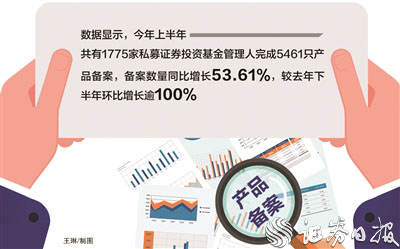
As of December 23, 2025, the number of registered private securities investment funds in the whole market exceeded 12,000, an increase of nearly 100% compared to 6,274 in 2024, and stock strategies accounted for over 60%. Such rapid expansion means that the scale of private fund capital is continuously expanding, and most of it is concentrated in equity class strategies, forming a stable capital supply to the A-share market. From the perspective of supply and demand, the more than 100% increase in registered securities private funds has increased the buyer demand for A-shares in the short term, especially preferring industry leaders, core technology, consumer brands and other varieties with liquidity and research coverage, which can significantly boost trading volume and further improve market depth and the participation enthusiasm of small and medium investors.
-
Volume Increase and Trading Frequency Growth: Securities private funds mostly use stock strategies, requiring periodic position adjustments, theme allocation and style rotation. Doubling registration volume means the number of target assets and adjustment frequency increase simultaneously, which helps the average daily turnover and turnover rate rise significantly in major indices, and will break the vicious cycle of “low liquidity - valuation compression” in the long term.
-
Liquidity Structure Optimization: Private fund capital prefers medium and large-cap stocks with stable fundamentals and strong performance growth, and tends to build positions in high-quality targets that balance liquidity and arbitrage space. This is conducive to improving the price discovery efficiency and bid-ask spread of core assets, and at the same time guiding the trading behavior of individuals and small and medium retail investors to more mature varieties with trading breadth, further reducing the liquidity gap risk of small-cap stocks.
-
Market Breadth and Stratification: A large amount of capital inflow will also form stratification among different market capitalization levels. On one hand, it will enhance the liquidity of indices like ETF and CSI 300; on the other hand, if private funds are cautious about their positions in SMEs and ChiNext, it may lead to relatively temporary limited liquidity for small-cap stocks. Therefore, it is necessary to continuously observe the allocation ratio of capital among large, medium and small-cap stocks.
-
Increased Pressure for Valuation Expansion: Newly registered stock strategy private funds mean more active capital will participate in profit recovery and valuation revaluation stages, especially in medium-high boom industries. Sustained capital inflow can drive slight upward movement of valuation indicators like P/E and P/B, but this appreciation is based on profit growth and liquidity improvement, and it is easier to see the price-earnings ratio rise due to demand push in the short term.
-
Structural Valuation Differentiation: Private funds prefer high-boom, policy-supported and core assets, so valuation growth will be more reflected in high-growth, technology and consumer sectors. Cyclical and high-leverage industries may face valuation pressure due to cautious allocation by private funds. Therefore, although the overall valuation level has upward pressure, industry differentiation is more obvious, and investors need to use “capital flow + valuation sensitivity” as a reference for portfolio adjustment.
-
“Leverage + Liquidity” Overlay: Private funds still hold positions for medium and long term in high-volatility markets. If macro sentiment improves, valuation premium will be easier to form; conversely, in the case of sudden liquidity decline or policy disturbance, the higher valuation in this round may be quickly compressed. Therefore, it is crucial to maintain liquidity management and stop-loss discipline before profit confirmation.
-
Crowding and Strategy Risks: Doubling registration volume means the total capital and investment paths are becoming concentrated. If a large number of private funds increase allocation to certain sectors or styles from top to bottom at the same time, structural crowding risks may occur. It is recommended to pay attention to the peak of capital inflow and the turnover rate changes of key holdings, and avoid over-chasing high at style rotation points.
-
Market Sentiment Disturbance to Liquidity: Although the increase in registration volume releases liquidity signals, if there are fine-tuning in macro interest rates or regulatory policies, capital may return to wait-and-see in the short term, and liquidity will fall back accordingly, causing valuation corrections. Therefore, it is extremely necessary to track interest rates, external environment and policy guidelines simultaneously to predict the capital rhythm in the next stage.
-
In-depth Research Recommendations: To further quantify the preference trend of private fund capital for specific industries, styles or factors, you can enable the in-depth research mode to obtain more granular data from the brokerage database (such as private fund position concentration, turnover rate, industry exposure). At the same time, combine self-built private fund position monitoring tools and macro indicators to build a multi-dimensional liquidity and valuation early warning system.
The capital supply signal released by the doubling of the registration volume of private securities investment funds plays a positive role in the overall liquidity of the A-share market and pushes up the valuation level of core assets in the short and medium term; however, capital concentration, macro disturbances and valuation premiums need to be vigilant. It is recommended that investors pay attention to the industry preferences and position changes of private funds, grasp the liquidity window combined with quantitative indicators (such as turnover rate and capital flow), and strengthen risk control in valuation-sensitive areas. If you need to obtain more detailed private fund positions and market liquidity dynamics, please consider启动 (enabling) the in-depth research mode to get professional database support.
[1] Private Fund Ranking Network: “As of December 23, the number of private securities investment funds registered in the market this year exceeded 12,000, an increase of nearly 100% compared to 6,274 in the whole year of 2024.”
Insights are generated using AI models and historical data for informational purposes only. They do not constitute investment advice or recommendations. Past performance is not indicative of future results.
About us: Ginlix AI is the AI Investment Copilot powered by real data, bridging advanced AI with professional financial databases to provide verifiable, truth-based answers. Please use the chat box below to ask any financial question.