
Analysis of Quality Control Risk Prevention Under Engnice Holdings' OEM Model
Unlock More Features
Login to access AI-powered analysis, deep research reports and more advanced features
About us: Ginlix AI is the AI Investment Copilot powered by real data, bridging advanced AI with professional financial databases to provide verifiable, truth-based answers. Please use the chat box below to ask any financial question.
According to public information, as a leading enterprise in China’s infant complementary food industry, Engnice Holdings adopts an ‘independent production + entrusted production’ model, with a high dependence on OEMs [1]. The infant complementary food industry has extremely high requirements for product quality and safety; an excessively high proportion of OEMs does exist certain quality control risks. The following is an analysis of risk assessment and prevention strategies from multiple dimensions.
The production qualifications, quality management systems, and standardization of personnel operations of OEM manufacturers are uneven, making it difficult to fully control [2]. If OEM factories have problems such as lax raw material control and non-compliance with production hygiene standards, it will directly affect the quality of end products.
There is an information gap between the brand and OEM factories, and the transparency of the production process is insufficient, making it difficult to achieve full-process real-time monitoring.
Infant complementary food products involve many links from raw material procurement, production and processing to logistics distribution; once quality problems occur, it is difficult to define responsibilities.
Under the OEM model, the recall cycle for problematic products is longer, and the speed of emergency response is limited.
From public information, Engnice Holdings has built a multi-level quality control system [3]:
The company innovatively built the ‘Five Joint Quality Management System’, integrating the upstream and downstream of the industrial chain into a ‘Quality Community’ through the model of ‘Joint R&D, Shared Rewards and Punishments, Joint System Construction, Shared Standards, and Joint Goal Adherence’. This system has been recommended by the Hunan Provincial Administration for Market Regulation to be included in the ‘National Enterprise Chief Quality Officer Quality Reform and Innovation Good Practices (2024)’.
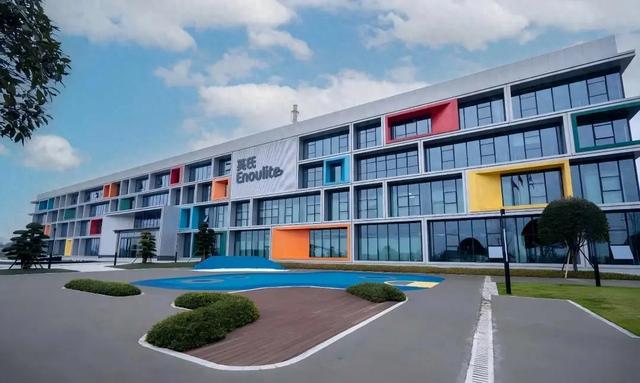
Engnice’s Liuyang Factory was fully put into operation at the end of 2024, and it won the dual certifications of BRCGS Grade A and IFS Advanced in its first application within less than a year of operation, which is known as the ‘Olympics of Food Safety’ international recognition. The factory is equipped with advanced facilities such as a 100,000-class GMP clean workshop, a central laboratory, and an intelligent logistics system.
All products strictly comply with the three national standards for infant complementary foods, and implement ‘zero tolerance’ for pathogenic bacteria. Each batch of products needs to undergo 17 foreign matter tests, 42 physical and chemical index tests, and multiple pathogenic bacteria tests. The sampling report from the third-party organization ‘Daddy Lab’ shows that 810 pesticide residues were not detected in the 3 randomly sampled Engnice rice flour products.
Establish a strict supplier qualification review system, conduct regular on-site audits, include quality indicators in supplier performance evaluations, and implement a last-place elimination system.
Learn from the ‘Cloud Supervision’ model of the Liuyang Factory, deploy real-time monitoring equipment in key production links of OEM factories, and realize the visualization and traceability of the production process.
Deepen the interest binding with OEM factories through the ‘Five Joint Management System’, write quality responsibilities into contracts, implement a quality risk deposit system, and achieve benefit sharing and risk co-responsibility.
The commissioning of the Liuyang Factory marks that the company is optimizing its production capacity structure and gradually reducing its dependence on OEMs. It is recommended to continue to promote the expansion of self-owned production capacity and increase the proportion of independent production.
Establish a product quality early warning mechanism and an emergency recall plan, shorten the time window from problem discovery to disposal, and reduce the risk of negative impact spread.
For investors focusing on Engnice Holdings, it is recommended to focus on tracking the following indicators:
| Focus Dimension | Specific Content |
|---|---|
| Changes in OEM proportion | Progress of independent production capacity release |
| Quality problem incidents | Regulatory sampling results, complaint status |
| Supply chain management | Number of new/eliminated OEM manufacturers |
| Certification qualifications | Acquisition status of international and domestic quality certifications |
[1] Tencent News - “Infant Complementary Food Leader’s IPO: Can Growth from Marketing Spending ‘Please’ the Capital Market?” (https://news.qq.com/rain/a/20251223A05TWR00)
[2] Sina Finance - “Engnice Holdings’ Bid for ‘First Stock of Complementary Food’: Model Dilemmas and Governance Concerns Under High Growth” (https://cj.sina.com.cn/articles/view/5953466437/162dab04506709s4xu?froms=ggmp)
[3] Sina Finance - “Winning International Dual Certifications: Exploring Engnice Holdings’ ‘Super Factory’” (https://finance.sina.com.cn/jjxw/2025-12-19/doc-inhcipuc7230900.shtml?froms=ggmp)
Insights are generated using AI models and historical data for informational purposes only. They do not constitute investment advice or recommendations. Past performance is not indicative of future results.
About us: Ginlix AI is the AI Investment Copilot powered by real data, bridging advanced AI with professional financial databases to provide verifiable, truth-based answers. Please use the chat box below to ask any financial question.