
Analysis Report on Capacity Clearance and Valuation Repair in the Photovoltaic Industry
Unlock More Features
Login to access AI-powered analysis, deep research reports and more advanced features

About us: Ginlix AI is the AI Investment Copilot powered by real data, bridging advanced AI with professional financial databases to provide verifiable, truth-based answers. Please use the chat box below to ask any financial question.
Related Stocks
According to the latest data, Tongwei Co., Ltd. is currently in a
- ROE (Return on Equity): -18.28%, indicating that shareholder equity is being eroded
- P/E Ratio: -11.51x (negative value reflects profit distress)
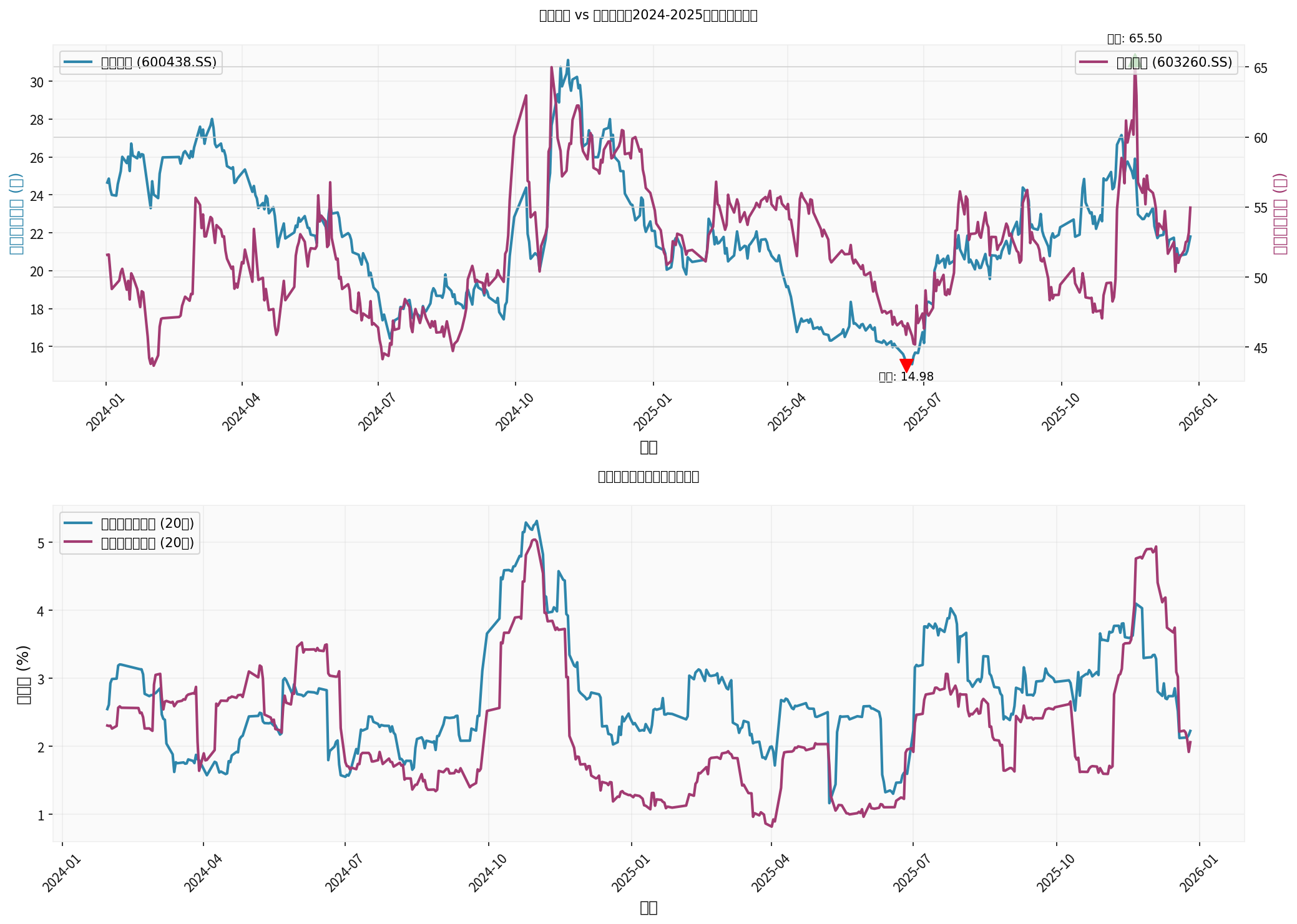
- Stock Price Performance: Cumulative decline of 11.56% since the beginning of 2024, significantly underperforming the market
- Volatility: Annualized volatility as high as 44.72%, reflecting industry uncertainty
- Market Capitalization: 959.3 billion USD, P/B Ratio 2.19x
- ROE: -0.11%, close to the break-even point, with a much lower loss degree than Tongwei
- P/E Ratio: -1820.00x (extremely loss-making financial performance)
- Stock Price Performance: Up 6.53% since the beginning of 2024, outperforming Tongwei
- Volatility: Annualized volatility of 38.35%, relatively low
- Market Capitalization: 644.3 billion USD, P/B Ratio 2.01x
From search results, the photovoltaic industry’s loss cycle is mainly due to:
- Severe Overcapacity: Since 2006, China’s photovoltaic module capacity has expanded rapidly, far exceeding the growth rate of global demand [1]
- Intensified Price Wars: From 2023 to 2024, industry profit margins dropped significantly, and the loss range of some enterprises expanded [1]
- Excessive Investment: The previous high industry boom attracted a large amount of capital, leading to serious imbalance on the supply side
JPMorgan listed “
-
Capacity Quota System:
- Referring to the experience of the refining and chemical industry, capacity quotas are concentrated on large enterprises
- Leading enterprises such as Hengli Petrochemical and Rongsheng Petrochemical obtained all 330 million tons of quotas
- Small and medium-sized enterprises can hardly get market share [2]
-
Eliminate Inefficient Capacity:
- Jiangsu Province clearly eliminated small-scale inefficient devices
- Promote the industry towards large-scale and intensive development [2]
-
Investment Restrictions:
- In the first eight months of 2025, fixed asset investment in the chemical raw material manufacturing industry decreased by 5.2% year-on-year
- The capacity release cycle is approaching the end, and the supply pattern is gradually repaired [2]
- Profit Margin Recovery of Leading Enterprises: Profit margins of leading enterprises such as Longi Green Energy (601012.SS) and CATL (3750.HK) have started to recover
- Technological Upgrade and Capacity Integration: Leading enterprises further expand their competitive advantages through technological upgrades and capacity integration
- Increased Industry Concentration: Small and medium-sized enterprises are forced to exit or be integrated, and the market is concentrated towards leading enterprises
From search results, the overcapacity problem in the photovoltaic industry is not the first time:
- 2006-2024: China’s photovoltaic module capacity continued to expand, and oversupply occurred many times [1]
- 2023-2024: Industry profit margins dropped sharply, entering a deep loss cycle [1]
-
Extreme Deterioration of Financial Indicators:
- Tongwei’s ROE dropped to -18.28%, indicating the industry is under extreme pressure
- Hesheng Silicon Industry is close to the break-even point (ROE -0.11%), showing clearance is near completion
-
Price Bottoming Signal:
- Tongwei’s stock price fell from a high of 32.05 USD in 2024 to a low of 14.89 USD (February 2024), and currently rebounded to 21.80 USD
- Hesheng Silicon Industry oscillated in the range of 41.60-67.46 USD, showing strong bottom support [0]
-
Policy Implementation Timing:
- Anti-involution policies began to take effect in 2025
- The capacity release cycle is approaching the end (fixed asset investment decreased by 5.2% in the first eight months of 2025) [2]
| Phase | Time Node | Characteristics |
|---|---|---|
Early Clearance |
2023-2024 | Intensified price wars, widespread corporate losses |
Mid Clearance |
2024-2025 | Small and medium enterprises exit, accelerated integration of leading enterprises |
Late Clearance |
2025-2026 | Supply-demand balance restored, prices stabilized and rebounded |
Clearance Completed |
2026 and beyond | Optimized industry structure, profitability restored |
The “Price-Earnings-to-Return Ratio (PR = PE/ROE/100)” mentioned by users is a practical valuation tool, but it needs to be adjusted in the current loss cycle:
- Traditional PR Calculation: PE(-11.51)/ROE(-18.28)/100 ≈ 0.63
- Adjusted Assessment: Since both PE and ROE are negative, traditional PR is invalid. Should focus onP/B Ratio: 2.19x
- Historical Comparison: The stock price has rebounded from the 2024 low of 14.89 USD to 21.80 USD (+46.4%), but still has a 32% upside potential compared to the historical high of 32.05 USD
- Traditional PR Calculation: PE(-1820)/ROE(-0.11)/100 → Extreme negative value, indicator invalid
- Adjusted Assessment: Also focus onP/B Ratio: 2.01x
- Relative Advantage: Stock price performance outperforms Tongwei (up 6.53% since 2024), with lower volatility (38.35% vs 44.72%)
- Supply-demand relationship gradually improves, product prices bottom out and rebound
- Corporate losses narrow, ROE turns from negative to positive
- Valuation repairs from around P/B 2.0x to 2.5x
- Target Upside: 20-30%
- Industry supply-demand balance established, leading enterprises’ profitability restored
- ROE returns to normal level of 10-15%
- Valuation repairs to P/B 3.0x, PE repairs to 15-20x
- Target Upside:50-80%
- Industry concentration increases significantly, leading enterprises enjoy excess profits
- Technical barriers and scale effects bring sustained profit growth
- Long-term valuation returns to reasonable valuation of industry leaders
- Target Upside: Over 100% (calculated from current low)
- Policy Implementation Effect Less Than Expected: The implementation effect of anti-involution policies is a key variable
- Slowdown of Global Economic Growth: Lower-than-expected overseas demand may prolong the clearance cycle
- Technological Iteration Risk: New technology routes may change the existing competitive pattern
- Intensified Trade Barriers: Restrictive policies of Europe and the US on Chinese photovoltaic products
##5. Investment Recommendations and Strategies
###5.1 Strategy Verification of “Buy When Industry is Widespread Losses”
- Tongwei Co., Ltd.: Currently in deep loss state (ROE -18.28%), stock price at a relatively low level, in line with left-side layout timing
- Hesheng Silicon Industry: Light loss degree, stronger financial resilience, suitable for investors pursuing relative stability
###5.2 Target Selection Recommendations
| Target | ROE | P/B | Investment Logic | Risk-Return Characteristics |
|---|---|---|---|---|
Tongwei Co., Ltd. |
-18.28% | 2.19x | Industry leader, high elasticity | High risk and high return, suitable for left-side layout |
Hesheng Silicon Industry |
-0.11% | 2.01x | Diversified business, strong risk resistance | Medium risk and medium return, suitable for stable allocation |
###5.3 Position Management and Time Strategy
- Bottom Position Allocation (30-40%): Establish bottom position in current price range
- Add Position Timing (30-40%):
- Obvious improvement signal in industry supply-demand
- Corporate ROE turns from negative to positive
- Product prices stabilize and rebound
- Trend Following (20-30%): Add positions after valuation repair enters the second stage
##6. Conclusion
###6.1 Core Views
- Capacity Clearance Has Entered Late Stage: Signals such as extreme deterioration of financial indicators, policy implementation, and profit margin recovery of industry leaders indicate that photovoltaic industry capacity clearance is expected to be completed in 2025-2026.
- Anti-involution Policy is Key Catalyst: Through capacity quota system, elimination of inefficient capacity, restriction of new investment and other means, policies will accelerate industry clearance and structure optimization.
- Considerable Valuation Repair Space: Tongwei Co., Ltd. and Hesheng Silicon Industry both have 50-100% repair space from current low, but need to go through 2-3 years of clearance and recovery cycle.
- “Price-Earnings-to-Return Ratio” Needs Dynamic Adjustment: In the loss cycle, more attention should be paid to indicators such as P/B Ratio, cash flow, and debt ratio instead of traditional PE/ROE framework.
###6.2 Investment Clock Positioning
Currently, the photovoltaic industry is in the
[0] Jinling API Data - Financial Data, Price Data, Volatility Calculation for Tongwei Co., Ltd. and Hesheng Silicon Industry
[1] Bloomberg - Analysis of China’s Photovoltaic Capacity and Demand Contrast (https://www.bloomberg.com/graphics/china-solar-oversupply/)
[2] Yahoo Finance (Hong Kong) - JPMorgan 2026 MSCI China Index Investment Outlook: AI Infrastructure, Anti-involution, Overseas Layout, Domestic Consumption (https://hk.finance.yahoo.com/news/摩根大通看好2026-msci中國指數-ai-反內卷-海外布局與消費復甦四大主題驅動-231004197.html)
[3] Forbes - Top 10 Trends in the Energy Industry in 2025 (https://www.forbes.com/sites/rrapier/2025/12/27/the-top-10-energy-stories-of-2025-the-year-reality-pushed-back/)
Insights are generated using AI models and historical data for informational purposes only. They do not constitute investment advice or recommendations. Past performance is not indicative of future results.
About us: Ginlix AI is the AI Investment Copilot powered by real data, bridging advanced AI with professional financial databases to provide verifiable, truth-based answers. Please use the chat box below to ask any financial question.