
Thermal Power Industry's Cost Dividend Transition and Leading Stocks' Valuation Repair Analysis
Unlock More Features
Login to access AI-powered analysis, deep research reports and more advanced features
About us: Ginlix AI is the AI Investment Copilot powered by real data, bridging advanced AI with professional financial databases to provide verifiable, truth-based answers. Please use the chat box below to ask any financial question.
Related Stocks
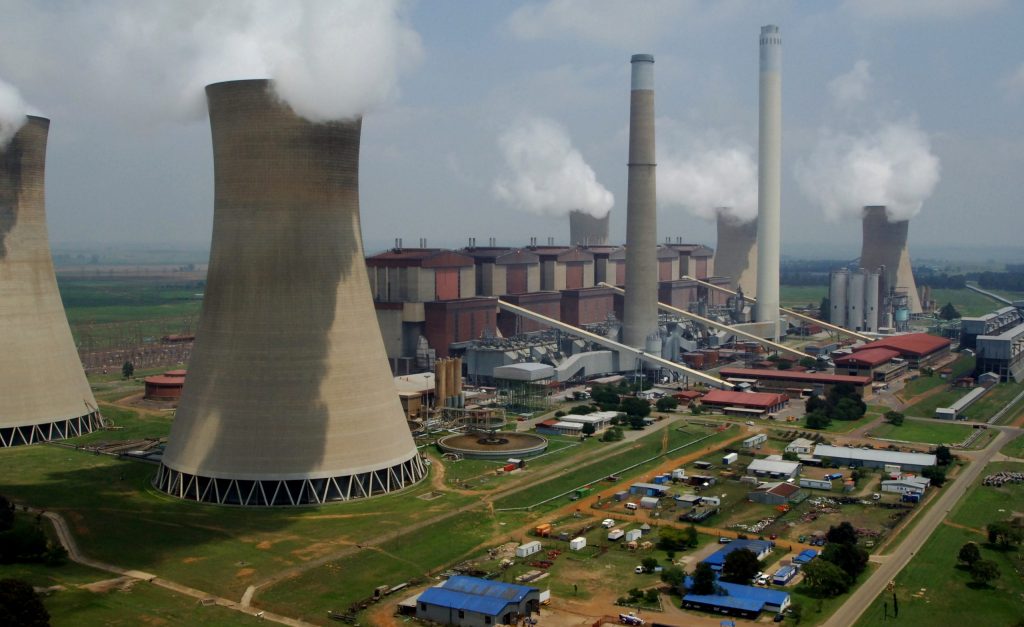
Recently, coal prices have “declined first and then risen” but remain at a low level, due to weak non-electric terminal demand, high inventory pressure, cost advantages of imported coal, and enhanced supply resilience from coal mine capacity verification/production reduction arrangements [1][2]. Official and research institutions generally judge that coal supply and demand will be “overall balanced with periodic tightness” in 2026, after which the price center may move up slightly [1]. At the same time, institutions like Dongxing Securities emphasize that policy-level mechanisms such as “anti-involution” and “long-term agreement price” are curbing irrational fluctuations in coal prices, leaving room for further decline in the marginal cost of coal-fired power under the influence of high inventory and policies [1]. Based on this, the variable cost of the thermal power industry is transforming from the original “coal price pro-cyclical” attribute to a “cost dividend” attribute: that is, coal prices are low and tend to be stable, so the industry can convert the highly elastic “fuel cost improvement” in operational efficiency into cash dividends or R&D/operation and maintenance investments, reflecting more asset-level dividends rather than rough cyclical increments.
- Cost Side: Low coal prices strengthen the cash flow of existing coal-fired power assets. Especially against the background of high inventory pressure before the winter heating period, the room for further rebound of coal prices is limited but the bottom is credible, meaning that the marginal profit of thermal power mainly depends on its own operational efficiency rather than the coal cycle;
- Demand Side: As the main peak-shaving force, thermal power has the potential to dilute fixed costs supported by the growth of high-frequency loads such as AI computing power and data centers (the “new power shortage” areas). Coupled with the fact that new energy regulation still requires a “minimum guarantee” share of thermal power, the order side shows strong resilience [1];
- Capital Preference: Current ETF style data shows that the energy/dividend sector is favored by capital. The dividend yield (TTM) of the 800 Energy Index exceeds 5%, and style rotation tends to be supported by high dividends, matching the “low volatility + high dividend” characteristics of thermal power [3].
Therefore, the investment logic has evolved from the paradigm of “profit amplification from rising coal prices” to “cash dividend release when coal prices are below the cost line”: in an environment where the coal cycle no longer drives profits, leading companies with stable cash flow and high dividend capacity are more likely to attract low-volatility capital; the current question is: has the current valuation fully reflected this dividend expectation?
| Target | Current PE | TTM EPS | Current Price | Key Indicators | Valuation Assumptions |
|---|---|---|---|---|---|
| Wanneng Power (SZ000543) | 8.38x | 1.05 CNY | 8.82 CNY | EV/OCF 8.19x, ROE14.6%, Net Profit Margin8.1% | If PE returns to10x, target price 10.5 CNY (~19% upside); if recognized as “stable cash flow + high dividend” with12x valuation, target price12.6 CNY (~43% upside) |
| Jingneng Power (SH600578) | 10.36x | 0.49 CNY | 5.38 CNY | EV/OCF7.79x, Net Profit Margin9.5%, ROE12.6% | If PE rises to12x, target price5.88 CNY (~9% upside); if policy/dividend expectations strengthen with14x valuation, target price6.86 CNY (~28% upside) |
The above valuation repair assumptions are based on current TTM EPS and P/E ratio levels, with main driving logic:1) Downward coal and coke prices suppress fuel costs;2) Positive thermal power load fluctuations improve asset utilization;3) Capital market has revaluation expectation for “stable high dividend + low valuation” combination. Wanneng Power’s ROE and cash recovery rate remain high, with current P/B only1.16, a typical undervalued case with significant dividend attributes; although Jingneng Power’s P/E is slightly higher (10.36), its high debt risk still drags on valuation repair, and its repair path relies more on signals of “dividend/cash flow transparency + subsidiary leverage consolidation”.
##4. Portfolio Construction and Position Adjustment Suggestions
1.
2.
3.
4.
Coal prices remain depressed but transition to “cost dividend”, and thermal power shows stable cash flow supported by new energy regulation and AI/digitalization-driven load growth; as leaders, Wanneng and Jingneng still have certain valuation repair space since current valuation does not fully reflect “high dividend + low volatility” attributes, especially when coal prices stay below cost line and dividend plans are realized, combined valuation (PE/PB/EV/OCF) has upward elasticity. It is recommended to take Wanneng as main line, Jingneng as strategic enhancement, Huaihe as defensive bottom position, dynamically track coal prices, power generation hours and cash distribution rhythm, and maintain moderate position before valuation repair signal confirmation.
[0] Jinling API Data
[1]《Coal Industry 2026 Credit Risk Outlook (Dec 2025)》, Caifuhao-Eastmoney.com, https://caifuhao.eastmoney.com/news/20251223183145634826120
[2]《Quarterly Analysis: Thermal Coal Rises After Fall in Q4, May Bottom in Q1 2026》, Sina Finance, https://finance.sina.com.cn/money/future/2025-12-25/doc-inhcyrur3707685.shtml
[3]《ETF Strategy Weekly: Cycle Sector Tracking - Non-ferrous Metals Strong, Industrial/Energy Metals Rise》, Caifuhao-Eastmoney.com, https://caifuhao.eastmoney.com/news/20251224160922381364800
Insights are generated using AI models and historical data for informational purposes only. They do not constitute investment advice or recommendations. Past performance is not indicative of future results.
About us: Ginlix AI is the AI Investment Copilot powered by real data, bridging advanced AI with professional financial databases to provide verifiable, truth-based answers. Please use the chat box below to ask any financial question.