
California High-Speed Rail Project Introduces Private Investment: U.S. Infrastructure PPP Model Milestone and Market Impact
Unlock More Features
Login to access AI-powered analysis, deep research reports and more advanced features
About us: Ginlix AI is the AI Investment Copilot powered by real data, bridging advanced AI with professional financial databases to provide verifiable, truth-based answers. Please use the chat box below to ask any financial question.
Related Stocks
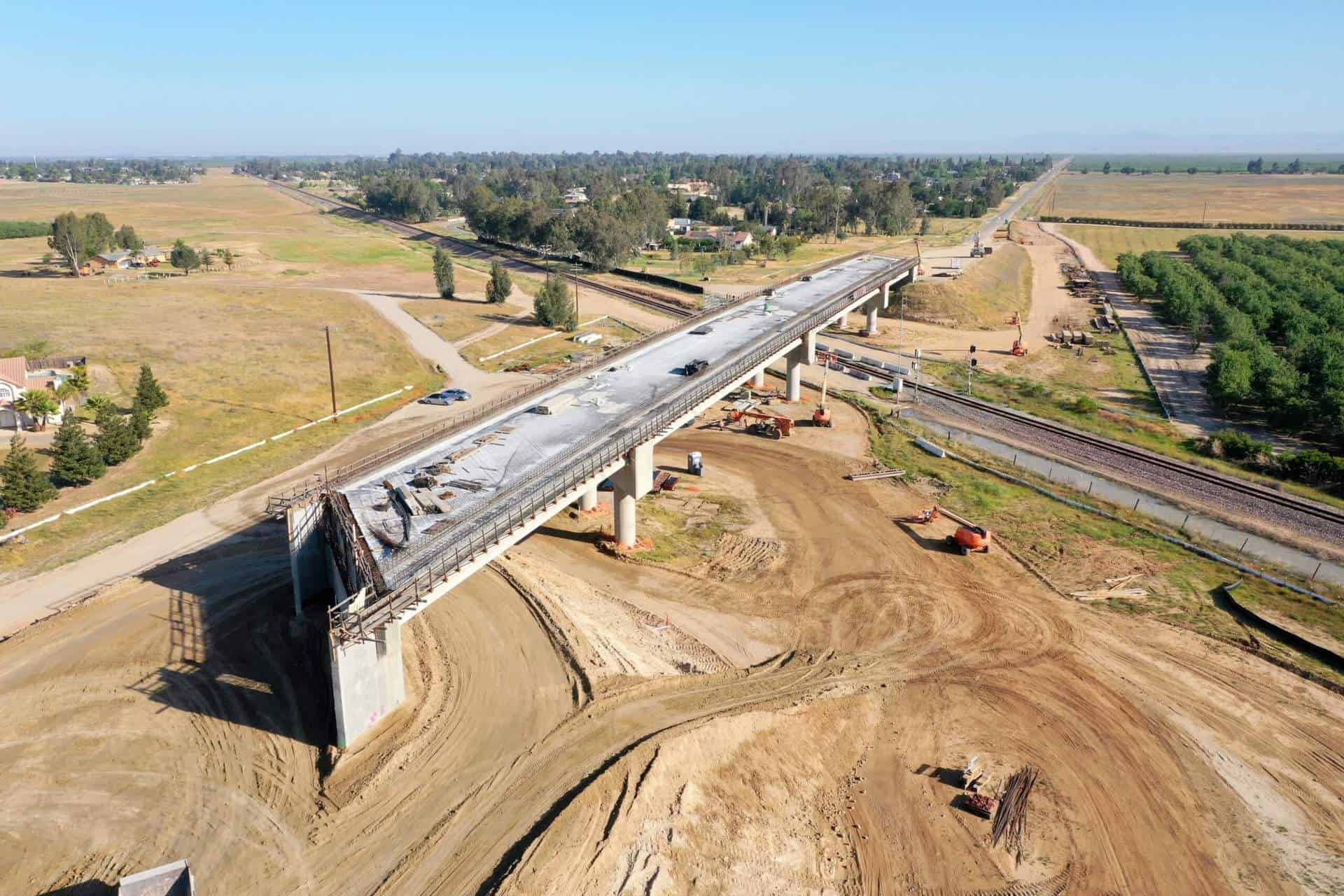
The latest development of the California High-Speed Rail Project marks a major shift in the financing model of U.S. infrastructure. California has dropped its lawsuit against the federal government and abandoned approximately
- Federal Funding Share: Only about 18%
- Construction Progress: 171 miles are in the design phase, and 119 miles are under active construction
- Private Investment Window: Finalize arrangements by summer 2026
This shift reflects the accelerated transition of U.S. infrastructure projects from the traditional government-funded model to the
The decision on the California High-Speed Rail Project is not an isolated event but reflects
- Federal Funding Uncertainty: Changes in government funding priorities make it difficult for long-term projects to obtain sustained commitments
- Rise of Private Capital: Investors are increasingly interested in real assets such as infrastructure, as they providestability, inflation hedging, and compound growth
- Driven by Three Major Trends: Digitalization, deglobalization, and decarbonization are reshaping the infrastructure investment landscape and promoting private capital participation [1]
The PPP model provides
- Risk Sharing: The government and private sectors jointly bear project risks
- Efficiency Improvement: Management experience and technological innovation from the private sector can enhance project execution efficiency
- Long-Term Stability: Private investors focus on long-term returns rather than short-term political cycles
According to Jinling API data, major U.S. construction/engineering companies have different advantages in the infrastructure PPP transition:
| Company | Ticker | Market Cap | Current Stock Price | P/E Ratio | 52-Week Performance | Analyst Consensus |
|---|---|---|---|---|---|---|
AECOM |
ACM | $12.89 billion | $97.40 | 22.93x | -9.55% | Buy [0] |
Fluor |
FLR | $6.58 billion | $40.82 | 2.04x | -18.46% | Buy [0] |
KBR |
KBR | $5.11 billion | $40.22 | 13.55x | -29.50% | Buy [0] |
- Market Position: One of the world’s largest infrastructure consulting firms
- Revenue Distribution: 77.6% of revenue comes from the Americas, with significant advantages in the California local market [0]
- Business Advantages: Comprehensive engineering design and project management capabilities
- PPP Experience: Has accumulated rich experience in multiple PPP projects globally
- Analyst Expectations: Target price of $137.00 (+40.7% upside potential), indicating the market’s optimistic outlook for its future prospects [0]
- Profitability: ROE as high as 72.50%, net profit margin of 21.72%, showing excellent operational efficiency [0]
- Business Portfolio: Driven by two pillars: Urban Solutions (52.8%) and Energy Solutions (43.6%) [0]
- Valuation Advantage: P/E ratio is only 2.04x, far below the industry average, with potential for valuation repair
- Risk Note: Operating profit margin is negative (-1.57%), so cost control needs attention [0]
- Government Business: 75.8% of revenue comes from government solutions, with natural advantages in government projects [0]
- Technical Strength: Sustainable technology solutions account for 24.2%, aligning with green infrastructure trends
- International Layout: 52.7% of revenue comes from the U.S., and 47.3% from overseas, with global project experience [0]
- Financial Health: Operating profit margin of 8.96%, showing good profitability [0]
In addition to the three listed companies above, the private company
- Historical Position: One of the largest construction contractors in the U.S.
- Project Experience: Has participated in multiple large-scale transportation and energy projects
- PPP Experience: Has rich practice in PPP projects
The number of non-residential construction project starts will increase by 59.4% in 2025, and the total construction start value in October reached a seasonally adjusted annual rate of
According to PCL Construction’s outlook, non-residential construction spending in 2026 will be driven by three key areas:
- Data Centers: Spending increased by over 33% in 2025, and is expected to grow by another 20% in 2026
- Water Infrastructure: Investment demand continues to grow
- Aviation Facilities: Hub airports maintain improvement momentum due to strong passenger revenue [1]
Modern railway systems are transforming into “cleaner, smarter, and more connected” systems:
- AI Optimization: Network Rail’s intelligent infrastructure project uses AI technology to reduce unplanned outages
- Predictive Maintenance: Amtrak and New York MTA adopt predictive maintenance to reduce downtime
- Green Finance: The combination of PPP model and green finance creates anew asset classof sustainable infrastructure [1]
The cost of the California High-Speed Rail Project has risen sharply from the initial estimate to $890 billion to $1.28 trillion, indicating that large-scale infrastructure projects face
The U.S. Federal Acquisition Regulation (FAR) often classifies private investors as contractors, trapping them in a regulatory network designed for weapons suppliers, which
Infrastructure projects often span multiple political cycles, and changes in government policies may affect project continuity and funding stability. As experienced by the California High-Speed Rail Project, changes in federal government policies directly impact project progress.
When projects face policy uncertainty, private investors may take a wait-and-see attitude toward whether the project can truly be implemented, which will affect the speed of fund allocation [1].
- Focus on the 2026 Milestone: The California High-Speed Rail plans to finalize private investor arrangements by summer 2026, which is an important catalytic event
- Policy Sensitivity: Closely monitor the infrastructure policy direction of the Trump administration’s second term
- Project Start Boom: Nine large-scale projects under construction in the U.S. are driving strong growth in non-residential construction [1]
The U.S. infrastructure PPP model will move from the experimental phase to maturity, and more states and local governments are expected to follow California’s model and introduce private capital.
Companies with PPP project experience and financial strength may further expand their market share through mergers and acquisitions, and industry concentration is expected to increase.
AI, digitalization, and green technology will play an increasingly important role in infrastructure projects, and companies with technological advantages will obtain premium valuations.
- Reasons: Leader in infrastructure consulting, rich experience in PPP projects, obvious local advantages in California
- Target Price: $137.00 (+40.7% upside potential) [0]
- Risks: High valuation (P/E ratio of 22.93x), but in line with industry leader status
- Reasons: Extremely low valuation (P/E ratio of 2.04x), strong ROE (72.50%) and net profit margin (21.72%)
- Target Price: $56.00 (+37.2% upside potential) [0]
- Risks: Negative operating profit margin; need to pay attention to improvement in cost control
- Reasons: Stable government business, sustainable technology aligns with green infrastructure trends
- Target Price: $50.00 (+24.3% upside potential) [0]
- Risks: Weak stock performance in 2025 (-30.51% YTD), but valuation is more attractive
The decision to introduce private investment in the California High-Speed Rail Project marks the entry of U.S. infrastructure construction into a
Major players such as AECOM, Fluor, and KBR are expected to
In the next 5-10 years, as the three major trends of digitalization, deglobalization, and decarbonization deepen, the role of private capital in infrastructure construction will become more important, bringing
[0] Jinling API Data (2025-12-28)
[1] TradingView - Reuters: “California drops suit against Trump’s high-speed rail funding revocation” (https://www.tradingview.com/news/reuters.com,2025:newsml_L6N3XX00A:0-california-drops-suit-against-trump-s-high-speed-rail-funding-revocation/)
[2] Newsweek: “Megaprojects Under Construction Around World in 2026” (https://www.newsweek.com/megaprojects-under-construction-2026-noem-kaec-california-london-11226613)
[3] Newsweek: “9 Megaprojects Begin Construction Across US” (https://www.newsweek.com/megaprojects-construction-us-11128598)
[4] GovTech: “Process, Shifting Priorities Slowed Infrastructure Work” (https://www.govtech.com/infrastructure/process-shifting-priorities-slowed-infrastructure-work)
[5] Defense One: “To rebuild America’s defense industry, unleash private capital” (https://www.defenseone.com/ideas/2025/12/rebuild-americas-defense-industry-unleash-private-capital/409921/)
[6] Forbes: “5 Trends Reshaping The Future Of Transportation Rail Infrastructure” (https://www.forbes.com/councils/forbesbusinessdevelopmentcouncil/2025/12/04/5-trends-reshaping-the-future-of-transportation-rail-infrastructure/)
[7] Building Design + Construction: “Three key sectors will drive nonres construction spending in 2026” (https://www.bdcnetwork.com/home/news/55339360/three-key-sectors-will-drive-nonres-construction-spending-in-2026)
[8] Investopedia: “Understanding Public-Private Partnerships: How They Work and Key Examples” (https://www.investopedia.com/terms/p/public-private-partnership.asp)
[9] Brookfield: “2026 Investment Outlook” (https://www.brookfield.com/2026-investment-outlook)
Insights are generated using AI models and historical data for informational purposes only. They do not constitute investment advice or recommendations. Past performance is not indicative of future results.
About us: Ginlix AI is the AI Investment Copilot powered by real data, bridging advanced AI with professional financial databases to provide verifiable, truth-based answers. Please use the chat box below to ask any financial question.