
In-depth Analysis of Governance Risks in Kuaishou Live Streaming Security Incident
Unlock More Features
Login to access AI-powered analysis, deep research reports and more advanced features
About us: Ginlix AI is the AI Investment Copilot powered by real data, bridging advanced AI with professional financial databases to provide verifiable, truth-based answers. Please use the chat box below to ask any financial question.
Related Stocks
Based on the latest incident materials and market data, I systematically analyze the platform governance risks exposed by the Kuaishou live streaming security incident.
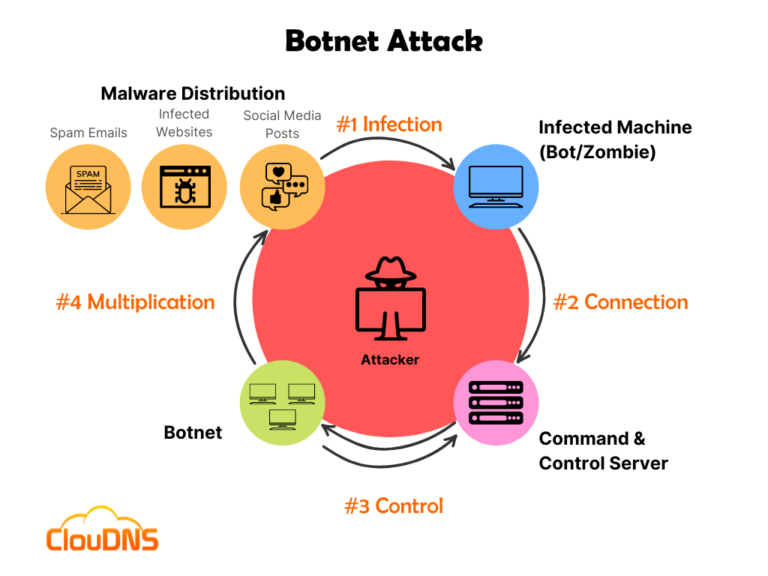
On the evening of December 22, 2025, the Kuaishou platform suffered a large-scale ‘organized attack by black and gray industries’. A large amount of non-compliant content flooded multiple live rooms in a short period, and the spread of such content lasted for more than an hour [1]. According to public information, black industry gangs used ‘code receiving’ services to bypass real-name authentication, and through automated scripts, they registered or stole accounts in batches, resulting in the sudden emergence of approximately 17,000 zombie accounts for mass distribution of non-compliant content [2]. After the incident, Kuaishou’s stock price dropped by nearly 6% on December 23, with a market value evaporation of about HK$16.4 billion [1].
This incident most profoundly revealed the systematic shortcomings of the platform in terms of technical confrontation. Specific manifestations are:
-
Asymmetric Offensive and Defensive Capabilities: Black and gray industries have fully entered the era of automated attacks, while the platform still relies on traditional manual defense models. Attackers use automated tools to achieve second-level release and diffusion of non-compliant content, and this large-scale attack completely exceeds the response limit of manual moderation [1]. Security experts from Qi An Xin pointed out that AI must be empowered to achieve automated security protection to counter automated attacks, which indicates the technical upgrade path that the industry must face [1].
-
Failure of Real-Name Authentication System: Black industry gangs easily bypassed the real-name authentication mechanism using “code receiving” services, indicating that the platform’s identity verification system has major vulnerabilities [2].
-
Failure of Real-Time Monitoring System: It took more than an hour from the large-scale emergence of non-compliant content to the platform’s response, exposing that the platform’s real-time monitoring system failed to capture abnormal signals in a timely manner [3].
The incident exposed multiple flaws in the platform’s crisis management capabilities:
-
Serious Response Time Out: The spread of non-compliant content lasted for more than an hour. Kuaishou only launched emergency disposal at 23:30, and the live streaming channel once displayed “server busy” and was temporarily closed until around 2:00 the next morning when it gradually returned to normal [2]. Tan Xiaosheng, Standing Director of the China Computer Federation, analyzed that as a domestic short video live streaming giant, Kuaishou not only has strict manual moderation for live content but also an AI-assisted moderation system that can achieve second-level bans, but relevant systems did not take effect in a timely manner during this incident [1].
-
Long Decision-Making Chain: The lack of a rapid response mechanism in emergency situations reflects the coordination efficiency problem at the organizational level [3].
-
Insufficient Preplan Preparation: There is a lack of effective preplans for large-scale coordinated attacks and a systematic crisis response system [3].
-
Insufficient Moderation Capability Under Large-Scale Attacks: When facing large-scale and coordinated attacks from black and gray industries, the traditional “AI + manual” moderation model appears to be vulnerable [3]. During the evening incident on the 22nd, when multiple users tried to ban live rooms through the reporting function, the system showed “report failed” or no feedback for a long time [2].
-
Passivity of Moderation System: The existing moderation system mainly focuses on post-event disposal, lacks intelligent prediction and active defense capabilities, and is difficult to deal with new risks [3].
-
Legal Liability Identification Risk: Domestic cybersecurity experts pointed out that the core of legal liability identification lies in whether the platform has fulfilled the “reasonable duty of care”, and the 1-hour response delay may become the key to determining negligence [3]. If the platform fails to fulfill its information security management responsibilities, it will face relevant administrative penalties [1].
-
Tightening Regulatory Environment: With the upcoming official release of the “Measures for the Supervision and Administration of Live Streaming E-commerce”, the live streaming industry will face more systematic and penetrating supervision. On December 12, 2025, the State Administration for Market Regulation and other departments issued the “Guiding Opinions on Improving the Quality of Products and Services on Online Trading Platforms”, which specifically clarified the selection mechanism, training requirements, and “blacklist” system for live streaming e-commerce [1].
-
Tightening Requirements for Principal Responsibility: Regulatory authorities continue to tighten requirements for the platform’s principal responsibility, and such incidents may promote the industry to establish stricter safety assessment and emergency response standards [3].
-
Collapse of Core Users’ Sense of Security: Zhan Junhao, a well-known crisis public relations expert, said that this large-scale non-compliant live streaming incident had a huge impact on the trust and sense of security of Kuaishou’s core users, especially users with teenagers in their families who would resist due to the collapse of security, and negative word-of-mouth could easily ferment through social platforms [2].
-
Shaken Trust of Brand Merchants: For Kuaishou, which relies on live streaming e-commerce and brand advertising, this incident may shake the assessment of the platform’s “security” by advertisers and brand merchants, and they may activate the “risk avoidance” mechanism [2]. Without subsequent transparent governance actions, in the long run, it will solidify the perception of “moderation dereliction of duty”, weaken the platform’s credibility, and increase user churn and brand repair costs [2].
The sharp reaction of Kuaishou’s stock price after the incident reveals the re-pricing of the platform’s governance capabilities by the capital market:
| Indicator | Data Performance |
|---|---|
| Maximum stock price drop | Nearly 6% |
| Market value evaporation | About HK$16.4 billion |
| Closing drop | 3.52% |
| Total market value after incident | HK$277.947 billion [1] |
In the digital economy era, the platform’s content security and governance capabilities have become one of the key factors affecting its valuation [1].
From a more macro perspective, this incident reflects the imbalance between “security protection” and “scale expansion” of short video platforms [3]. With the iteration of attack technologies by black and gray industries, the traditional “AI + manual” model needs to be upgraded to “intelligent prediction + active defense”, and relying solely on post-event disposal is no longer sufficient to deal with new risks. Platform governance is no longer a single technical issue but a systematic project involving multiple dimensions such as technology, operation, law, and public relations [1].
This incident has sounded an alarm for Kuaishou and the entire live streaming industry. After discovering that users publish or sell non-compliant resources, the platform has a legal obligation to immediately take measures such as deletion and account banning [1]. Against the background of tightening regulatory environment, the platform can no longer regard content security as a “regulatable risk” but must treat it as an “insurmountable red line” [1]. In the future, the platform needs to continuously improve in the following aspects:
- Accelerate the intelligent upgrade of the technical defense system
- Optimize emergency response mechanisms and decision-making processes
- Strengthen collaboration with regulatory authorities and public security agencies
- Establish a more transparent user communication mechanism
- Balance defense intensity and user experience to achieve a win-win situation of “precision prevention and control” and “ecological friendliness” [3]
[1] Eastmoney.com - Review of Kuaishou’s “Live Streaming Out of Control Involving Obscenity”: HK$16.4 Billion Evaporated Overnight Breaking Through Capital Defense Lines (https://caifuhao.eastmoney.com/news/20251225211937723214910)
[2] Eastmoney.com - Kuaishou Live Rooms Suddenly Attacked by Black and Gray Industries: Market Value Evaporated by Nearly HK$10 Billion (https://caifuhao.eastmoney.com/news/20251223123535914512220)
[3] 100EC.cn - A Large Number of Explicit Pornographic Contents Appeared in Kuaishou Live Rooms: What About Platform Network Security Vulnerabilities and Responsibilities? (https://www.100ec.cn/detail--6655483.html)
[0] Jinling AI - Kuaishou Technology Real-Time Market Data
Insights are generated using AI models and historical data for informational purposes only. They do not constitute investment advice or recommendations. Past performance is not indicative of future results.
About us: Ginlix AI is the AI Investment Copilot powered by real data, bridging advanced AI with professional financial databases to provide verifiable, truth-based answers. Please use the chat box below to ask any financial question.