
Analysis of Intel Foundry Business Investment and TSMC 3nm Capacity Allocation
Unlock More Features
Login to access AI-powered analysis, deep research reports and more advanced features
About us: Ginlix AI is the AI Investment Copilot powered by real data, bridging advanced AI with professional financial databases to provide verifiable, truth-based answers. Please use the chat box below to ask any financial question.
Related Stocks
According to the latest information, NVIDIA invested
- U.S. Government Investment: In August 2025, the U.S. government invested $8.8 billion in Intel through grants under the CHIPS Act framework, acquiring a 10% stake in the company [1]
- SoftBank Investment: A few days before NVIDIA’s investment, SoftBank invested $2 billion in Intel [1]
- NVIDIA Investment: $500 million, butdid not commit to using Intel’s foundries, only agreed to use certain technologies from Intel [1]
From the perspective of TSMC’s 3nm process capacity allocation, the industry pattern shows the following characteristics:
- Appleis TSMC’s largest 3nm customer, taking most of the initial capacity
- NVIDIA and AMDare the other two major customers
- Intelhas a relatively small share in TSMC’s 3nm capacity
- Samsung, as a foundry competitor, also faces capacity pressure
TSMC’s 3nm capacity remains tight, mainly due to the following reasons:
- Surge in demand for AI chips (such as NVIDIA H200 chips)
- Strong demand for high-performance computing chips
- Long yield ramp-up cycle for advanced processes
-
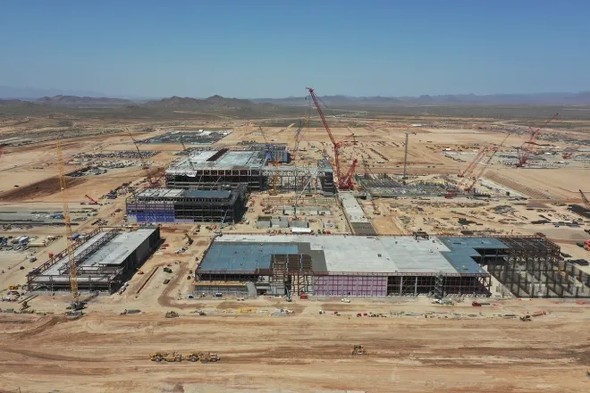
Technological Progress: Intel’s 18A process has entered mass production at the new Fab 52 factory in Arizona [1]
-
Financial Support: Received a total of approximately $11.5 billion in external investment (government $8.8b + SoftBank $2b + NVIDIA $500m)
-
Strategic Cooperation: Signed a $14 billion cooperation agreement with India’s Tata Electronics [2]
-
Difficulty in Customer Acquisition:
- Currently, no major external customershave signed long-term foundry agreements [1]
- NVIDIA invested but did not commit to using Intel’s foundries
- Currently,
-
Lack of Economies of Scale:
- Foundry business needs a large number of external customers to be profitable
- Lack of scale effect will continue to lead to losses
-
Technological Gap:
- TSMC leads Intel by about 2-3 years in advanced processes
- TSMC’s 2nm process is only produced locally in Taiwan [1]
-
Market Competition:
- TSMC has formed mass production in the 4nm process
- Samsung is also actively competing for foundry orders
- TSMC’s 3nm capacity allocation pattern indicates that Intel’s competitiveness at this process node is limited
- Major AI chip manufacturers (NVIDIA, AMD) still prioritize TSMC
- Intel’s foundry business break-even target is set for 2027 [2]
- If Intel can continuously improve yield and reduce costs, it may attract some customers
- Geopolitical factors may promote supply chain diversification, creating opportunities for Intel
- If the 18A process can reach the same technical level as TSMC, it may become a turning point
- Whether to acquire the first major external customer
- Capacity utilization and yield improvement
- Time point of narrowing losses
Overall, although Intel has received significant investment support, from the reality of TSMC’s 3nm capacity allocation, Intel’s foundry business has limited possibility of achieving major breakthroughs in the short term. The success of this business will highly depend on the improvement of technical level and the acquisition of major customers.
[1] CNBC - “Inside Intel’s new Arizona fab, where the chipmaker’s fate hangs in the balance” (https://www.cnbc.com/2025/12/19/intel-aims-to-find-clients-and-catch-tsmc-with-new-chip-fab-in-arizona.html)
[2] Notebookcheck - “Intel signs $14 billion deal with India’s Tata Electronics” (https://www.notebookcheck.net/Intel-signs-14-billion-deal-with-India-s-Tata-Electronics.1180876.0.html)
Insights are generated using AI models and historical data for informational purposes only. They do not constitute investment advice or recommendations. Past performance is not indicative of future results.
About us: Ginlix AI is the AI Investment Copilot powered by real data, bridging advanced AI with professional financial databases to provide verifiable, truth-based answers. Please use the chat box below to ask any financial question.