
Risk Analysis Report on High-Goodwill Acquisition Strategy of RuiPai Pet Hospital
Unlock More Features
Login to access AI-powered analysis, deep research reports and more advanced features
About us: Ginlix AI is the AI Investment Copilot powered by real data, bridging advanced AI with professional financial databases to provide verifiable, truth-based answers. Please use the chat box below to ask any financial question.
Related Stocks
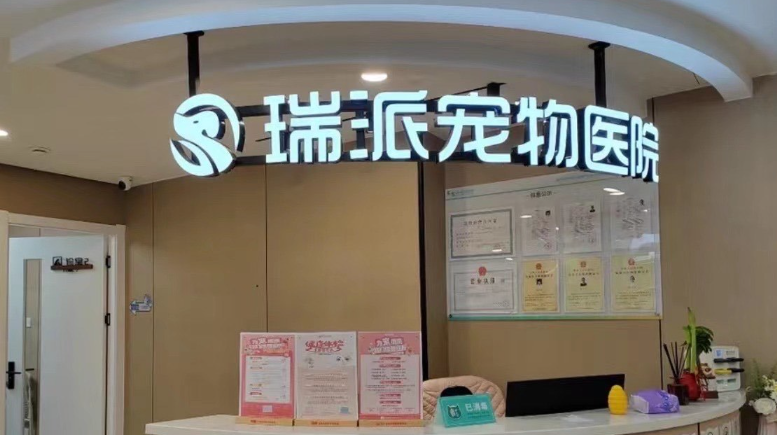
RuiPai Pet Hospital, a major player in China’s pet healthcare industry, has achieved rapid expansion through a series of acquisitions and integrations since 2015. The company adopts the VDP model (holding equity while retaining approximately 30% shares for the original core team), acquires regional well-known pet hospital brands, and ultimately integrates them into a chain pet hospital network under the ‘RuiPai’ brand [1]. As of the first half of 2025, the company has 548 hospitals under its umbrella, forming a nationwide pet healthcare service network [2].
However, this aggressive acquisition and expansion strategy has resulted in high goodwill assets on the financial statements. According to the prospectus data, the goodwill formed by the company’s mergers and acquisitions at the end of each reporting period was: RMB 1.62 billion in 2022, RMB 1.84 billion in 2023, RMB 1.78 billion in 2024, and RMB 1.792 billion in the first half of 2025, accounting for 34.6% of total assets [2]. This scale is equivalent to 1.02 times the 2024 full-year revenue, indicating an extremely high proportion of goodwill in the company’s asset structure and significant potential financial risks.
The core risk of high-goodwill acquisitions lies in whether the acquired targets can achieve expected performance. RuiPai Pet acquired a total of 119 pet hospitals between 2022 and 2024, but some of the acquired hospitals failed to meet expected performance targets. In 2023, the company recorded a RMB 137 million goodwill impairment provision due to underperformance of some hospitals, directly leading to a 303% surge in net losses [2]. The auditing firm clearly noted in the prospectus that there are significant uncertainties in goodwill impairment tests; if the performance of acquired hospitals continues to deteriorate in the future, further impairment risks will be triggered [2].
From historical data, there is an obvious correlation between goodwill impairment and acquisition rhythm. After goodwill peaked at RMB 1.844 billion in 2023, it slightly decreased to RMB 1.776 billion in 2024, but this was a passive adjustment based on impairment provisions [1]. If the integration effect of acquired hospitals is not as expected, or if market competition intensifies leading to declining profitability, goodwill impairment will have a major impact on the company’s profits.
Accompanying acquisition expansion is the continuously increasing number of store closures. Data shows that 18 hospitals were closed in 2022, 14 in 2023, 38 in 2024 (accounting for 6.7% of the total), and 26 in the first half of 2025 [2]. Store closures not only mean partial losses of previous acquisition investments but also expose systematic flaws in the company’s target selection, integration management, or regional layout. Frequent store opening and closing cycles will erode investor confidence and negatively affect the sustainability of goodwill.
Behind RuiPai Pet’s aggressive expansion is strong capital support. The company has completed multiple rounds of financing since 2016, including angel round from R&P Bio, Series A from Goldman Sachs, Series B and B+ from Goldman Sachs and others, Series C from Mars China, and Series D and D+ from Mengniu and Jishi Capital [1]. However, behind capital promotion is the urgent expectation of going public, and there are bet-on-listing agreements between the company and investors. As of June 30, 2025, the company has formed RMB 2.822 billion in redemption liabilities [1].
The prospectus clearly states that this redemption right automatically terminates when the company submits its listing application. This means that if RuiPai Pet fails to list in Hong Kong, the company will face huge redemption liability repayment pressure, and may even lead to extreme risks such as the actual controller using equity to pay debts or changing control rights [1]. This bet-on-listing arrangement pushes the company onto a ‘single-plank bridge’ where it must successfully go public, increasing rigid constraints on strategic decisions.
From the perspective of cash flow status, the company faces severe liquidity challenges. Net current liabilities reach RMB 2.46 billion, short-term loans are RMB 920 million, while cash flow from operating activities is only RMB 180 million [2]. The coverage capacity of operating cash flow for short-term debts is obviously insufficient; once financing channels are blocked or operating performance fluctuates, the company may fall into a liquidity crisis. High goodwill assets themselves have no liquidity and cannot be directly used to repay debts, further exacerbating financial fragility.
RuiPai Pet’s expansion model is to acquire scattered small brands and integrate them into a pet healthcare platform listed under ‘RuiPai’, but the depth of this integration is worth examining. The prospectus shows that doctor qualifications and medical environment mainly depend on the situation of the original hospital before acquisition; one of the main differences before and after acquisition is the replacement of store signs [1]. Whether this ‘rebranding’ integration can truly achieve brand synergy, management standardization, and service quality improvement is highly uncertain.
More critically, the company’s VDP model of retaining 30% shares for the original core team, while helping to stabilize the management team, may also lead to problems such as incomplete integration and decentralized management rights. When the acquired team has differences with the company’s overall strategy, decision-making efficiency and execution may be affected.
Abnormal changes in management compensation reflect potential internal governance issues. Data shows that director compensation plummeted from RMB 5.6 million in 2022 to RMB 1.2 million in 2024, with a cumulative decrease of 76.79% over three years [2]. This downward trend is inconsistent with conventional practices during the listing preparation period and may reflect insufficient confidence of management in the company’s prospects or major internal differences. In addition, the actual controller Li Shoujun has received multiple regulatory letters for short-term trading, illegal occupation of funds, and failure to disclose related transactions in a timely manner, casting doubt on the effectiveness of the company’s governance [2].
RuiPai Pet has a problem of highly concentrated equity. The actual controller Li Shoujun indirectly controls 26.91% of the equity through Zhongrui Huapu (holding 58.25%) and R&P Bio (holding 36.04%), and the top five shareholders hold a total of 68.3% [2]. This equity structure leads to a lack of effective checks and balances, related transaction approvals are easily formalized, and the rights and interests of minority shareholders are difficult to be fully protected.
There are a large number of related party transactions between the company and its related party R&P Bio, and the fairness of procurement pricing is questionable. Data shows that the company’s procurement price from R&P Bio is about 12% higher than that from other suppliers [2]. In addition, in 2024, the company lent RMB 180 million to Zhongrui Huapu without charging interest, which is suspected of harming the company’s interests [2]. These related party transactions may become channels for the actual controller to occupy listed company resources, posing a threat to investor interests.
The prospectus discloses serious compliance flaws. As of the last practicable date, 530 of the company’s lease agreements were not filed (accounting for 96.7%), 102 properties had no property rights certificates, 20 had actual uses inconsistent with planning, and 36 had not completed environmental assessments [2]. These compliance issues may lead to risks such as administrative penalties, disputes over the validity of lease contracts, and even store closures. Especially for a chain enterprise with 548 stores, any systematic compliance risk may have a chain reaction.
The company used 22 personal bank accounts to settle corporate funds in 2022; although rectified, this behavior exposed obvious internal control defects [2]. In terms of financial management, capital flow, and risk control, the company has gaps with listed company governance standards and needs systematic rectification before listing.
The pet healthcare industry is facing serious overcompetition. According to public data, the number of pet hospitals nationwide reached 39,025 in September 2025, compared with only 22,537 in the same period four years ago; passenger flow was divided by nearly half of the incremental stores in four years [1]. An industry practitioner revealed that the monthly revenue of his pet hospital is RMB 43,000, and the actual net profit after deducting employee salaries, utilities, and consumables is only over RMB 10,000, with huge competitive pressure [1]. The industry dilemma of ‘too many hospitals’ means that RuiPai Pet’s expansion strategy faces the risk of diminishing marginal returns.
Financial data of industry benchmark enterprise New Ruipeng reveals the profit dilemma of the pet healthcare industry. From 2020 to 2022, New Ruipeng accumulated losses of nearly RMB 4 billion, and its gross profit margin plummeted from 30% in 2014 to about 5% in 2022 [1]. This trend indicates that even the largest industry leader is difficult to achieve stable profitability in fierce competition. RuiPai Pet’s 303% surge in net losses in 2023 is highly consistent with the overall industry dilemma [2].
From a valuation perspective, if calculated based on the 2025 forecast net profit of RMB 50 million and the 35x P/E ratio of the Hong Kong stock pet healthcare sector, RuiPai Pet’s valuation is about RMB 1.75 billion (1.0x P/S ratio), significantly higher than the industry average of 0.8x [2]. The high valuation is based on optimistic expectations of growth prospects, while the above risk factors may make this expectation difficult to realize.
RuiPai Pet Hospital’s high-goodwill acquisition strategy contains multiple systematic risks: huge goodwill impairment pressure, questionable merger integration effect, fragile capital structure, frequent related party transactions, prominent compliance issues, and fierce industry competition. These risks are intertwined and mutually reinforcing, forming a complete risk chain. For potential investors, it is necessary to carefully evaluate the sustainability of the company’s profitability and compliance risks, and be alert to investment traps under valuation bubbles. Given the numerous risk factors, it is recommended to maintain a cautious wait-and-see attitude towards RuiPai Pet before these risks are fully disclosed and effectively resolved.
[1] Caizhongshe - “Goldman Sachs and Mars China Invest in RuiPai’s IPO: Treating Cats and Dogs Costs Tens of Thousands of Yuan” (https://m.caizhongshe.cn/news-9001386280076414311.html)
[2] Sina Finance - “RuiPai Pet Races for Hong Kong IPO: 2023 Net Loss Surges 303%, Related Party Procurement Accounts for Up to 8%” (https://finance.sina.com.cn/stock/aigc/ggxg/zgs/2025-12-23/doc-inhctxhn8443185.shtml)
Insights are generated using AI models and historical data for informational purposes only. They do not constitute investment advice or recommendations. Past performance is not indicative of future results.
About us: Ginlix AI is the AI Investment Copilot powered by real data, bridging advanced AI with professional financial databases to provide verifiable, truth-based answers. Please use the chat box below to ask any financial question.