
Big Tech's $1.5 Trillion AI Funding Challenge: Financial Engineering and Market Implications
Unlock More Features
Login to access AI-powered analysis, deep research reports and more advanced features
About us: Ginlix AI is the AI Investment Copilot powered by real data, bridging advanced AI with professional financial databases to provide verifiable, truth-based answers. Please use the chat box below to ask any financial question.
Related Stocks
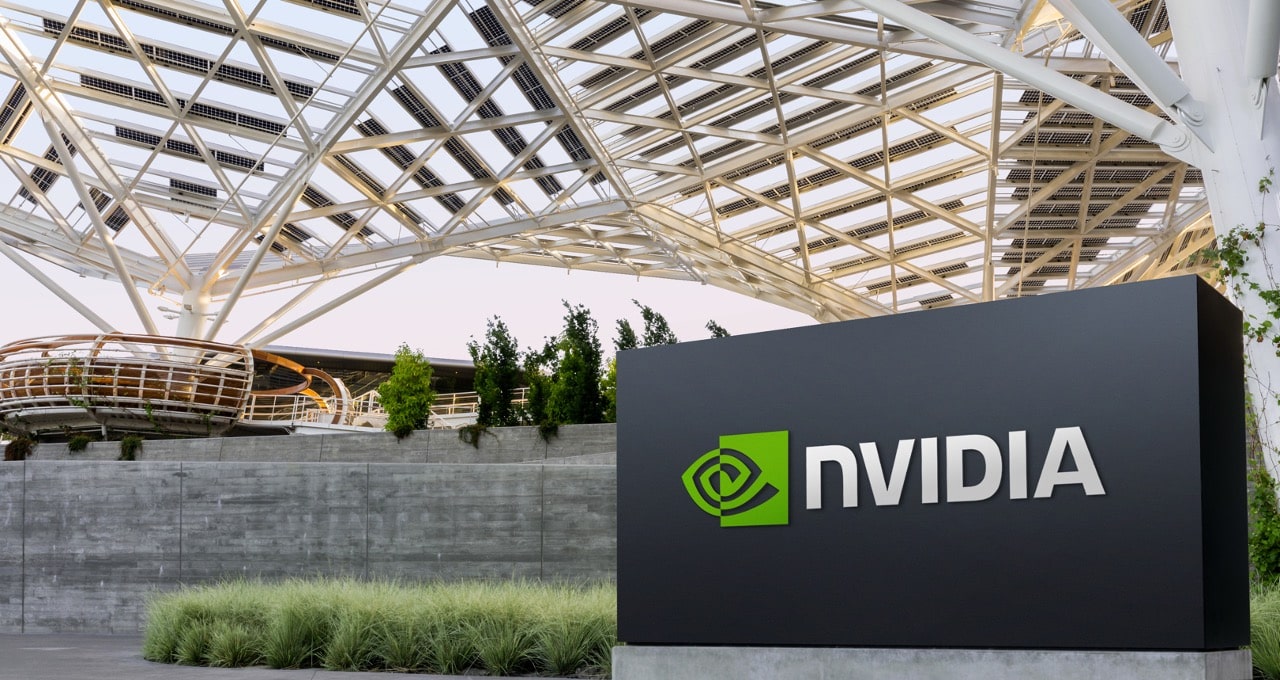
This analysis is based on the MarketWatch report [1] published on November 8, 2025, which reveals that Big Tech companies require a staggering $1.5 trillion to fund the artificial intelligence boom. The massive capital requirements are forcing industry leaders like Nvidia, Google, and other major technology companies to develop sophisticated financial engineering strategies beyond traditional corporate financing.
The technology sector’s reaction to this funding challenge was notably muted, gaining only 0.04769% on the news day [0], significantly underperforming other sectors despite the broader market’s positive performance. The S&P 500 rose 0.49% to 6,728.81, while the NASDAQ gained 0.49% to 23,004.54 [0]. This subdued response suggests investors are processing the implications of massive capital requirements rather than reacting positively to the growth narrative.
Individual AI-related stocks displayed divergent performance:
- NVIDIA (NVDA): +0.04% to $188.15 with elevated trading volume of 262.85M shares (vs. 181.82M average) [0]
- Meta (META): +0.45% to $621.71 with double the average volume [0]
- Alphabet (GOOGL): -2.08% to $278.83, underperforming the sector [0]
- Microsoft (MSFT): -0.06% to $496.82, relatively flat [0]
Traditional corporate bond issuances are expected to cover only approximately $200 billion of the $2.9 trillion global AI spending from 2025-2028, leaving a substantial funding gap [1]. This has catalyzed innovation in financing approaches:
The $1.5 trillion funding requirement establishes formidable barriers to entry, effectively consolidating AI infrastructure development among established players with access to sophisticated financing channels. This capital intensity could accelerate market concentration and limit competition from smaller innovators.
A critical insight emerging from the analysis is the temporal disconnect between massive capital deployment and clear AI-driven revenue streams. Analysts note that “when Big Tech companies drive more AI-related revenues, investors will have a clearer line of sight to facilitate unsecured debt issuance” [1]. This suggests current financing strategies are predicated on future revenue realization that remains uncertain.
The AI boom is catalyzing a structural transformation in private credit markets, with technology companies becoming major clients for alternative financing providers. This represents both opportunity and risk, as private credit typically carries higher costs than traditional corporate debt but offers greater flexibility and speed of execution.
The AI infrastructure build-out represents one of the largest capital deployment cycles in technology history, with $1.5 trillion in funding requirements driving innovation in corporate finance. The technology sector’s muted market response reflects investor uncertainty about the timeline for revenue generation from these massive investments.
Current financing strategies rely heavily on private credit markets ($1.8 trillion opportunity) and vendor financing arrangements, with traditional corporate bonds covering only a fraction of total needs [1, 2]. The absence of clear AI revenue streams creates a significant information gap for investors, though analysts note that today’s Big Tech companies have “pristine credit” and robust free cash flows, unlike the low-quality companies that failed during the internet bubble [1].
Key monitoring factors include AI revenue generation timelines, private credit market health, infrastructure utilization rates, regulatory developments, and competitive responses from smaller AI companies. The massive capital requirements create both significant opportunities for established players and substantial risks related to overbuilding and geopolitical tensions.
Insights are generated using AI models and historical data for informational purposes only. They do not constitute investment advice or recommendations. Past performance is not indicative of future results.
About us: Ginlix AI is the AI Investment Copilot powered by real data, bridging advanced AI with professional financial databases to provide verifiable, truth-based answers. Please use the chat box below to ask any financial question.